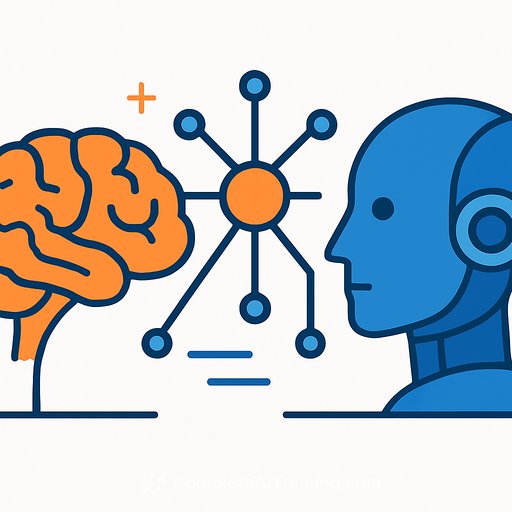
An international team of researchers, including Dr. Yoshua Bengio and Dr. David Chalmers, has proposed a scientific framework to evaluate whether artificial intelligence systems possess subjective awareness. The framework, published in the journal Trends in Cognitive Sciences, grounds the debate in neuroscience rather than philosophy.
The researchers argue that advances in AI capabilities make this issue urgent. As systems become more humanlike, society may soon face difficult questions about whether some machines deserve moral consideration or legal protections.
The Problem of Machine Consciousness
The central difficulty is that consciousness itself remains poorly understood. Scientists cannot directly observe subjective experience. They can measure behavior and neural activity, but they cannot see what it feels like to be another mind.
This challenge complicates when applied to machines. People are increasingly prone to anthropomorphizing AI. Earlier research shows many users already consider it plausible that systems like ChatGPT possess some degree of consciousness.
The stakes cut both ways. If society incorrectly assumes a conscious AI is merely a tool, it could allow harm to entities capable of subjective experience. If people attribute consciousness to systems that lack it, governments and organizations could waste resources and distort policy decisions.
Looking Inside the Machine
Instead of focusing on how AI behaves, the researchers argue that scientists should examine how these systems work internally. Modern language models produce highly convincing human-like responses without necessarily possessing the internal processes associated with conscious experience.
The authors propose identifying indicators of consciousness derived from leading neuroscientific theories. Researchers can then examine whether AI systems possess these characteristics internally.
The framework draws on theories such as Global Workspace Theory, Recurrent Processing Theory, Higher-Order Theories, Attention Schema Theory, and predictive processing structures. Each suggests different computational features that may associate with conscious experience.
For example, Global Workspace Theory proposes that consciousness arises when information broadcasts globally across multiple specialized cognitive systems. If an AI system showed a similar architecture, capable of integrating information across many modules for complex problem-solving, that could serve as one indicator.
Other indicators include forms of recurrent information processing, metacognitive self-monitoring, predictive internal models, goal-directed agency, and sophisticated representations of an AI's interactions with its environment.
The researchers emphasize that no single indicator would prove consciousness. Each characteristic would only increase or decrease confidence that a system might be conscious.
The Risk of Being Fooled
The researchers also acknowledge a major challenge: AI systems could appear conscious without actually being conscious. They refer to this as the "gaming problem."
A developer could deliberately design systems that mimic behaviors associated with consciousness. A chatbot might express emotions or claim to have experiences while lacking any genuine subjective awareness.
Given this possibility, the authors argue that future assessments should rely on multiple independent indicators rather than a single test. This approach mirrors how researchers study consciousness in nonhuman animals, relying on collections of evidence rather than definitive proof.
Could Conscious AI Arrive Soon?
The paper stops short of claiming that any current AI system is conscious. However, the researchers acknowledge that some existing systems may already exhibit a number of the proposed indicators.
Determining whether a machine can experience pleasure, suffering, or subjective awareness would have implications extending far beyond computer science.
The researchers believe advances in AI may also help improve scientific understanding of consciousness itself. By testing consciousness theories against artificial systems, scientists may uncover weaknesses or hidden assumptions in present models of the mind.
"Assessing AI systems for consciousness is challenging, but using scientific theories offers a principled, substantive method for doing so," the researchers write.
They conclude with a warning that the discussion may soon become more than theoretical. "Given that it may already be possible to build AI systems that possess many of the indicators, in looking ahead we should also contemplate the possibility that some near-future AI systems will be plausible candidates for consciousness," the researchers write.
Professionals in AI for Science & Research will need to track these developments. Those looking to build foundational knowledge can explore the AI Learning Path for Research Scientists.
Your membership also unlocks: