AI Skills in Africa: A Practical Playbook for HR
AI isn't a side project anymore. It's a core capability. Two-thirds of African organizations are already rolling out AI-focused career development to upskill or reskill their people. That puts HR in the driver's seat.
A new SAP report, Africa's AI Skills Readiness Revealed, shows a clear pattern: traditional IT skills still matter, but they're not sufficient on their own. Cloud and cybersecurity remain hot. AI fluency is becoming non-negotiable.
What the data says
Organizations face a dual challenge: attract scarce tech talent while building AI skills internally. Nearly half of surveyed companies expect a strong rise in demand for AI skills by 2025. And 94% now offer training at least once a month.
The pressure is real. 38% cite reskilling as their top skills challenge for 2025, and nearly half say the same for upskilling. Two-thirds say helping employees understand why reskilling matters is a priority.
There's a warning sign: investment is dipping. In 2023, no organization allocated more than 10% of its HR or IT budget to skills development, down from the prior year when a quarter spent more than 15%.
Why this matters for HR
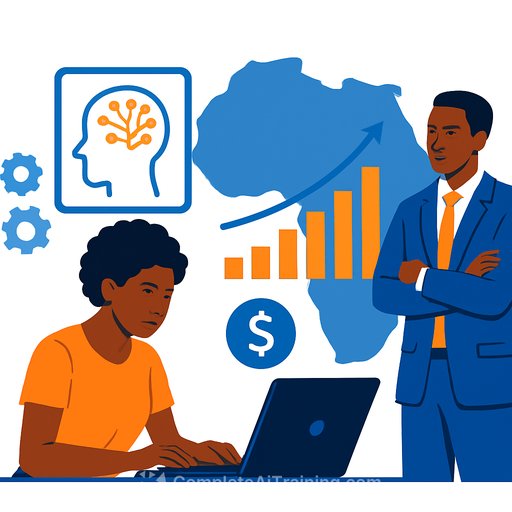
The upside is big. Some estimates suggest AI could add up to $1.5 trillion to Africa's economy by 2030 if the continent captures 10% of the global AI market. Companies expect AI to improve decision-making (64%), strengthen marketing (51%), and boost innovation (47%).
The downside of inaction is already visible: failed innovation efforts, delayed projects, overloaded teams, and missed client work. Genevieve Koolen of SAP Africa argues for a pragmatic approach: balance long-term reskilling with short-term fixes. She also warns that shrinking training budgets will stall transformation and weaken competitiveness.
Your 90-day HR playbook
- Run a skills audit: Map roles to the AI skills they need now and next. Include data literacy, prompt writing, automation ops, and model risk basics. Flag at-risk roles for reskilling.
- Prioritize high-ROI teams: Start with customer support, sales, operations, finance. Define 2-3 AI use cases per team (assistants, reporting, content production) with measurable outcomes.
- Launch tiered learning paths: Awareness for all staff; practitioner tracks for analysts and marketers; builder tracks for engineers. Blend microlearning, hands-on labs, and peer shadowing.
- Ring-fence budget: Protect a minimum per-employee learning spend and tie it to KPIs like time-to-skill and tool adoption. Avoid one-off bootcamps with no follow-through.
- Stand up an AI guild: A cross-functional community to share use cases, templates, and safe-use guidance. Spotlight quick wins monthly.
- Partner externally: Universities, bootcamps, and technology providers can co-create curricula, internships, and certification paths.
- Set policy and guardrails: Clear rules for data privacy, IP, and acceptable use. Provide approved tools and a sandbox to experiment safely.
- Measure what matters: Track hours saved, time-to-productivity for new hires, internal mobility, adoption rates, and revenue or cost metrics linked to AI use cases.
- Equip with tools: Provide secure access to approved AI assistants and analytics-plus curated prompts and datasets-so training turns into real output.
Training that actually sticks
Monthly training is common. The gap is impact. Curate fewer, better programs that tie directly to use cases and KPIs.
- Awareness & policy: Short, scenario-based workshops with live demos and your company's data policy.
- Job-specific tracks: Give employees clear paths by role. See curated options and tailored learning paths such as AI Learning Path for Training & Development Managers and AI Learning Path for Business Unit Managers.
- Credentials that matter: Use certifications to validate proficiency and support internal mobility. Explore popular AI certifications.
Partnerships move faster than solo efforts
Public-private collaboration can expand capacity and shorten time-to-skill. Closer engagement with technology providers also ensures your teams learn the tools they will actually use on the job.
For more on the report and ongoing updates, see the SAP Africa News Center.
Budget, then protect it
Training volume means little without consistency. Pool HR, IT, and L&D funds where possible, and tie spend to measurable outcomes. Protect a baseline investment so you don't stall progress halfway through the year.
The bottom line
AI skills are now a core part of workforce strategy. Companies that balance immediate upskilling with long-term reskilling-and keep budgets steady-will move faster, reduce risk, and create room for growth.
Your membership also unlocks: