
AI news ·
Royal Society vice-president warns researchers not to let AI replace human understanding
Researchers must keep checking AI-generated literature summaries rather than treating them as finished work, Oxford's Alison Noble warns. The tools handle volume well, but human judgment is still needed to spot gaps and apply findings correctly.
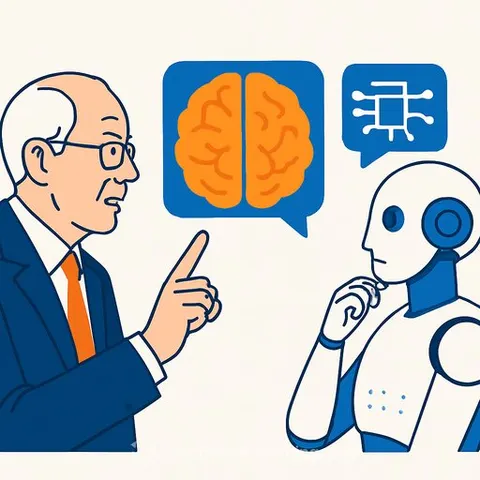
Researchers warned to maintain human judgment as AI tools spread through science
Researchers must not abandon critical thinking when adopting artificial intelligence tools to speed up their work, according to Alison Noble, vice-president of the Royal Society and Technikos professor of biomedical engineering at the University of Oxford.
AI excels at summarizing scientific literature quickly. But researchers still need to verify what the tools produce and understand how to apply those summaries to their own work, Noble said.
"What [AI] is very good at in science is summarising literature," she told Research Professional News. "But you have still got to check the literature, and you have to think about how you use it in the context of doing a literature review."
The warning reflects a broader tension in academic research: tools that promise efficiency gains risk creating a false sense of completeness if researchers treat AI outputs as finished work rather than a starting point.
Literature review remains a core research skill. Researchers who outsource this thinking entirely to AI systems may miss nuances, contradictions, or gaps that human judgment catches. The technology works best as an assistant to human expertise, not a replacement for it.
For researchers adopting these tools, the practical implication is clear: use AI to handle volume, but invest the time saved into deeper analysis and verification rather than moving faster through the same amount of work.
Learn more about AI for Science & Research or explore AI Research Courses designed for working professionals in academic and research settings.