
AI news ·
Rural New Mexico hospital uses AI tool to free doctors from paperwork
A rural New Mexico hospital cut doctors' after-hours charting time by adopting an AI tool that transcribes patient visits directly into health records. One physician now leaves by 5:30 p.m. instead of 7:30.
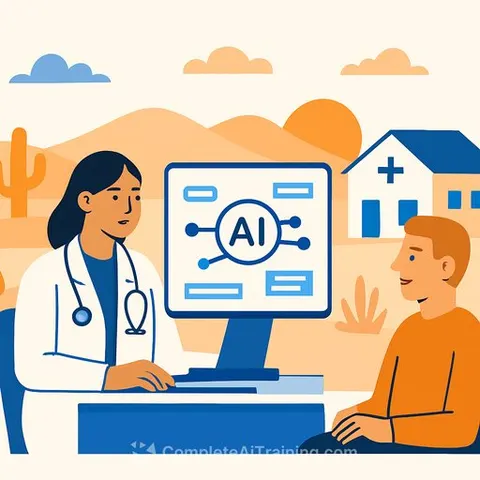
Rural New Mexico Hospital Adopts AI to Reduce Doctor Paperwork
Dr. Peter Jewell sees 20 to 25 patients a day at Artesia General Hospital, a 25-bed facility in southeastern New Mexico. Until recently, that patient load meant staying at the office until 7 or 7:30 p.m. to finish charts.
Two years ago, the hospital adopted Microsoft Dragon Copilot, an AI assistant that records conversations with patients and automatically updates electronic health records. Jewell now leaves by 5 or 5:30 p.m. most days.
More Time With Patients
The technology addresses a practical problem in rural medicine. Jewell treats everything from diabetes and hypertension to seizures and back pain. His patients travel from across the oil-rich region - some from Lovington, Ruidoso, Alamogordo, and Cloudcroft - making each visit count.
When Jewell spent time typing notes into a computer, patients felt ignored. "When you were staring at the computer like this and not looking them in the eye, they feel like you're not listening to them," he said.
The ambient listening system frees him to assess body language, check pain levels, and gauge whether patients understand his recommendations. He can also perform physical exams without interruption.
"It's not making decisions; I'm making all the decisions still. It's just listening," Jewell said.
Accuracy and Consent
The hospital integrated the tool directly into TruBridge, its electronic health records system. Jewell estimates the AI transcription is more accurate than his handwritten notes, though he reviews everything for errors - typically limited to doctor names and missing billing codes.
Artesia General alerts patients at check-in about the AI system. Medical assistants confirm consent before each visit. In thousands of patients Jewell has seen, only one declined the technology.
The adoption reflects broader adoption of speech-to-text tools in clinical settings. AI for Healthcare applications are expanding beyond large urban medical centers into smaller community hospitals.
Burnout and Work-Life Balance
Physician burnout remains a persistent problem in rural medicine. For Jewell, reclaiming personal time matters. "You get burned out really quick as a physician if you don't have that work/personal life balance," he said.
The hospital's experience suggests that administrative automation - not clinical decision-making - may be where AI tools provide immediate value in understaffed rural settings.