
AI news ·
Salesforce launches Agentforce Operations to restructure enterprise workflows for AI agents
Salesforce released Agentforce Operations to convert existing business workflows into structured tasks that AI agents can execute reliably. The platform enforces fixed execution paths rather than letting agents make judgment calls about next steps.
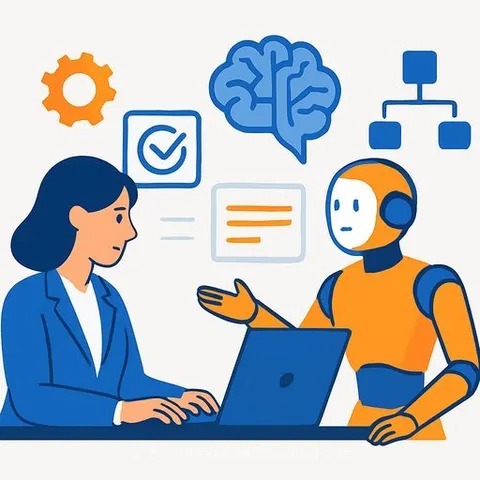
Salesforce launches control system for enterprise AI workflows
Enterprise teams deploying AI agents are discovering a costly problem: their workflows were built for humans, not machines. Tasks fail. Handoffs break. The issue compounds as organizations push agents deeper into back-office systems.
Salesforce released Agentforce Operations to address this gap. The platform converts existing business processes into structured tasks that specialized agents can execute reliably.
The real problem isn't reasoning - it's structure
Most enterprise workflows evolved through years of workarounds. Steps remain loosely defined. Decisions stay implicit. Coordination depends on people knowing what to do next without being told.
When agents encounter these processes, they fail. Even with full access to company data, an AI system struggles if instructions aren't explicit.
Sanjna Parulekar, Salesforce's senior vice president of Product, told VentureBeat that the issue often starts in the requirements document itself. "What we've observed with customers is that a lot of times, the brokenness in a process is probably in your product requirements document," Parulekar said. "When that's uploaded into a product, it doesn't quite work."
Agentforce Operations forces companies to rethink their processes. Users upload existing workflows or select from Salesforce's pre-built Blueprints. The platform breaks them into explicit steps agents can follow deterministically.
How this differs from traditional automation
Most workflow automation tools use probabilistic decision-making - agents or routing systems make judgment calls about what comes next. Agentforce Operations works differently.
The system enforces execution along pre-defined paths. The platform decides what happens next, not the agent. This removes ambiguity and makes processes repeatable.
Parulekar noted that this approach introduces observability through session tracing. Human checkpoints can be built in, making the process transparent and auditable.
The governance challenge ahead
Codifying a workflow doesn't fix a broken one. If a process has flawed steps, encoding it for agents locks that problem in at scale across your organization.
Brandon Metcalf, CEO of workforce orchestration company Asymbl, said the real requirement is clarity about goals. "You have to understand the goal or the agent or human won't complete the task successfully," Metcalf said. "Someone has to manage that outcome that has to be delivered."
This means operations teams need clear ownership. Someone must be accountable for task completion and process evolution as business conditions change.
The bottleneck has shifted. The question is no longer whether agents can reason through tasks - it's whether your workflows are coherent enough to execute. For organizations that built processes around human judgment and institutional memory, that's a harder problem to solve than upgrading to a better model.
Operations professionals considering agent deployment should audit their existing workflows first. An AI Learning Path for Operations Managers can help teams understand how to structure processes for machine execution. For broader context on automation strategies, see AI Agents & Automation.