
AI news ·
Schools struggle to keep pace as students integrate AI tools into everyday learning
Students are already using ChatGPT and similar tools in class, with or without permission. The real risk isn't cheating-it's students skipping the hard thinking that builds lasting skills.
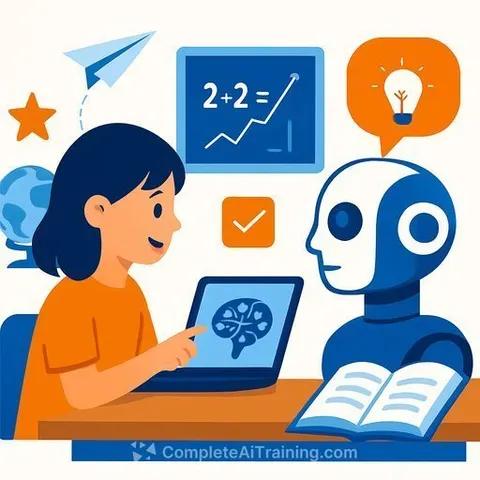
Schools Face a Choice: Adapt to AI or Watch Students Use It Anyway
Students are already using ChatGPT, Claude, and Gemini in classrooms-whether schools officially allow it or not. The question educators face is not whether to stop this. It is whether to guide it.
The instinctive response to AI in education is alarm. Students are cheating. Assignments become meaningless. Learning collapses. But this reaction misses what has actually changed. Students have always sought the fastest path through school. What differs now is capability, not intent. The real question is whether schools can evolve fast enough to teach the skills that matter when AI handles routine tasks.
The Cheating Problem Is Smaller Than the Learning Problem
Students can use AI to generate essays without understanding the material. That happens. But they also use it to brainstorm, summarize readings, and refine arguments-the same way professionals work. The distinction matters.
The actual risk is cognitive offloading. When students skip the difficult parts of learning-the confusion, repetition, and failure that build real understanding-they may produce polished work without developing skill. Writing shows this clearly. The struggle to organize thoughts and find clarity is where learning occurs. If AI replaces that process entirely, students bypass the cognitive foundation needed for independent thinking.
Some Schools Are Building Better Models
Rather than ban AI, forward-thinking educators are redesigning assignments where AI becomes part of the process, not the final product. Students compare outputs across multiple systems, identify errors, critique results, and then create something original-a podcast, presentation, or project that demonstrates understanding.
This shift moves learning from production to thinking. AI becomes a tool for analysis rather than a shortcut.
Another promising use is personalized learning. In a traditional classroom of 20 to 35 students with different abilities and learning speeds, meeting each student where they are is nearly impossible. AI allows teachers to generate customized materials tailored to individual students' levels and interests. This does not replace teachers. It amplifies their reach, freeing them to spend more time with students and less time preparing materials.
The Screen Time Problem Is Real
While AI can enhance learning, it also worsens an existing problem: overexposure to screens. Young children are particularly vulnerable to what educators call "dopamine conditioning." Constant exposure to fast, stimulating digital content can reduce attention span, increase emotional volatility, and make sustained effort harder.
Teachers can identify screen-dependent students. These students often struggle with focus, emotional regulation, and persistence-core skills for learning. The solution is not to eliminate technology. It is to introduce it thoughtfully, at developmentally appropriate stages, with clear boundaries and balance.
Schools That Do Nothing Are Taking the Biggest Risk
Some schools are piloting tools and training teachers. Others are freezing-banning AI or avoiding decisions altogether. Avoidance creates a problem. When schools refuse to engage, AI use goes underground. Students continue using it without guidance, oversight, or ethical frameworks.
Controlled adoption is safer than prohibition. Effective schools run pilot programs, gather stakeholder input, establish clear policies, and iterate. Standing still is not an option.
What Students Actually Need Now
If AI handles more technical tasks, human skills become more valuable. Students need the ability to learn continuously, adapt quickly, and think critically. Communication, resilience, curiosity, and empathy matter more-not less.
These skills are harder to teach and measure. They require real-world practice and interaction, not just digital instruction. There is a growing case for rebalancing education beyond academics. Financial literacy, problem-solving, and independence are the skills that translate across any future, regardless of how technology evolves. These are the same skills once taught in home economics and shop classes-courses that have largely disappeared from modern curricula.
What Parents Should Do
The most important step is not control. It is awareness. Parents do not need to become AI experts, but they should understand what tools exist and how their children might be using them.
Open conversations matter more than strict prohibitions. Ask how kids are using AI. Encourage learning over shortcuts. Help them understand where AI is helpful and where it can mislead. Balance screen time with face-to-face interaction. The skills that matter most are still learned in person.
The Real Question
AI is not breaking education. It is exposing where education was already outdated. If school exists to produce assignments, AI will win. If the goal is to develop thinking, creativity, and human capability, AI can actually help.
The future of learning depends not on whether students use AI. It depends on whether educators teach them how to think with it-without losing the ability to think on their own.
Learn more about how educators are adapting to this shift with our AI for Education resources, or explore our AI Learning Path for Teachers for practical guidance.