
AI news ·
Smart bird feeders use AI to turn backyard observations into global ecological data
Smart bird feeders now automatically identify over 6,000 species and upload sightings to global research databases like eBird. The shift turns backyard hobbyists into contributors to climate and population studies.
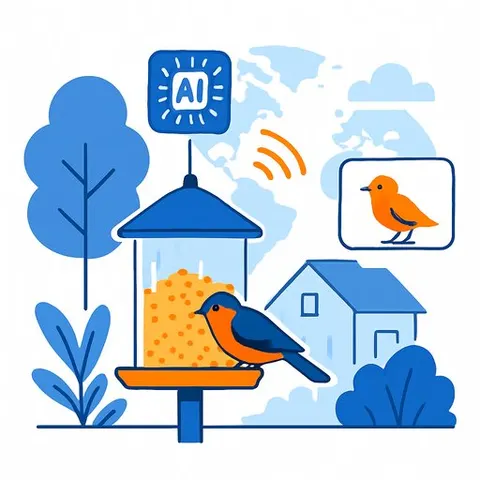
Backyard Bird Feeders Now Collect Scientific Data Automatically
A bird lands on a feeder for a few seconds and flies away. A camera records the visit, identifies the species, and uploads the data to a global research database. What once required expert fieldwork and manual identification now happens automatically in residential backyards.
Systems like Birdfy demonstrate how artificial intelligence can turn casual bird observation into usable ecological data. The technology identifies more than 6,000 bird species by analyzing shape, coloration, and behavior patterns. This reduces human error and accelerates data collection.
How the Technology Works
Birdfy smart feeders use HD and 2K cameras, with some models including night vision for continuous monitoring. The system combines edge computing-which handles basic detection locally-with cloud processing for species analysis. This split approach improves performance while letting users control which data they share.
The feeder automatically records videos and images, maintains a species database, and generates daily, weekly, and monthly activity summaries. Users don't identify birds themselves. The system does it immediately upon detection.
Closing the Gap Between Hobbyist and Researcher
Bird identification historically required patience, practice, and expensive equipment. Many sightings went unrecorded because the barrier to participation was high.
Smart feeders eliminate that barrier. A family in one documented case noticed unusual migrating birds in their garden. The system automatically recorded them and integrated the data into larger research datasets. An apartment dweller recorded a rare urban bird species from a balcony.
Integration with platforms like eBird and iNaturalist allows users to share observations directly with the scientific community.
Real Applications in Ecological Research
Researchers use aggregated backyard data to track invasive species, monitor populations affected by climate change, and understand ecosystem shifts. Individual observations from residential areas contribute to large-scale environmental studies.
The educational value extends beyond research. Children learn through real-time observation. Adults gain a daily break from routine work. Schools use the technology as a teaching tool.
Current Limitations
The system occasionally misidentifies uncommon species. Some features are paywalled. Privacy concerns exist around sharing location and species data online.
These issues are improving as the technology develops, but they remain considerations for researchers evaluating the platform's reliability for specific applications.
Broader Expansion in Nature Observation
Birdfy is one example within a growing field. AI tools now exist for plant observation, insect monitoring, and broader wildlife tracking. The trend reflects a shift toward distributed data collection-turning everyday spaces into research stations.
Balconies, rooftop gardens, and backyards now generate ecological data that previously required dedicated field teams. The change is structural: people move from spectators to participants in scientific work.
For professionals in research and science, understanding how AI automates data collection at scale matters. These systems reduce costs, increase sample sizes, and democratize access to ecological research. Learn more about AI for Science & Research to see how similar tools apply across disciplines.