
AI news ·
Sorenson launches AI tools to translate sign language without a human interpreter, but experts raise concerns
Sorenson Communications has built two AI tools that translate American Sign Language in real time, without a human interpreter. Experts warn the avatar lacks facial expressions, a core part of ASL meaning.
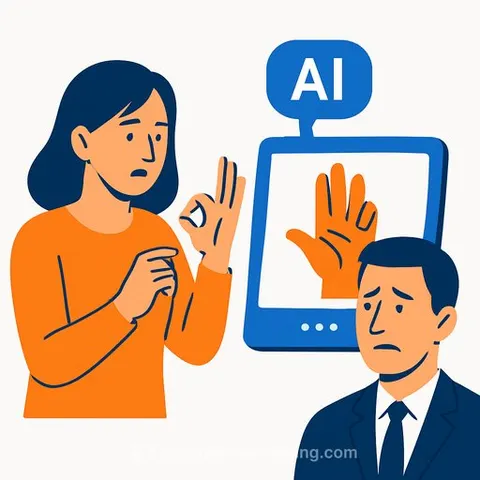
Sorenson Unveils AI Sign Language Translation Tools, But Experts Raise Access Questions
Sorenson Communications has released two artificial intelligence tools designed to translate American Sign Language in real time without a human interpreter. One converts signing into English text. The other translates written text, spoken word, or video into ASL using a digital avatar. The company expects to bring both tools to market within weeks.
The tools target everyday interactions in stores, restaurants, airports, and similar settings where Deaf Americans typically lack immediate access to interpreters. Sorenson positions the technology as faster than writing, the current workaround for many Deaf people in these situations.
Adam Munder, Sorenson's head of insights for AI Sign Language translation, said he did not expect to see this technology developed in his lifetime. Kaj Van De Loo, general manager of AI Sign Language translation, emphasized the company's focus on integrating the tools into existing hardware and real-world environments.
Accessibility Concerns Emerge
Experts at major institutions have flagged significant limitations. Naomi Caselli, co-director of the Deaf Center at Boston University, raised the question of consent - whether Deaf people can choose whether to use the technology or opt for traditional interpreters instead.
Katie McCarthy, outreach and support services program coordinator at the Deaf and Hard of Hearing Program at Boston Children's Hospital, identified a technical shortcoming: the avatar lacks facial expressions. She questioned whether this limitation would make the avatar viable for real-world interpreting scenarios, since facial expressions carry essential meaning in ASL.
The nuance of sign language - including facial expressions, body positioning, and contextual meaning - remains difficult for AI systems to capture accurately.
Next Steps
Sorenson said it plans to refine the technology based on feedback and explore additional applications. One possibility: using the avatar as an alternative to traditional closed captioning.
For PR and communications professionals, this development raises practical questions about accessibility in client-facing operations. Understanding both the capabilities and limitations of these tools will matter as more organizations consider deploying them. Learn more about how AI for PR & Communications is reshaping how companies approach accessibility and inclusion.