
AI news ·
South Africa delays national AI policy to 2027 after draft contains fabricated academic references
South Africa scrapped its draft national AI policy after fabricated academic citations were found in the document, likely AI-generated. Two officials are suspended and a new framework won't be ready until January 2027.
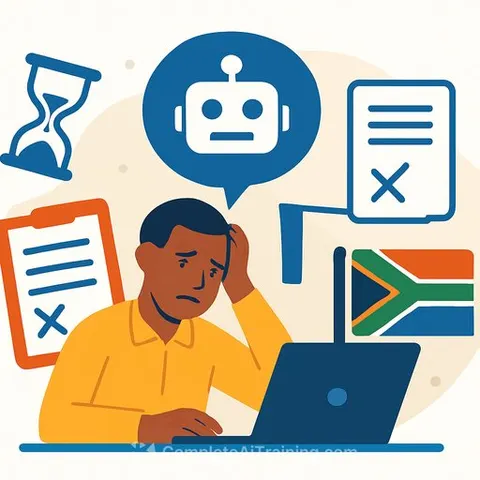
South Africa's AI Policy Collapses Over Fabricated References
South Africa withdrew its draft national AI policy after discovering fabricated academic citations in the document, some suspected to have been generated using AI tools. The government has delayed the framework until January 2027 while an independent panel rebuilds it from scratch.
Communications Minister Solly Malatsi told parliament on Tuesday that the Department of Communications and Digital Technologies failed to detect the problems before news outlet News24 exposed them publicly. He called it a "massive oversight" and acknowledged inadequate disclosure about AI tool use during drafting.
Two officials have been suspended pending investigation. Director-General Nonkqubela Jordan-Dyani said withdrawing the document was necessary to restore public confidence.
A Broader Governance Problem
The scandal exposes a growing risk: governments trying to regulate AI are increasingly vulnerable to the same technology's flaws. As authorities worldwide rush to build rules around generative AI, they face the same hallucinations, fabricated information, and weak verification systems they're supposed to govern.
The original draft, approved by Cabinet in March and published for public comment in April, was designed to position South Africa as Africa's leading AI innovation hub. It addressed ethics, jobs, inequality, privacy, and governance concerns.
The collapse comes at a difficult moment. South Africa hosts some of the continent's biggest banks, telecom companies, and technology firms-many already deploying AI for fraud detection, customer service automation, and financial analytics. Yet the country still lacks formal national AI governance.
What Comes Next
A seven-member independent review panel, chaired by Benjamin Rosman and including AI researcher Vukosi Marivate and cyber lawyer Lufuno Tshikalange, will audit the withdrawn framework and rebuild it.
The revised policy is expected to return to Cabinet by November 2026 before public consultation in January 2027.
The delay leaves South Africa without formal AI policy while the European Union's AI Act sets global compliance standards and the United States, China, Britain, and Gulf states pour billions into AI infrastructure and regulation.
The Institutional Challenge
The incident underscores a wider problem facing many African governments: regulating advanced technologies while still building technical expertise and oversight capacity inside public institutions.
For government officials involved in policy development, the stakes are clear. AI Learning Path for Policy Makers addresses how to build governance frameworks with proper verification and oversight. Understanding AI for Government systems is now essential for anyone drafting technology policy.
South Africa's experience is a warning: institutions trying to balance innovation, regulation, and credibility need stronger controls over the tools they use to build those controls.