
AI news ·
South Africa's AI skepticism gives communicators an edge as audiences reject synthetic content
South African audiences are quick to spot manufactured content, and that skepticism is now a strategic asset. Brands cited in AI search responses earn 35% more organic clicks than those that aren't.
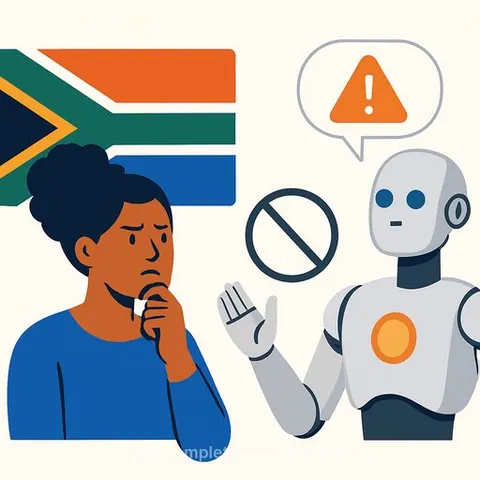
South Africa's Skepticism About AI May Be Its Biggest Advantage
South African audiences are unusually alert to manufactured content and quick to call it out. That skepticism, combined with shifting search behavior driven by AI, is creating an advantage for communicators who understand how the market has changed.
The ground has already shifted. OpenAI now offers ad-supported ChatGPT globally. Pew Research Center data shows only 8% of users who see an AI-generated summary click through to the original website. The logic of earned media-publish, rank, get found-is rewriting itself in real time.
The Trust Problem With AI-Generated Ads
Research by TBWA and Ideally identified what they call a synthetic authorship penalty. When audiences learn an ad was made using AI, trust drops, purchase intent falls, and brand recognition scores decline. This is not skepticism about the technology itself.
The problem is what AI use signals about intent. Telling consumers a machine wrote the message reads as cost-cutting, not innovation. Ads appearing inside AI platforms-where the value exchange is clear-tend to be accepted without the same backlash.
Visibility Now Means Being Cited
A 2025 study by Seer Interactive found organic click-through rates have dropped by as much as 61% for searches returning AI-generated summaries. Separately, Bain research shows 60% of Google searches end without any click to a website.
Success is no longer measured by whether content ranks. It is measured by whether content gets cited inside AI responses. Brands cited in AI-generated answers earn 35% more organic clicks and 91% more paid clicks than those that are not.
This requires a shift in strategy. Content must be authoritative, clearly structured, and directly responsive to what audiences search for. Optimization for AI visibility is now as important as traditional search optimization.
AI as a Multiplier, Not a Shortcut
South African brands that win will not be those cutting costs with AI. They will be those using it to sharpen the human insight that local audiences actually respond to.
Content that strips cultural nuance or replaces genuine creativity with automation fails commercially. South African audiences recognize hollow content quickly. The reputational cost of that backlash outweighs whatever was saved in production.
The competitive advantage belongs to communicators who treat AI as a capability multiplier. That means using AI to handle routine production work while preserving the human judgment and cultural knowledge that drive trust.
Skepticism Is Part of Adoption, Not Rejection
South Africa did not fall behind when social media marketing faced skepticism. Influencer culture was questioned. Programmatic advertising sparked debate. Resistance was not rejection-it was part of the process.
In every era of disruption, the same rule applies. Adapt or become irrelevant. The choice for South African communicators is not whether to engage with AI. It is whether to engage on your own terms or someone else's.
For PR and communications professionals looking to understand how AI is reshaping the industry, resources on AI for PR & Communications and AI for Social Media offer practical guidance on strategy and implementation.