
AI news ·
South Korea funds AI curriculum development at 20 universities with up to 300 million won each per year
South Korea is funding AI curriculum development at 20 universities, offering up to 300 million won per school annually for two years. The program targets non-engineering students and requires schools to share course materials.
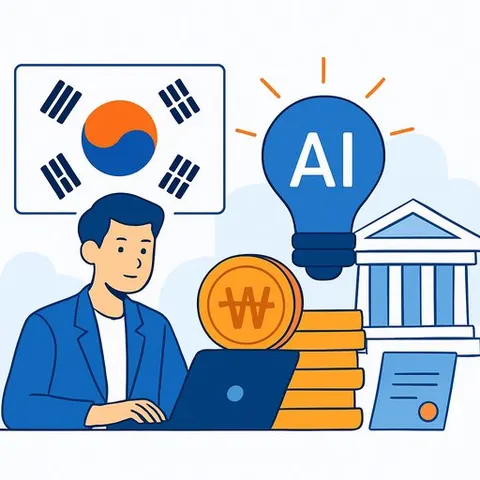
South Korea Funds AI Curriculum Development at 20 Universities
South Korea's Ministry of Education selected 20 universities to design and teach AI courses across all majors, allocating up to 300 million won per institution annually for two years. The program aims to build baseline AI literacy among undergraduates outside engineering departments and train faculty to teach the material.
The selected schools will develop two types of courses: broad liberal arts introductions to AI concepts and domain-specific micro-credentials that embed AI into existing majors like business, humanities, and social sciences. Universities must also create plans to share their curricula with other institutions.
Who's Involved
The 20 participating universities span South Korea geographically and include regional institutions, women's colleges, and foreign language schools:
- Duksung Women's University
- Dongguk University
- Seoul Women's University
- Sejong University
- Yongin University
- Hankuk University of Foreign Studies
- Konkuk University (GLOCAL)
- Kyungwoon University
- Kyungpook National University
- Hanbat National University
- Dongguk University (WISE)
- Tongmyong University
- Dongshin University
- Dong-Eui University
- Busan University of Foreign Studies
- Songwon University
- Soonchunhyang University
- Jeonju University
- Changshin University
- Halla University
The program deliberately excludes nine flagship national universities and 10 AI-focused schools that receive separate funding from the Ministry of Science and ICT. This structure spreads resources across a broader set of institutions rather than concentrating them at research centers.
What Universities Must Deliver
Selection committees prioritized three criteria: feasibility of curriculum design, instructor training strategies, and concrete plans for sharing materials with other universities. Agreements will be finalized through June after an appeals process.
For educators, the program signals a shift in how institutions approach AI teaching. Rather than treating AI as a specialized computer science topic, the curriculum model positions it as foundational knowledge for students in any field.
What This Means for Educators
The initiative creates demand for teaching frameworks, datasets, assessment rubrics, and instructor training materials designed for non-specialists. Educators outside engineering departments will need resources that explain AI concepts without requiring advanced mathematics or programming background.
The emphasis on curriculum sharing also suggests South Korea expects institutions to collaborate rather than compete on AI course design. Whether universities actually open-source their materials and how interoperable those resources prove will determine the program's practical impact.
Learn more about AI for Education or explore the AI Learning Path for Teachers to understand how educators can integrate AI concepts into their teaching practice.