
AI news ·
Teachers remain essential for curiosity and critical thinking despite AI tools, educators say
AI tools answer student questions instantly, but teachers build the curiosity and critical thinking skills that AI can't replicate. Schools find that AI handles routine tasks, freeing teachers for the human work of shaping how students think.
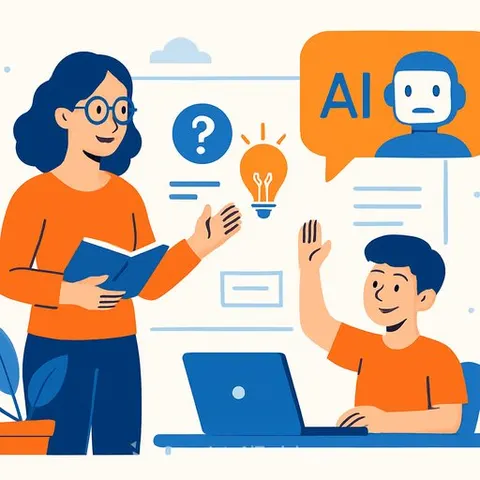
Teachers Still Needed in the AI Era
Artificial intelligence tools deliver instant answers to student questions. Yet educators say teachers remain essential to education because they cultivate curiosity, motivation, and critical thinking-skills that AI cannot replicate.
The distinction matters for schools and education professionals weighing how to integrate AI into classrooms. AI excels at providing information quickly. Teachers shape how students think about that information.
What Teachers Do That AI Cannot
A student asking an AI tool "What is photosynthesis?" receives a factual answer within seconds. A teacher asking the same question might probe further: Why does this process matter? How would life on Earth change without it? What questions does this raise for you?
Teachers diagnose why a student struggles with a concept. They adjust their approach based on what they observe in a classroom-a confused expression, a question asked differently than expected, a pattern of mistakes. This responsiveness requires human judgment developed through experience.
Motivation and curiosity develop through relationship. Students work harder for teachers they trust. They take intellectual risks in classrooms where they feel safe to be wrong. These conditions emerge from sustained human interaction, not from interfaces.
The Practical Reality
Schools implementing AI tools report that teachers become more valuable, not less. Teachers spend less time grading routine assignments when AI handles that work. They spend more time in one-on-one conversations about student thinking.
The role shifts rather than disappears. Teachers who understand how to use AI tools effectively can personalize instruction at scale-assigning AI-generated practice problems tailored to individual student needs, then using freed-up time to discuss misconceptions.
For education professionals, this means developing new skills alongside AI literacy. Teachers benefit from learning how AI tools work, what they're good at, and where they fall short. Understanding these boundaries helps educators use AI as a tool rather than a replacement.
Next Steps for Educators
Schools and teachers exploring AI integration should focus on how the technology extends human teaching, not replaces it. Consider which tasks AI handles well-grading, generating practice problems, providing instant feedback-and which remain human work.
Professional development matters. Teachers who receive training on AI tools and pedagogy integrate them more effectively than those handed a tool without context.
For educators looking to build expertise in this area, AI Learning Path for Teachers covers classroom tools, lesson planning, and student engagement with AI. AI for Education resources provide additional strategies for classroom implementation.
The evidence suggests that AI in education works best when it augments teacher capability rather than attempting to replace it. The question for schools is not whether to use AI, but how teachers can use it effectively.