
AI news ·
South Korea's National Cancer Center develops AI platform to predict drug candidate success before clinical trials
South Korea's National Cancer Center is building an AI platform to predict drug success before clinical trials begin. The system will train on cell, organoid, and animal data to flag failing candidates early and cut drug development costs.
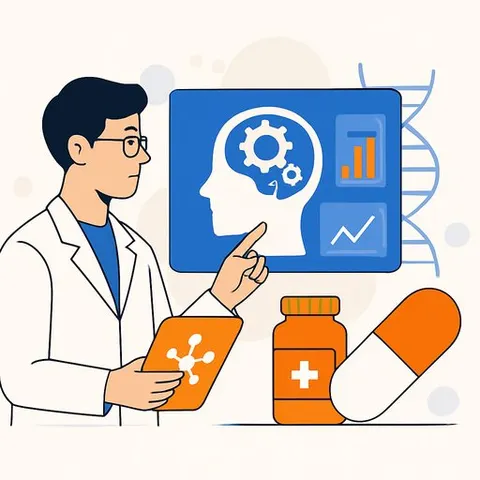
Cancer Center Develops AI to Predict Drug Success Before Clinical Testing
The National Cancer Center has launched a research initiative to build AI technology that predicts whether drug candidates will succeed before entering expensive clinical trials. Researchers led by Dr. Shin Dong-kwan will develop a Biological World Model-an AI platform that integrates experimental data from cell lines, organoids, and animal models to forecast drug responses.
The problem the project targets is straightforward: most drugs that work in laboratory cells fail when tested in animals or humans. This gap between lab results and real-world outcomes wastes time and money, with only a small fraction of drug candidates ultimately reaching patients.
Bridging the Lab-to-Patient Gap
The AI system will function as a virtual testing platform. It will learn from cellular experiments and predict how drugs will perform in more complex biological environments-essentially translating results across different biological systems.
Human biology introduces variables that lab dishes cannot replicate: tumor microenvironments, immune responses, and cell-to-cell interactions all affect drug efficacy. The research team will treat each experimental system-cells, organoids, animals-as distinct biological worlds and train AI models to translate drug-response data between them.
The platform will do more than predict whether a drug works. It will identify which genes activate or suppress after drug exposure, using generative AI and LLM technology to model intracellular changes.
Early Detection and Personalized Treatment
If successful, the technology could identify failing drug candidates early and accelerate selection of promising therapies. It could also support precision medicine by predicting which treatments benefit individual patients.
Dr. Shin said: "Predicting whether a drug that works in the laboratory will also be effective in actual patients is one of the most difficult challenges in drug development. Through this research, we aim to establish a foundational technology that can improve drug-development success rates and enhance the efficiency of cancer therapeutics research."
Co-investigator Professor Kim Yun-hee emphasized the value of patient-derived organoids and animal models. "By validating AI-predicted drug responses in patient-derived models, we can improve reliability and ultimately contribute to identifying more effective personalized treatment options for cancer patients," Kim said.