Human & AI Workforce Management: The New Staffing Crisis Nobody Knows They're In
The standard customer service team is gone. We now run blended operations where humans and AI share the queue, trade context, and inherit each other's mistakes.
That shift brings real gains: lower handling times, less burnout, and better data. It also creates a new management problem: staffing becomes orchestration (AI for Operations).
Adoption is moving fast. Salesforce projects a 327% jump in AI agent use, and Slack's Workforce Lab expects teams where AI assistants outnumber people. Once that happens, "headcount" isn't the plan anymore. Capacity is shared across humans and machines.
Why Traditional WFM Models Break in AI-Supported Environments
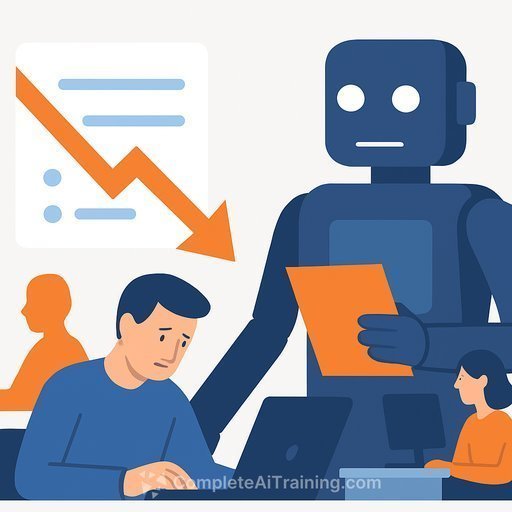
Old WFM assumed people did all the work and volume followed patterns. That collapses when AI takes first pass on intent. Simple questions vanish, and agents see a denser mix of exceptions, policy-heavy cases, and emotionally charged issues.
AI doesn't remove demand. It redistributes it. You'll see clean containment followed by sudden bursts of escalations when confidence dips, routing misses, or a model update changes behavior.
Training also suffers. AI eats the easy reps that build intuition. New hires jump straight into complex work, ramp slower, and carry more emotional load. Treating humans and AI as separate layers is exactly why the old models crack.
From Headcount to Blended Capacity
Once AI takes real volume, planning shifts from "how many people do we need?" to "how do all contributors share the load?" AI is a worker with throughput limits, quality constraints, and failure patterns. Humans inherit whatever it can't finish.
Be explicit about the boundaries of your AI agents. What they can and can't handle depends on:
- Confidence thresholds
- Latency and rate limits
- Drift after model updates
- Knowledge gaps
- Risk rules
Each one can trigger unplanned handoffs. If you don't model these, your staffing plan will always be late to the party.
Model AI Capacity, Throughput, and Fallback Behavior
Treat AI like an actual team member. Give it a profile the same way you would a new hire-just with different inputs.
- Throughput: tasks per hour, concurrency, and how speed changes under load.
- Quality: containment rates, accuracy bands, sentiment impact, and the messy cases that routinely escape automation.
- Confidence thresholds: when the system steps back and flags a human.
- Operating costs: API usage, time-outs, and compute spikes.
- Constraints: downtime, throttling, version updates, and drift patterns.
The hardest part is fallback behavior. AI failures arrive in clusters, not trickles. A minor hallucination or intent misclassification can trigger a run of escalations in minutes. Build your plan around those spikes, not averages.
Forecasting Blended Workloads and Escalations
Forecasting is now a joint exercise: predict how humans and AI will trade work across the day. Expect calmer stretches followed by dense pockets of exceptions.
- AI activity: containment, confidence dips, drift, and what the system does when uncertain.
- Human activity: intensity of escalations, emotional load, and the variability of customers arriving mid-journey after trying the bot.
Escalations are patterned, not random. Watch for:
- Confidence cliffs (AI hands off when unsure)
- Policy triggers (refunds, regulated requests, edge-case IDs)
- Misrouted intents (customer already annoyed)
- Repeat attempts (multiple retries before giving up)
Predictive alerts on sentiment shifts and retry spikes help you get ahead of the wave. If your forecast ignores AI signals, it's outdated at launch.
Update the Skills Map for Human-AI Teams
As AI covers up to 80% of routine queries, the job changes. The early reps that built muscle memory are gone. What's left is context-heavy, emotionally loaded, and harder to standardize.
Your most valuable people are the ones who can:
- Read a customer's emotional state after the bot set a rough tone
- Spot drift and quietly steer the conversation back on track
- Make sense of half-complete context from automation
- Use co-pilot suggestions without becoming dependent
- Switch between empathy and analysis on demand
Hire and train for system awareness, judgment, and emotional intelligence. Super-agents thrive because they know where humans add unique value-and where AI should carry the load.
Scheduling for a Blended Workforce
Once AI handles a real slice of interactions, the day develops odd rhythms. Long periods of calm give way to sharp clusters of escalations. Traditional schedule templates struggle here.
Add new time blocks to the roster:
- AI oversight time for drift checks and odd patterns
- Recovery blocks after heavy escalations
- Continuous learning windows for fast-changing co-pilots
- Micro-shifts to absorb sudden swings in containment
- Shared queue moments to exchange context with AI agents
Coverage matters, but so does survivability. Make sure humans can perform when the system hands back complex work at unpredictable times.
Trust, Oversight, and Guardrails
Governance gets serious when systems can change behavior after an update. One hour the AI nails refunds, the next it floods the queue with handoffs. You need checks and balances that move as fast as the stack.
- Clear rules for what AI may say or decide
- Guardrails for handoffs and second attempts
- Monitoring that catches anomalies early
- A lightweight way for agents to flag "something feels off"
Customers need a path to a human. Agents shouldn't take the blame for upstream model choices. If you need a framework baseline, see the NIST AI Risk Management Framework.
New Playbooks You Can Deploy This Quarter
- Map the real workload: Pull transcripts, bot logs, and escalation notes. Compare intents and outcomes to spot gaps.
- Model AI capacity like a worker: Throughput, accuracy bands, confidence dips, and failure triggers.
- Rewrite the schedule: Add drift checks, recovery time, and fast handoff rules.
- Update the skills map: Blend EQ, system awareness, and judgment. Route tougher escalations to those ready for them.
- Build a steady governance layer: Lightweight, consistent, and visible to the floor.
- Pilot small, measure honestly, scale slowly: Track resolution quality, agent strain, recontact rates, and sentiment shifts.
For managers running AI-enabled workstreams, the AI Learning Path for Project Managers offers practical frameworks for modeling blended capacity and rewriting schedules.
What This Means for Leaders
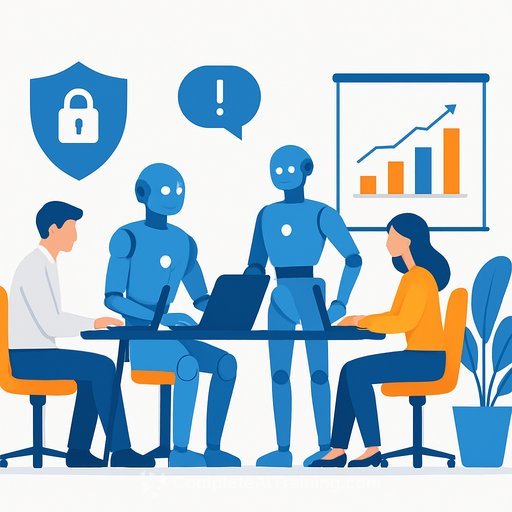
Blended operations are already here. Once AI takes real volume, demand shape changes, escalations hit harder, and skills need a refresh. The answer is to treat AI as a contributor with strengths and limits-not a cure-all.
When people and systems share context instead of fighting for control, everything gets easier: cleaner escalations, steadier queues, fewer surprises. Leaders looking for governance and leadership frameworks can consult the AI Learning Path for CIOs. If you want structured support for upskilling managers and teams on human-AI operations, explore Complete AI Training: Courses by Job.
Your membership also unlocks: