AI-Supported Customer Support: What 2026 Demands
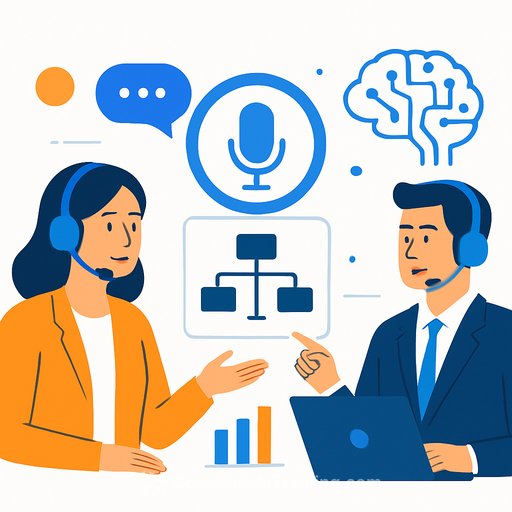
Agentic AI is moving from concept to production in support operations. The teams that win will invest in human oversight, clear ownership, and real-time visibility into what AI is doing. That mix lets you scale automation without trading away quality or trust.
Hugo's clients see the strongest results when accountability is defined early and humans stay close to live signals. Efficiency improves, teams perform better, and customers get outcomes they can trust.
The Gap That Creates Operational Risk
AI can classify tickets, draft replies, and flag anomalies. But it still can't do three things that matter most in customer-facing work:
- Assess risk when situations fall outside its training data
- Make judgment calls in sensitive or unclear cases
- Take accountability for outcomes
That's where risk piles up. In 2026, advantage won't come from "more automation." It will come from teams built to supervise, intervene, and own the systems they use.
Why Workforce Design Matters More Than Tooling
Across support, trust and safety, and digital operations, the failure point is often governance. As one leader put it, "With agentic AI, the failure point is often governance, no one in the workflow has the authority or context to catch its mistakes."
It's a familiar pattern: agents get AI outputs without context to judge risk, ownership defaults to whoever is closest, and safety teams only hear about issues after a customer does. Clear ownership, defined escalation, and human oversight keep operations safe and effective. Without them, automation creates friction instead of removing it.
Start With Workforce Clarity Before Workflow Automation
Lock down these questions before you scale a single bot:
- Who owns the system?
- Who has the authority to intervene?
- When do humans step in?
- What decisions are off-limits to automation?
Narrow Scope To Scale Safely
Progress comes from focus, not expansion:
- One workflow
- Clear guardrails
- Human review where risk exists
- Expand only after quality holds
Design Choices That Reduce Risk Fast
- Start with one high-volume, low-ambiguity workflow (e.g., order status, password resets). Monitor before expanding.
- Make escalation rules explicit so teams know exactly when to intervene.
- Define triggers and sentiment shifts, and surface them in the workflow.
- Show confidence and source info with every AI suggestion so humans can judge risk quickly.
- Keep live signals and interventions in one place so everyone stays aligned.
- Assign clear ownership for model performance, data quality, incident response, and prompt/instruction updates.
- Test edge cases regularly. Cultural nuance, regional policy differences, and novel complaint types are where AI is weakest and human review matters most.
What This Looks Like Inside A Support Organization
The strongest programs tie AI to a specific purpose, give agents visibility into what AI is doing and why, and keep human authority at every decision point with real consequences. Teams pair automation with trained operators who enforce policy and protect quality standards.
Before go-live, leaders should answer four baseline questions:
- Are legal, privacy, and compliance requirements documented and communicated to frontline teams?
- Is there a documented rollback plan, and are approvals for system changes in place?
- Are specific people (not just teams) assigned to manage moderation, escalation, and oversight?
- Are you measuring customer outcomes like resolution quality, trust signals, or CSAT impact, or only throughput and deflection?
Leaders who budget for governance, clean handoffs, and operator training raise the odds that agentic systems improve experience and protect the business.
How Agent Roles Change
As automation handles repetitive work, agents shift to what humans do best: working through ambiguity, managing escalation, reading tone and cultural context, and making judgment calls. That's a better use of existing talent and a direct path to better customer outcomes.
Strong guardrails make automation work. The companies that scale AI well build teams that know when to trust the system-and when to step in.
Practical Next Steps
- Pick one workflow. Write the guardrails. Define the escalation rules. Launch small.
- Expose confidence scores and sources in the agent UI. Require human review for medium/high risk.
- Centralize live signals: customer sentiment, policy flags, edge-case markers.
- Name accountable owners for model health, data quality, incidents, and instruction updates.
- Run monthly edge-case drills. Track errors caught pre-customer and post-customer.
- Report impact with two lenses: quality (CSAT, FCR accuracy, trust signals) and efficiency (AHT, deflection, cost per resolution).
Helpful Resources
- NIST AI Risk Management Framework for practical guidance on risk controls, measurement, and governance checkpoints.
- AI for Customer Support for courses and playbooks on deploying AI in support with guardrails, ownership, and live-review workflows.
Editor's Note: This article was created in partnership with Hugo Inc.
Your membership also unlocks: