
AI news ·
SZA calls musicians using AI 'disgusting' and warns against training models on Black artists
SZA accused Suno of training its AI on Black musicians' work without consent, alleging Diplo holds equity in the company whose $400 million funding round included music-industry investors.
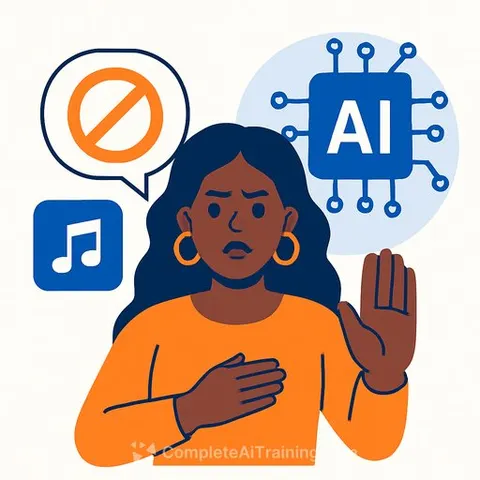
SZA publicly condemned musicians who use AI music generators on Saturday, singling out Suno and alleging producer Diplo holds equity in the company while training its models on Black artists' work. The Instagram posts mark one of the most direct attacks yet from a major artist against the technology reshaping the economics of songwriting and production.
The accusations against Suno and Diplo
SZA posted on her private "notmusicatalliswear" Instagram account that Suno trains on "the best and brightest black minds of writers and producers." She wrote: "We make up 13% of the American population yet influence the world w our sound and perspective. I AINT HEARD A WHITE AI SONG YET…We have no protection in legislature medical or creative. The easiest to steal from. DO NOT GIVE AWAY YOUR VIBRANIUM !!! DO NOT TRAIN AI W YOUR GENIUS."
On her main Instagram account, SZA claimed a search for her name showed AI models had been trained on 238 of her songs. "If your a musician and you support this degenerate shit ? Your DISGUSTING and there's NOTHING YOU COULD EVER SAY TO ME TO MAKE THIS OKAY," she wrote.
A Suno spokesperson declined to comment and pointed to a LinkedIn post from chief product officer Jack Brody, who said the company's training metadata does not include artist names, its models cannot replicate training material, and Suno is improving impersonation detection. Diplo's representative did not respond to requests for comment. It remains unconfirmed whether Diplo is a Suno investor, though Suno CEO Mikey Shulman said "some of the best artists, producers, songwriters and people from across the music industry" contributed to its $400 million investment round.
An industry split on AI
SZA's stance reflects a widening divide among musicians. Jack Antonoff last month called those who make music with AI "godless whores" and "bad actors" that "will willingly reveal themselves through slop." On the other side, producers Will.i.am and Timbaland have invested in AI companies. Diplo himself said in April that "there's no fighting AI" and that he no longer needs human voices for his tracks because "I can get the best voice from AI."
Sony Music, which owns SZA's label RCA Records, is in active litigation against Suno and competitor Udio. Warner Music Group and Universal Music Group have settled their lawsuits against the music generators - settlements that prompted the American Federation of Musicians to sue the labels in turn. Suno is currently testing a WMG-backed model.
Diplo's position: adapt or quit
Diplo has been blunt about where he stands. "The customer and accessibility is what's always going to be triumphant," he said. "You're never going to be like, 'I'm going to choose the artistry and the hard work.'" In a follow-up post on X, he told artists to "adapt or just like give up and become an uber driver until everyone has a waymo." He added: "there will always need a human mind and touch because ai will never suffer from bipolar disorder and autism like me and other creative people."
For writers and songwriters watching this unfold, the conflict cuts to the core of how creative labor is valued. The AI Learning Path for Vocal Artists & Songwriters addresses these tensions directly, offering guidance for professionals navigating a market where platforms can generate lyrics and melodies trained on catalogues without consent or compensation.
Why this matters for writers
SZA's argument is fundamentally about intellectual property and the absence of legal guardrails. When she says "the easiest to steal from," she names a fear that working writers share: that AI companies will ingest decades of work, build competing products, and leave creators with no recourse. The legal fights between labels and AI firms will set precedents that affect not just musicians but anyone who writes for a living.
Diplo's counterpoint - that markets prioritize speed and cost over craft - is not a prediction. It is already the logic driving enterprise adoption of generative AI. Writers who understand how these models are trained and what protections exist (or don't) will be better positioned than those who ignore the shift. Resources like AI for Writers help professionals build that understanding without the hype.