
AI news ·
Taylor Swift's trademark strategy offers new model for protecting celebrity identity from AI, experts say
Taylor Swift's new trademark filings suggest celebrities are moving beyond copyright to protect against AI voice cloning and deepfakes. Trademark protection can last indefinitely, making it a stronger long-term tool than copyright's fixed term.
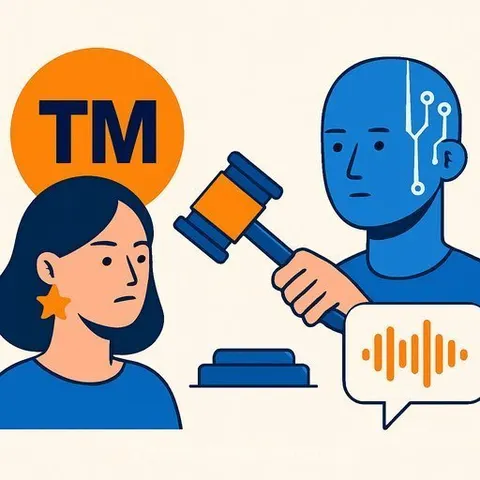
Taylor Swift's Trademark Strategy Points to New Legal Front in AI Rights
Taylor Swift's recent trademark applications signal a shift in how celebrities are fighting unauthorized AI content. Rather than relying solely on copyright, her filings suggest a longer-term legal strategy that could reshape protections for artists against voice cloning and deepfakes.
The distinction matters. Copyright protects for the life of the author plus 70 years. Trademark protection, by contrast, can last indefinitely as long as the mark remains in use and defended.
Cayce Myers, a media law professor at Virginia Tech, says the move addresses a genuine problem. "AI amplifies copyright concerns because of its ease in generating new content through voice cloning and deepfakes," Myers said. "The accessibility of this technology makes trademark concerns particularly troubling for artists who rely on their voice for revenue and licensing."
For PR and communications professionals, the implications are direct. If trademark becomes the preferred legal tool for protecting voice and identity, it changes how brands and talent approach licensing agreements, talent representation, and reputation management.
Technical Safeguards Have Limits
Julia Feerrar, a digital literacy expert at Virginia Tech, cautioned against over-relying on technical fixes alone. Some AI tools already refuse prompts to generate images of real people, but these guardrails are inconsistent.
"Watermarks can be destroyed and detection tools have proven unreliable," Feerrar said. "While technical safeguards may be pieces of the puzzle, they have shortcomings, especially for wide public use."
This matters for communications teams managing brand reputation. If detection and prevention tools can't be trusted, legal frameworks become more critical.
Individual Literacy Isn't Enough
Feerrar stressed that audiences need better skills to identify misleading content. But she also noted a hard limit: individual approaches alone won't solve the problem.
"We all can be vulnerable to AI-generated and other misleading content," she said. "Law and policy implications should come into play."
For communicators, this means the responsibility extends beyond your organization. Expect regulation to follow as AI-generated content becomes harder to distinguish from authentic material.
What This Means for Your Industry
Swift's trademark strategy opens a new legal avenue that other high-profile figures will likely pursue. For PR teams managing talent or building brand protection strategies, understanding trademark law alongside copyright becomes essential.
The gap between legal protections and technical reality is widening. Until detection and prevention tools become reliable, trademark and copyright will remain the primary defenses-and they have their own limitations.
PR professionals should begin advising clients and employers about trademark registration for distinctive phrases, visual marks, and vocal characteristics. The legal landscape is shifting faster than the technology can keep pace.
Learn more about AI Voice Modulation & Voice Cloning Courses to understand the technical capabilities your organization may face, or explore AI for PR & Communications to understand how AI impacts brand strategy and reputation management.