AI and the workforce: What Long Island employers should know
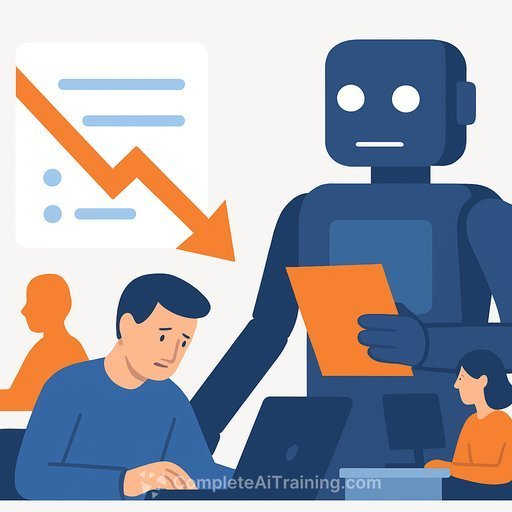
AI adoption is accelerating, and HR teams on Long Island are feeling the squeeze. Entry-level roles are thinning. Veteran employees still carry the context, nuance, and judgment businesses need. The risk is obvious: neglect either group, and your talent pipeline breaks.
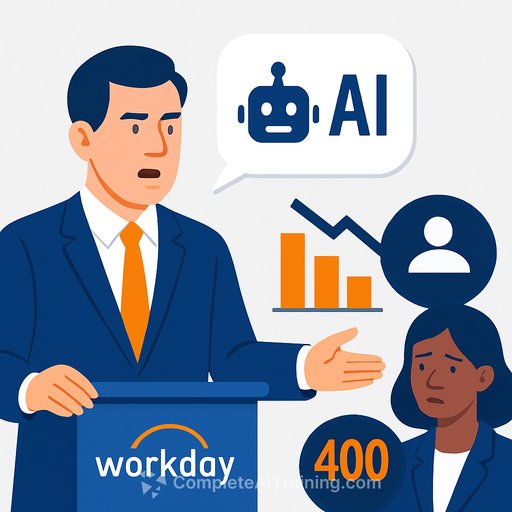
Jim McCann, founder and chairman of 1-800-Flowers and chairman of Worth Media Group, has been pushing this discussion into the open. At Techonomy 25, an AI summit in Manhattan, he asked a simple question with big consequences for HR: What should the next generation study-and how should employers prepare to hire and grow them?
What leaders are saying about the next wave of work
Andrew Yang told attendees that college will matter less for the major and more for leadership experiences, relationships, and socialization. The catch: AI is swallowing many entry-level tasks-the very roles that train new hires. If the bottom of the ladder shrinks, the whole system gets shaky.
Michael Rogers argued that education has to start much earlier-and focus on what's uniquely human: empathetic communication, open-ended problem solving, and real collaboration. "There is some magic about having humans all in one room, the whiteboard and a mission," he said. In his view, AI will be part of that room, and people must learn how to work with it.
One Fortune 500 HR leader he cited is already piloting a remedial social skills class for new grads-how to start a conversation, read the room, and close a discussion with intention. Within five years, Rogers expects to see chief AI officers and HR leaders fluent in human-to-bot issue resolution.
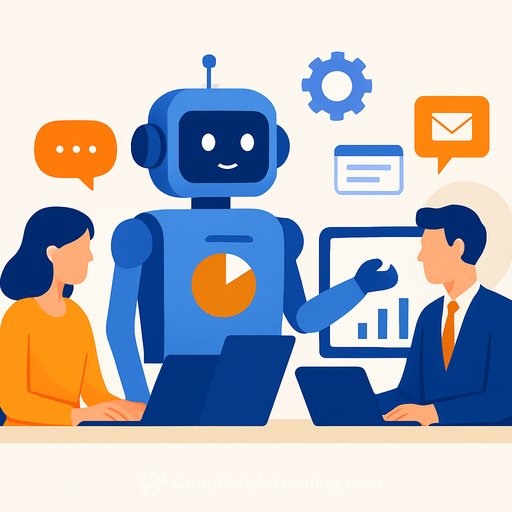
Kevin Chung, chief strategy officer at Writer, expects thousands of AI agents ("digital workers") to be managed by recent grads. That requires a new skill set: assigning tasks to agents, reviewing outputs, and building feedback loops-at scale.
Tami Rosen of Pagaya framed the shift clearly: the winners blend AI's speed and efficiency with human creativity and resilience. The job for HR isn't an "AI strategy" in isolation-it's a workforce strategy that uses AI as an amplifier.
Long Island's colleges are moving fast
SUNY Old Westbury is integrating AI across teaching, research, and operations to build ethical, practical fluency. Hofstra University rolled out campus-wide access to ChatGPT Edu for faculty and students. Both efforts echo New York State's push to lead in AI for the public good through Empire AI.
Empire AI sets the tone for public-sector and academic collaboration. HR leaders should track it; policy and talent supply will follow.
What HR should prioritize right now
- Skills over titles: Build a common skills language for roles affected by AI-communication, analysis, prompt quality, QA, workflow design, and oversight.
- Dual-track development: Give new grads project reps and mentoring; give experienced employees AI tools plus time to adapt processes they know deeply.
- Human strengths training: Communication, facilitation, judgment under uncertainty, and conflict resolution. Pair with scenario-based AI practice.
- AI agent management: Teach teams to brief, supervise, and audit AI "digital workers." Treat it like people management with tighter QA.
- Governance and risk: Set acceptable-use policies, review data handling, and monitor bias. See the EEOC's guidance on AI and selection tools.
Fix the broken entry-level pipeline
- Apprenticeships and rotations: Replace tasks AI now does with projects that teach context-customer calls, field work, shadowing, and cross-functional sprints.
- Mentor matching: Pair new hires with experienced employees to transfer tacit knowledge and judgment.
- Social fluency bootcamps: Conversation starts and closes, meeting etiquette, live collaboration, and feedback drills. Short, repeated, in person.
- Portfolio-based hiring: Ask for work samples (prompts, agent flows, QA checklists) instead of relying on GPA or pedigree.
Roles to plan for
- Chief AI Officer (or AI Program Lead): Sets policy, talent standards, and ROI guardrails.
- AI Product Owner: Owns use cases, adoption, and performance.
- AI Trainer/QA Lead: Improves prompts, labels data, designs evaluation, and audits outputs.
- Digital Worker Manager: Oversees fleets of AI agents, workload routing, and exception handling.
- HR + AI Partner: Bridges policy, change management, compliance, and skills architecture.
Build a workforce strategy (not a tooling wishlist)
- Define value: Identify the 5-10 workflows where minutes saved matter-recruiting coordination, job ad drafting, onboarding docs, L&D outlines.
- Policy first: Write a simple acceptable-use policy, human-in-the-loop rules, and data redlines. Train managers to spot misuse.
- Measure outcomes: Track cycle time, error rates, rework, employee sentiment, and candidate experience. Publish before/after metrics.
- Redesign jobs: Update role scopes, career paths, and pay for AI stewardship and oversight work.
- Change management: Communicate early, invite feedback, and celebrate wins with numbers, not hype.
A 90-day HR action plan
- Days 0-30: Inventory high-volume tasks; draft policy; run one live workshop on prompting, review, and ethics.
- Days 31-60: Pilot two use cases with a cross-functional squad; set metrics; add a social skills micro-program for new grads.
- Days 61-90: Publish results; expand pilots; define new responsibilities (AI QA, agent manager); update job descriptions and performance rubrics.
Signals to watch
- Universities embedding AI into core curriculum (SUNY Old Westbury, Hofstra). Expect grads who can brief and critique AI tools-but who still need live-collab reps.
- Vendors pitching "digital workers." Pressure-test claims with audits, escalation paths, and clear accountability.
- New executive roles (chief AI officer) and HR capabilities around AI policy, training, and incident response.
Where to build skills fast
If you're building role-based AI learning paths for recruiters, HRBPs, L&D, or operations, explore practical course maps here:
Complete AI Training: Courses by job
The bottom line for HR: treat AI as an amplifier. Pair it with human creativity, resilience, and real collaboration, and you'll protect your pipeline while improving outcomes. Ignore either side, and you'll pay for it later.
Your membership also unlocks: