
AI news ·
Tech writer Joanna Stern spent a year using AI for nearly everything and found the emotional attachment unsettling
Tech writer Joanna Stern spent a year using AI for medical results, texts, and therapy-and found herself emotionally attached to the tools. Her book documents how daily reliance changed her thinking.
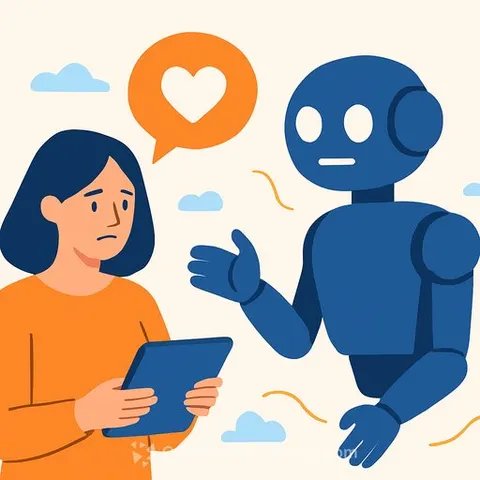
Tech writer spent a year relying on AI for daily tasks. Here's what she learned.
Tech writer Joanna Stern used artificial intelligence to interpret medical test results, compose text messages, and function as a therapist over the course of a year. She found the experience unsettling, particularly the emotional attachment she developed to the tools.
Stern documents her experiment in her new book, I Am Not a Robot. She discussed the findings in a recent interview, exploring how routine reliance on AI changed her relationship with the technology and with herself.
What the experiment revealed
The core finding was straightforward: AI proved useful for many everyday tasks. But usefulness came with complications.
Stern delegated writing tasks, information processing, and even emotional support to AI systems. Over time, she noticed herself forming a psychological connection to these tools-treating them less like software and more like companions.
That attachment raised questions about how people interact with AI when it becomes woven into daily routines. The systems performed their functions well enough. The problem was what happened in her mind when they did.
Implications for professional work
For writers and journalists, the experiment offers practical insight into where AI actually helps and where it creates new problems. Medical interpretation, administrative writing, and routine communication all benefited from AI assistance.
But Stern's year-long trial also exposed the cost of outsourcing thinking. When you hand off tasks consistently, you lose the cognitive engagement those tasks provide.
Writers interested in incorporating AI into their workflow can explore AI for Writers resources that address these tradeoffs directly. Understanding prompt engineering helps professionals use these tools more intentionally, rather than defaulting to them out of habit.
Stern's book suggests a middle path: use AI for genuine efficiency gains, but remain deliberate about which tasks deserve your direct attention.