
AI news ·
Telus uses AI to alter offshore call-centre agents' accents in real time
Telus is using AI to alter call-centre agents' accents in real time during live customer calls. Labour groups call it deceptive; Rogers and Bell say they won't follow suit.
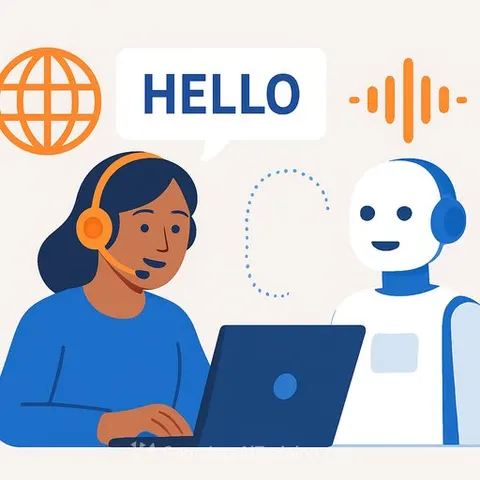
Telus Alters Call-Centre Agents' Accents With Real-Time AI
Telus is using artificial intelligence to modify call-centre agents' accents in real time, according to reporting by iPhone in Canada and The Globe and Mail. The Canadian telecom deploys the technology through its Telus Digital unit, which uses software from Tomato.ai to alter offshore agents' voices during live customer calls.
Telus describes the system as a way to reduce "accent-related friction" with customers. The speech-to-speech tool processes audio through automatic speech recognition, applies accent conversion models, and reconstructs the modified speech with minimal delay.
Labour and Privacy Groups Push Back
Labour advocates have criticized the practice as deceptive and called for mandatory disclosure to customers. They argue that people should know when their call-centre agent's voice is being altered.
Rogers and Bell told The Globe and Mail they have no plans to adopt similar voice-altering technology, distancing themselves from the approach as public backlash mounted in Canada.
How the Technology Works
Real-time voice conversion combines three technical layers: speech recognition to capture what the agent says, accent conversion models to modify phonetic patterns, and neural vocoders to reconstruct natural-sounding speech. The system must operate with minimal latency to work in live customer interactions.
Building such pipelines into call-centre systems creates operational tradeoffs. Latency, voice naturalness, and robustness to background noise all compete for optimization. Contact-centre environments present particular challenges: noisy audio, multiple languages, and the need for immediate results.
What Customer Support Teams Should Watch
Regulatory responses from Canadian authorities could establish disclosure requirements for voice-altering AI in customer service. Any technical disclosures from Tomato.ai about model architecture and safeguards would clarify what the system can and cannot reliably do.
Other large contact-centre operators may face pressure to publish transparency policies or conduct technical audits addressing worker notification and customer consent. The competitive distance Rogers and Bell have taken suggests the industry is watching closely.
For teams managing customer support operations, this case illustrates the practical and compliance risks of deploying voice conversion in production environments. The question of whether customers should be informed before their agent's voice is altered remains unresolved.
Learn more about AI for Customer Support and the technical foundations of Voice Modulation systems.