
AI news ·
Theme park executives say smaller experiences, AI efficiency, and rising costs are reshaping the industry
Theme park giants including Disney and Universal are shifting away from massive destination resorts toward smaller, more personal experiences. Executives say storytelling quality and human connection now matter more than scale.
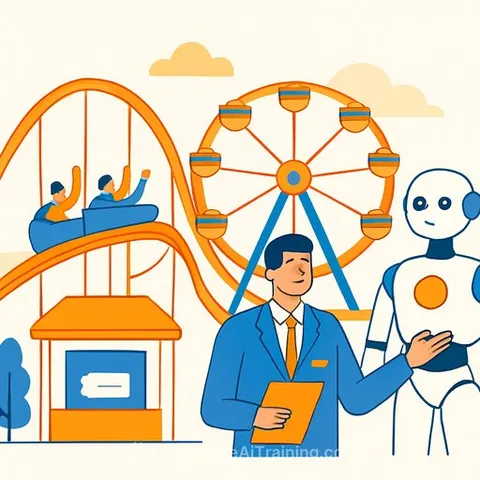
Theme parks are getting smaller, more local, and focused on people over scale
Executives from Disney, Universal, Lionsgate, and other major theme park operators said this week that the industry is moving away from the "bigger is better" model that defined the past two decades. Instead, parks are investing in smaller, more personal experiences-and rethinking how they use technology.
The shift emerged during the Themed Entertainment Association INSPIRE panel in Orlando, where leaders discussed five major changes reshaping the industry.
Smaller parks and hyperlocal experiences are gaining priority
The era of massive destination resorts as the only path to success is ending. Executives said high-quality storytelling no longer requires the scale of a traditional theme park.
Universal's approach to its Dark Universe illustrates this. Rather than building enormous show buildings, the company is creating character-driven moments-like the Igor character-that guests discover organically. Ali Rubinstein, senior vice president of executive global management for creative development at Walt Disney Imagineering, said the opportunity lies in "the personal, intimate piece of it."
For operators, this means designing parks where memorable moments happen in the spaces between headline attractions, not just in the attractions themselves.
Accessibility and younger children are reshaping design decisions
Universal's upcoming Universal Kids Resort targets children ages 3 to 8, with every element scaled to that age group. The park will be autism certified, with staff trained in autism awareness.
Jenefer Brown, president of global products and experiences at Lionsgate, said her company initially missed accessibility issues with "The Hunger Games: On Stage" until audiences pointed them out. The team invited those guests back and made changes based on feedback.
This signals a shift toward designing for a broader range of visitors from the start, rather than retrofitting later.
Economic pressure is forcing harder choices about what to build
Inflation and rising travel costs are changing how parks prioritize projects. Companies are thinking more carefully about value and impact relative to spending.
Andy Westfall, senior director of strategic planning and development at Herschend Creative Studios, called NightFlight a "milestone project" for Dollywood because it maximizes storytelling and creative execution without requiring Disney or Universal-scale budgets. The message to the industry: creative execution matters more than raw spending.
AI is a tool for efficiency, not a replacement for people
Artificial intelligence came up repeatedly, but executives were consistent on one point: AI handles backend work, not creative decisions.
At Walt Disney Imagineering, AI is used to improve workflow efficiency so teams have more time for creative work. Page Thompson, president of new ventures at Universal Destinations & Experiences, said plainly: "The human aspect of what we do is what draws people in. There's no substitute for human interaction."
For guests, this means technology may improve operations behind the scenes, but the experiences that stick are still driven by people.
Learn more about how AI for Executives & Strategy is reshaping business decisions across industries, or explore how AI Agents & Automation streamline operations without replacing human roles.
Live entertainment is becoming central to the business model
Festivals, live shows, and special activations are no longer secondary offerings. Cecil Magpuri, founder of Falcon's Beyond, said themed entertainment now extends across media, destinations, and formats-not just physical parks.
This gives operators multiple reasons to draw repeat visits and creates revenue streams beyond ticket sales.
What this means for operators
The industry is moving in multiple directions simultaneously. Large destination resorts, smaller local experiences, advanced technology, and human-driven storytelling all coexist. Parks are becoming more flexible in how they deliver value to guests, which means more choices in when, where, and how visitors engage.
For executives making strategy decisions, the takeaway is clear: scale alone doesn't guarantee success anymore. Execution, accessibility, and authentic human connection do.