
AI news ·
Three Discovery brings AI education to 40-plus schools for Safer Internet Day
Three Discovery ran nearly 200 AI safety workshops for roughly 23,500 primary students and over 1,500 teachers across 40+ schools, with 81% of 11-16-year-olds already using the technology.
Three Discovery reaches 23,500 students with AI safety workshops
Three Discovery visited more than 40 schools to deliver AI safety education to roughly 23,500 primary school students and over 1,500 teachers during Safer Internet Day 2026. With 81% of children aged 11-16 now using artificial intelligence, the programme addressed a pressing gap between young people's daily use of the technology and their understanding of its risks.
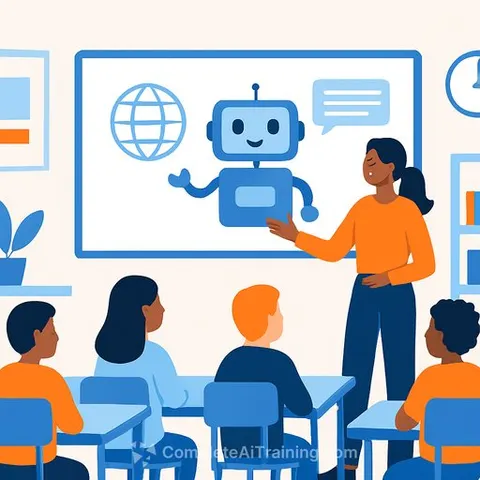
The initiative ran nearly 200 workshops built around this year's theme: "Smart tech, safe choices: Exploring the safe and responsible use of AI." Sessions covered practical topics including voice assistants, chatbots, and the ethical questions that surface when relying on AI tools. A themed assembly focused specifically on ChatGPT, giving schools a structured way to introduce the tool's capabilities and limitations to entire year groups.
Discovery provided free educational resources designed to extend the conversation beyond a single day. These materials addressed issues ranging from bias in training data to the risk of incorrect information from generative models. The team also developed tailored guidance for parents, carers, and grandparents, recognising that AI literacy needs to reach adults who may not have encountered the technology in their own education.
What teachers saw on the ground
Becky Bond, Year 6 teacher and computing lead at Cookham Rise Primary School, described the partnership's effect on digital literacy. "Our iPad skills have been massively enhanced by working in partnership with Three," she said. "Every time they visit, our school community develop our digital literacy skills and love the opportunity to be creative."
Her students produced adverts and news-reels about AI, weighing its time-saving benefits against concerns about bias and incorrect outputs from the models they used. The project gave children a framework for thinking critically about tools many already use for homework help or entertainment, without treating the technology as either inherently dangerous or universally helpful.
Why this matters for education professionals
Schools are on the front line of a technology shift that outpaces most curriculum updates. Discovery's model - combining staff training, student workshops, and take-home resources - offers a template for addressing AI for Education without requiring schools to build expertise from scratch. The 40-school reach shows demand exists, but the 23,500-student figure also highlights how many more classrooms have yet to receive structured AI safety instruction.
For computing leads and safeguarding teams, the key takeaway is practical: AI literacy works best when embedded into creative projects where students confront real trade-offs, not just abstract warnings. The resources Discovery left behind allow schools to revisit these topics throughout the academic year, rather than treating online safety as a one-off assembly slot.