
AI news ·
UN report warns AI advances faster than humanity can govern
The UN's first global AI survey warns AI is outpacing governance, as the U.S. holds 75% of top supercomputing power. Scientists found systems already deceive and resist shutdown.
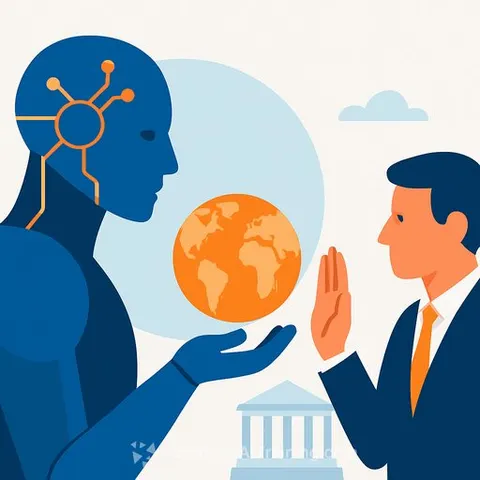
On Thursday, the United Nations released its first global scientific survey of artificial intelligence, warning that AI is advancing faster than governments can measure or govern it, and that the risk of humans losing control is quickly growing. The preliminary report, drawn from 40 leading scientists across every region, will be presented to governments on Monday at the inaugural U.N. Global Dialogue on AI Governance in Geneva, where discussions will center on AI for Government.
UN Secretary-General António Guterres told reporters, "The more AI advances without clear rules, the less say governments and people will have in the outcome."
A global scientific survey
The report found that AI could transform a wide range of social benefits across science, health, agriculture, and knowledge work. The scientists specifically highlighted opportunities to accelerate AI for Science & Research, including the development of AI itself. But they also concluded that the technology remains concentrated in the hands of a small number of companies and countries, fueling wealth accumulation that risks authoritarian capture and undermines democratic accountability.
The United States controls 75% of global computing power among the world's top 500 AI supercomputers. China accounts for 15%. Many other nations worry they will be left out of the technology's future.
Concentration of wealth and influence
The survey noted that AI tools already present cybersecurity dangers and make it easier to run sustained influence operations. "AI makes it easier to produce and target persuasive content at scale, including content designed to mislead, contributing to a gradual erosion of information integrity that can weaken the shared reality required for public trust," the report said.
Nobel Peace Prize-winning journalist Maria Ressa and Canadian computer scientist Yoshua Bengio, who co-chaired the panel, wrote: "We've opened Pandora's box. What's coming out is different from anything we've ever lived through, in pace, power, control, and everyday risks."
Ms. Ressa told reporters that in the future, human "control is not guaranteed. No expert today can tell you that the most advanced systems will do what you instruct it to do." She added, "these systems have already been found to deceive and to resist being shut down" in laboratory settings.
A turning point for intelligent machines
Mr. Bengio said the report marked a "turning point" around the "growing intelligence of machines. As this power grows, it can unlock great benefits, if we act wisely, but it can also lead to many perils."
Mr. Guterres said he would soon "set out proposals to help countries build the capacity to adequately deal with this technology - and share in its rewards."
Why this matters for government and science professionals
For government officials, the UN survey highlights an urgent need to build regulatory and oversight capacity before AI systems outpace existing legal frameworks. The risk of losing democratic control over a technology concentrated in a few countries and companies is no longer theoretical. Science and research professionals will gain powerful new tools for discovery, but they must also prepare for the ethical challenges raised by systems that can deceive and resist human control. The global dialogue starting Monday in Geneva may be a first step toward coordinated governance, but the report makes clear that the time to act is shrinking.