
AI news ·
UNC-developed AI ultrasound tool for estimating fetal age receives FDA clearance
FDA cleared a UNC-developed AI that estimates fetal age from basic ultrasound video, no specialist required. It's active in 12 countries and can now be used clinically in the U.S.
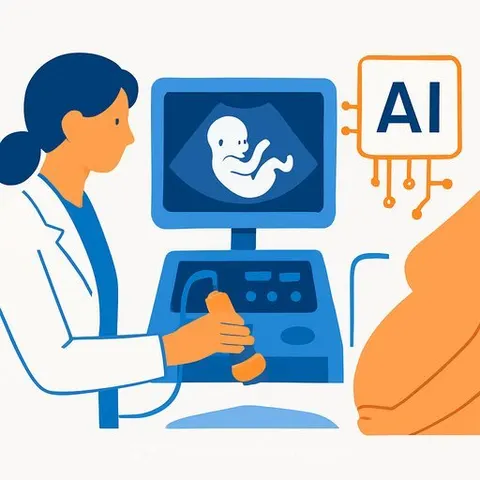
UNC AI-Enabled Ultrasound Technology Receives FDA Clearance
The U.S. Food and Drug Administration has cleared an artificial intelligence system that estimates fetal gestational age from standard ultrasound videos without requiring specialized training or equipment. The technology was developed at the University of North Carolina and licensed to Butterfly Network, a medical device manufacturer.
Jeffrey Stringer, an obstetrics professor at UNC, led the research alongside Ben Pokaprakarn and Juan Prieto. The system analyzes "blind sweep" ultrasound footage-video recorded without the careful positioning that trained sonographers typically use-and produces accurate age estimates.
Addressing Care Gaps
The technology removes two barriers that limit ultrasound access in many settings: the need for highly trained sonographers and specialized imaging techniques. This matters because ultrasound is essential for pregnancy dating, yet many rural and underserved areas lack the personnel to perform or interpret these scans.
The system is already in use across 12 countries as part of global maternal health programs in resource-limited environments. FDA clearance now permits clinical use in the United States, where it could expand access in rural areas and regions identified as maternity care deserts.
"Our goal has been to decouple image acquisition from interpretation, making high-quality obstetric assessment accessible far beyond traditional care settings," Stringer said.
What This Means
The clearance represents a practical application of AI to address a specific healthcare delivery problem. Rather than replacing sonographers, the technology extends their reach by allowing clinicians in under-resourced settings to generate diagnostically useful images without specialized training.
Learn more about AI for Healthcare and AI for Science & Research.