
AI news ·
Unilever uses AI to cut beauty product development cycles from months to days
Unilever's Beauty & Wellbeing division now develops products in days instead of months, cutting insight analysis time by 60% and reducing formulation cycles from six iterations to two.
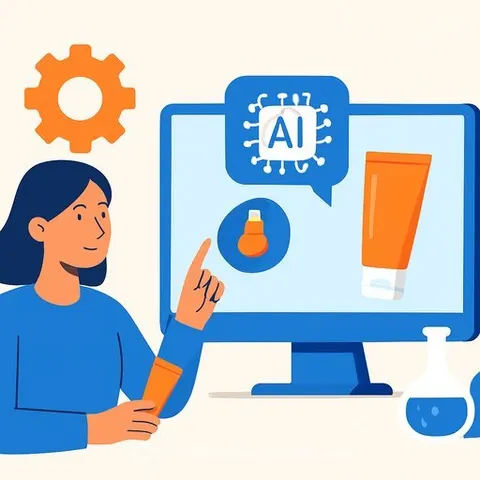
Unilever cuts product development timelines from months to days using AI
Unilever's Beauty & Wellbeing division now develops science-backed products in days instead of months by analyzing consumer trends and research data with AI tools. The company processes over 1,000 external data sources monthly to track sentiment, engagement, and emerging beauty preferences across social media, search engines, and retail platforms.
The shift cuts insight analysis time by 60% and reduces formulation cycles from five or six iterations to one or two. Concept-to-brief timelines have dropped from months to days.
How AI accelerates discovery
Unilever's AI tools analyze massive datasets to identify patterns humans would miss. For the Pond's Hydra Miracle range, AI examined 30 terabytes of skin microbiome data to uncover a combination of pro-ceramides, hyaluronic boosters, and amino components. The resulting Cera-Hyamino technology delivered 67 times greater barrier resilience power and 100% hydration boost in clinical testing.
Without AI, detecting these connections would have required millennia of conventional analysis, Jason Harcup, chief R&D officer for Beauty and Wellbeing, said.
For Dove's Damage Therapy range, AI-supported modeling helped scientists map which proteins and amino acids are lost from hair under different damage types at a molecular level. Teams then optimized ingredient combinations to target that specific damage, creating the Bio-Protein Care technology.
Consumer data feeds product design
AI combines external signals-social media buzz, search terms, retail data-with internal consumer interaction data to identify unmet needs. This integration allows R&D teams to spot emerging trends earlier and predict which product features will resonate.
Beauty consumers increasingly research ingredients, check reviews, and follow trends that move quickly across social platforms. Unilever's AI systems track these conversations in real time to understand not just what trends exist, but why consumers engage with them.
Virtual testing allows scientists to simulate how different consumer groups respond to products before physical testing begins. This refinement stage happens at scale, letting teams focus real-world testing where it matters most.
Data integration remains central challenge
Unilever connected decades of proprietary scientific data across R&D systems into a single ecosystem. This data democratization lets teams explore and link datasets at speeds and depths previously impossible.
The goal is to keep human judgment at the center while AI handles pattern detection across vast experimental, ingredient, and consumer datasets. Scientists use AI to accelerate discovery, not replace expertise.
Copyright dispute raises questions
Vaseline, a Unilever-owned brand, recently removed an advertisement after an artist accused the company of copying poster artwork and modifying it with AI without permission. The artist, who uses the handle @namejr_ on Instagram, said the work was created for the film Michael.
Vaseline said it is working to understand what happened and why. The incident highlights risks companies face when deploying AI tools in creative work without clear sourcing protocols.
For product development teams considering AI adoption, Unilever's approach shows both the speed gains possible and the need for governance around how AI tools access and use external data and creative assets.