
AI news ·
Unregulated AI use exposes businesses to legal risks in employment, data security and intellectual property
A court ruled companies lose work product privilege for AI research done before hiring counsel. This exposes early case data to discovery and highlights broader corporate risks.
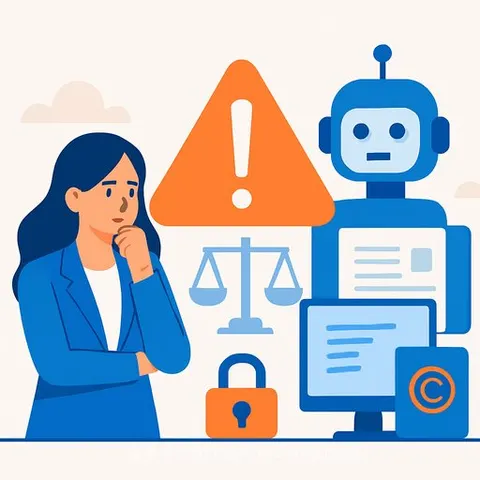
A business that used an AI platform to research defense strategies before hiring a lawyer cannot claim privilege over those queries, a court has ruled. The decision exposes AI-assisted preparations to discovery and makes clear that timing - whether counsel is involved - determines if work product doctrine protections apply.
AI research and privilege
In the case, the company posed detailed factual scenarios to an AI tool to anticipate how a potential claim might unfold. When litigation began, the opposing party sought all AI platform data related to the claim. The company claimed the information was privileged, but the court disagreed because no attorney was involved - the AI was not providing legal advice. Had the company's lawyer directed the same research, the work product doctrine might have cloaked the information. For legal teams, this ruling underscores the need to instruct clients to route sensitive pre-litigation analysis through counsel before turning to AI.
Shadow AI and confidentiality
Employees using unvetted AI tools - often called shadow AI - can inadvertently expose trade secrets, customer data, and proprietary strategies. Once data is entered into most open AI systems, it loses its confidential status and may enter the public domain. That can trigger breach of confidentiality duties to clients. Companies need a written AI usage policy that defines which platforms are approved, what data can be uploaded, what review procedures are required, and who must authorize AI use before it begins.
Employment decisions and algorithmic bias
AI tools that screen resumes, evaluate applicants, or monitor productivity introduce compliance risks under the Fair Credit Reporting Act and privacy statutes. At least one court has found that using AI in hiring can violate the FCRA if disclosure and consent requirements aren't met. Even unintended discrimination creates liability: if an AI model disproportionately filters out candidates in a protected class, the employer remains responsible. Regulators and courts are rejecting the defense that "the algorithm made the decision." Human oversight is not optional.
Intellectual property and infringement
Under current U.S. Copyright Office guidance, purely AI-generated works lack human authorship and may not qualify for copyright protection. A business that invests in AI-generated marketing copy, logos, or code could end up with no enforceable IP rights. Moreover, because AI models are trained on vast datasets that include copyrighted material, outputs may inadvertently infringe existing works. Several pending lawsuits are testing these boundaries, and businesses cannot assume AI-generated content is free of infringement risk.
Defamation risk from hallucinations
AI tools sometimes fabricate facts - commonly called hallucinations - that can damage reputations if circulated. An employee tasked with generating a report on a competitor, vendor, or former employee might inadvertently spread false statements about criminal conduct or regulatory violations. If that content is distributed externally, the company could face defamation claims. Requiring meaningful human review before AI-generated content goes outside the organization is a minimum safeguard.
Vendor contracts and data ownership
Third-party AI vendors often present standard agreements that heavily favor the provider. Businesses should scrutinize who owns the data entered into the platform, how that data will be used, what security obligations are in place, and what liability limitations apply. Surprises emerge when a breach or system failure reveals that the company had little contractual protection. Legal review of these agreements is essential before implementation.
Why this matters for legal professionals
Clients are adopting AI faster than they are assessing the legal risks. In-house and outside counsel need to proactively advise on privilege protection, data governance, employment compliance, IP ownership, and vendor contracting. The court's ruling on AI and privilege sends a clear signal: waiting until after the fact to involve lawyers can forfeit key protections. For legal practitioners, building AI usage protocols into standard corporate hygiene is no longer a future concern - it's a current duty.