
AI news ·
Unstructured clinical data, not model performance, is the biggest barrier to trustworthy AI in oncology
Messy, fragmented data in electronic health records-not model capability-is the main barrier to trustworthy clinical AI, health systems are finding. Oncology, with its complex histories and shifting treatment standards, shows the risks most clearly.
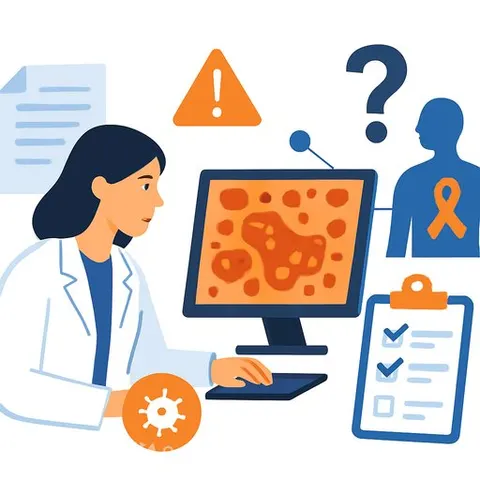
Healthcare Systems Confront AI's Real Problem: Messy Data, Not Model Power
Healthcare organizations have moved past the excitement of large language models and into a harder question: Can AI be trusted in actual patient care? As health systems deploy ambient documentation tools, clinical decision support systems and AI-powered analytics, they're discovering that model performance isn't the bottleneck. The problem is the fragmented, unstructured information buried in electronic health records.
Oncology reveals the challenge most clearly. Cancer care demands that AI systems handle complex patient histories, rapidly changing treatment standards and thousands of distinct diseases. Dr. Theepa Dinis, a medical oncologist and clinical informatics business analyst at emtelligent, a healthcare AI company specializing in structuring unstructured medical data, said the pressure on AI systems in oncology exceeds almost any other medical specialty.
Precision medicine raises the stakes for AI
Genomics, biomarker testing and targeted therapies have made oncology one of medicine's most personalized fields. Treatment decisions now depend on genomic markers, tumor characteristics, prior therapies and patient-specific factors. Practice-changing clinical trials regularly shift standards of care, creating an information burden that challenges both clinicians and AI systems.
This shift toward personalization means AI must do more than identify patterns. It must understand highly individualized patients while keeping pace with constantly changing evidence.
Ambient AI solves documentation, not the whole problem
Ambient documentation has become one of healthcare's most successful AI applications, reducing administrative work by automatically generating clinical notes. But oncology shows why documentation alone falls short.
Cancer patients often receive care from multidisciplinary teams over many years. Imaging studies, pathology reports and treatment histories accumulate across dozens of encounters. "The longitudinal complexity is enormous," Dinis said. "AI that can't handle it accurately just isn't helpful. Even worse, it can be dangerous if deployed incorrectly."
AI must understand how new information fits into years of prior clinical history. Capturing today's conversation is only part of the challenge.
Data governance and AI governance are now inseparable
Clinical information remains concentrated in physician narratives, pathology reports and radiology interpretations. Clinicians use this information every day, but many AI systems struggle to interpret it consistently.
Distinguishing between diagnoses, treatment courses and recurrence events can challenge even sophisticated models. A patient's record might reference a left breast cancer diagnosis from 1999 and a separate right breast cancer from 2015. Errors involving those distinctions can affect downstream clinical decision-making.
"Most clinical AI fails for a simple reason: The data it's built on isn't good enough," Dinis said. Healthcare leaders are increasingly realizing that data governance and AI governance are inseparable.
Hallucinations create patient safety risks
Hallucinations remain one of healthcare's biggest AI concerns because inaccuracies can directly affect patient care. The risks extend beyond clinical decision support into pharmacovigilance, where organizations use AI to identify adverse events and monitor drug safety.
"Pharmacovigilance is how we monitor drug safety after a medication is already on the market," Dinis said. "If AI is helping extract these insights from clinical records or adverse event databases, a hallucination could send the whole system chasing the wrong problem."
Clinicians remain responsible for patient care decisions regardless of how AI tools contribute to the process. Trust and validation are critical components of any deployment.
Healthcare AI is entering a mature phase
The conversation is becoming less about what AI can do and more about how organizations can deploy it safely and effectively at scale. Oncology offers a preview of that future-massive volumes of unstructured information, rapidly changing evidence and high-stakes decision-making.
Success will require more than increasingly powerful models. For health systems pursuing enterprise AI for Healthcare strategies, the most important lesson may be that trustworthy AI begins with trustworthy data. Organizations deploying AI Data Analysis tools need to invest in data governance before they invest in the models themselves.