
AI news ·
UofL law professor guides students and faculty on responsible AI use in legal education
Brandeis law professor Susan Tanner teaches students to use AI for self-quizzing and argument practice-not to replace their thinking. Her core test: did you use the tool to learn, or to skip the work?
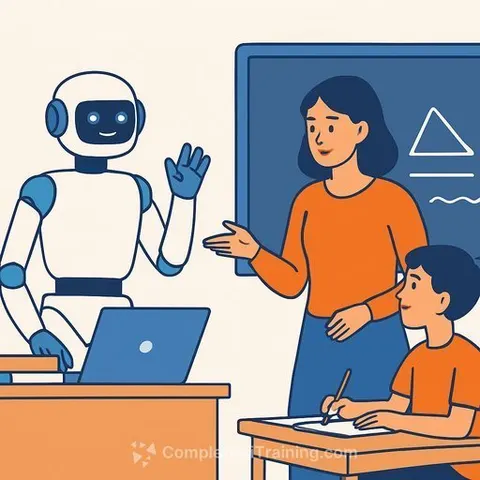
Law Professor Guides Students on Responsible AI Use
Susan Tanner, an associate professor at the Brandeis School of Law, has spent more than a decade teaching students and faculty how to integrate AI into legal work without sacrificing learning or ethics. Her approach centers on a practical question: How did you use the tool-to learn, or to skip thinking?
Tanner was featured in Google's Portraits of AI and received the Ascending Star Fellowship in 2025 for developing AI toolkits that help law professors make deliberate choices about when AI supports teaching and when it undermines it.
How Tanner Uses AI With Students
In her classes, Tanner shows students how to use AI bots to quiz themselves and practice explaining legal doctrine. Instead of asking AI for answers, students ask it to question their reasoning, identify gaps, and push back on their arguments.
Students also use bots to simulate oral arguments or client conversations, with the AI playing the role of a judge, supervising attorney, or client. The tool creates more opportunities to practice without replacing the work itself.
For her own work, Tanner uses AI to organize ideas, move material between formats, draft initial versions, and identify gaps in her thinking. She does not treat AI as an authority. She remains responsible for accuracy and judgment in the final product.
The Cheating Question
Tanner rejects the binary framing of whether AI use is allowed or banned. The better question, she said, is whether students used AI to outsource their thinking or to support learning.
"If students use AI to outsource thinking, then they are cheating themselves out of an education," Tanner said. "They may produce something that looks finished, but they have not developed the reasoning, judgment, or skill that the assignment was designed to teach."
She worries that AI can short-circuit productive struggle. Some struggle is necessary. If work becomes too easy, teaching diminishes. Students need to wrestle with cases, rules, facts, and uncertainty.
Teaching AI and the Law
Tanner now teaches a course on AI and the law that covers the doctrine developing around the technology: privacy, discrimination, employment, intellectual property, torts, constitutional questions, and legal ethics.
The course lets students see law being made in real time, working with unsettled doctrine, new statutes, and cases that don't fit neatly into older categories. That mirrors what lawyers will face in practice.
The course also teaches students that AI competence means more than knowing what prompt to type. It means using tools critically and responsibly while doing the legal thinking themselves.
The Bigger Picture for Legal Practice
Tanner sees AI reducing friction around routine work: organizing information, drafting initial versions, summarizing material, and formatting ideas. Lawyers can spend less time on these tasks and more on judgment calls.
But she raises a caution. If organizations simply demand more output faster with fewer resources, AI won't make work easier-it will increase pressure. The outcome depends on whether AI supports human judgment or merely extracts more productivity.
Learn more about AI for Education and AI for Legal professionals.