
AI news ·
Vercel runs 96% of marketing and 93% of support through AI agents, CPO says
Vercel's AI support agent resolves 93% of customer inquiries without human involvement. The remaining 7% gets escalated-not as failures, but as a filtered list of real product gaps worth fixing.
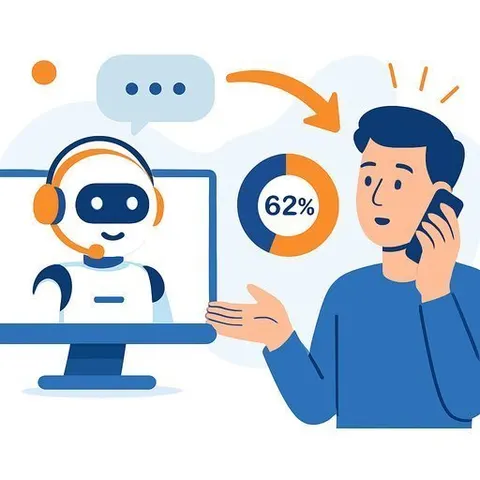
Vercel's AI Agents Handle 93% of Support With No Human Touch
Vercel runs a customer support agent that resolves 93% of inquiries without human intervention. The company built hundreds of agents for internal use before selling agent infrastructure to customers, and the results are reshaping how B2B teams think about staffing in 2026.
The insight that matters most: most of what teams are about to build for agents is repetitive work that doesn't differentiate the business. The real question isn't whether you can build an agent. It's whether building it should consume your team's time.
What Vercel's Support Agent Actually Does
The support agent handles routine inquiries automatically. When it can't resolve a ticket, it escalates to a human. Vercel's reframe of that 7% that gets escalated is sharper than traditional metrics.
Those escalations aren't failures. They're a curated list of real product gaps and misconfigurations. The agent filters signal from noise, so your team only sees problems worth solving instead of clearing mechanical tickets.
A human still reviews complex cases, edge cases, and anything requiring judgment. The difference is they're no longer buried in volume.
Three Production Agents at Vercel
Content agent: Turns long Slack threads into blog post drafts in the company's voice. Around 96% of marketing content now starts this way. A human edits and reviews, but the slow first draft mostly disappears.
Lead qualifying agent: Replaced a large SDR team doing manual qualification. The people who did that work got redeployed into higher-impact roles.
Support agent: Handles 93% of customer inquiries with no human intervention. Anything it can't handle signals either a product gap or a misconfiguration.
Read those three together and the pattern emerges: humans stop doing work an agent can do and move to work that actually compounds.
How to Build Your First Agent
Vercel's advice for teams starting out is unglamorous and practical:
- Pick low-value, highly repetitive work. Support triage, data pulls, lead qualification. Something someone on your team does dozens of times a week. That's where ROI is fastest and where you learn the most about how agents behave in your environment.
- Document the process in painful detail. This feels backwards. You can already do the task, so writing it down seems like wasted effort. It isn't. An agent is only as good as the process you hand it. If you can't write down exactly how a human should do the work, an agent won't do it either.
- Hand the documented process to a coding agent. Use Claude Code, v0, or whatever you prefer. Give it the plan and iterate all the way to production. Use a coding agent to build your first agent.
Start small. Pick something you do every day. Learn as you go.
The Real Bottleneck Isn't the Model
Teams expect the hard part of building an agent to be the AI. It isn't. The hard part is being able to write down exactly how the work should be done.
Teams that have never documented their own processes will discover that's the real blocker to deploying agents. It has nothing to do with which model you pick.
Documentation forces clarity. It exposes steps people do on instinct, edge cases they handle without thinking, and judgment calls they make without explaining. An agent can't replicate what you haven't made explicit.
What Support Teams Need to Know
For customer support specifically, the shift is straightforward: agents handle volume, humans handle signal.
Your team won't shrink to zero. It will stop doing repetitive triage and start doing the work that matters. That means fewer tickets closed and more problems solved. Fewer hours spent on mechanical routing and more time spent on genuinely hard cases or genuinely valuable customers.
The agent becomes a filter. It catches the 93% that follows a pattern. Your team gets the 7% that doesn't, which is exactly the 7% where your judgment and experience actually matter.
Start with your most repetitive workflow. Document how you do it today. Hand it to a coding agent. Iterate until it works. That's the path.
For a deeper look at how AI agents are reshaping support operations, see AI for Customer Support.