Video Takes Over Marketing's Middle Class: Cheap AI, Premium Human, Nothing in Between
Video creation has hit an inflection point. What used to take a crew, a set, and a month now takes one prompt and a few minutes. Costs fall, output explodes, and the middle of the market is getting squeezed.
Budgets are following the shift. U.S. digital video ad spend hit $64B in 2024 and is projected to reach $72B in 2025. Nearly 90% of advertisers plan to use generative tools in upcoming campaigns, and about 63% of marketers already run AI in their edit stack. This isn't a test phase. It's the new baseline.
The New Barbell: Scale vs. Sincerity
Video is splitting into two winners:
- High-volume AI content: infinite variants, personalized at scale, optimized by the algorithm.
- Premium human storytelling: verifiable people, real locations, unscripted emotion, and trust you can feel.
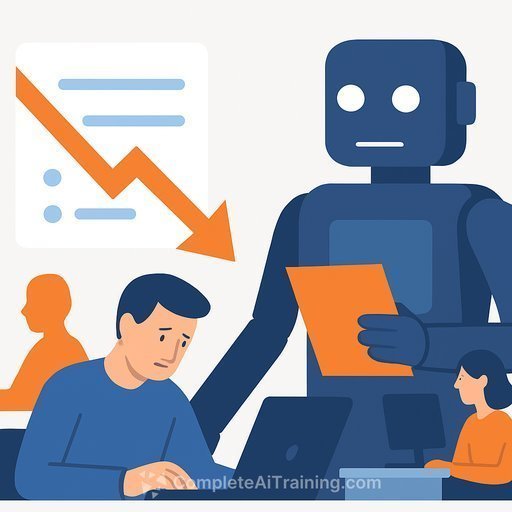
The middle tier-explainer videos, corporate overviews, mid-budget commercials-once balanced quality with cost. AI now replicates most of that format for a subscription fee. The result: mid-tier agencies and freelancers face redundancy, not competition.
What This Means for Creatives, HR, and Marketing
- Creatives: Routine work is getting automated. Specialize in strategy, taste, or verified authenticity-or build systems to ship a lot, fast.
- HR: Rewrite roles. Hire creative directors who can manage AI workflows, editors who can prompt and QA, and producers who think like product managers.
- Marketing: Treat creative like an experiment engine. Briefs become datasets, edits become versions, and performance guides the next round.
Why Mid-Tier Work Is Collapsing
When creation cost approaches zero, value shifts to differentiation. In 2025, nearly 40% of ads are projected to include generative elements. Contracts in AI-exposed fields are softening as tools take over repeatable steps-editing, motion graphics, voice, even script beats.
Large brands benefit from scale. Mid-level pros face an opponent that never tires and iterates on demand. The middle no longer signals quality; it signals replaceability.
Creator Economy: Bigger, But Different
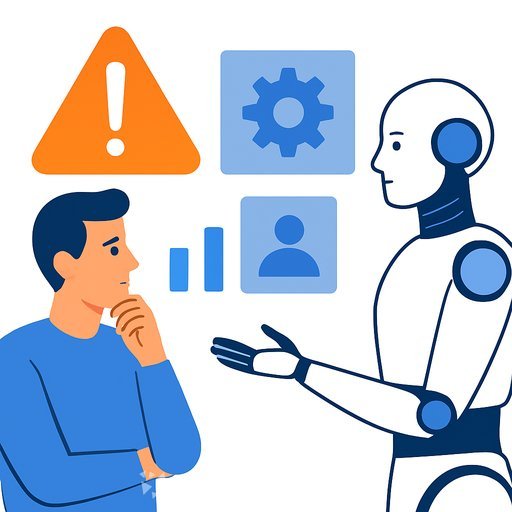
The creator economy is expected to hit $37B in 2025. A rising share of that output is AI-assisted. Platforms nudge this forward with built-in tools that write, edit, and translate on command. Human creators are shifting into creative direction-setting taste, QA'ing outputs, and shaping narrative-while machines handle the grind.
Trust, Provenance, and Labels
As synthetic video floods feeds, audiences lean toward what feels real. Platforms now require labels for AI-generated content, and transparency standards are maturing. Content Credentials and similar provenance tech embed source metadata so viewers can verify what they're watching.
IAB insights track spend and format trends, while Content Credentials offer a practical path to verify authorship and edits. In a sea of synthetic clips, proof of origin becomes production value.
Environmental Reality of Infinite Video
AI reduces travel and set waste, but compute isn't free. Data center electricity demand could reach 945 TWh by 2030, driven by generative workloads. At scale, every video carries a hidden carbon cost.
- Prefer efficient models and providers with clear energy disclosures.
- Adopt carbon-aware scheduling for large batch renders.
- Fold FinOps/GreenOps into creative ops and vendor selection.
Two Playbooks That Win
1) Scale Operator
- Systemize production: script templates, prompt libraries, voice and style presets.
- Ship variants: formats by channel, audience, language, and funnel stage.
- Instrument everything: CTR, watch time, hold rate, conversion, CAC payback.
- Tight loop: ideate → generate → test → iterate in days, not months.
2) Trust Specialist
- Prioritize human presence: faces, voices, locations, behind-the-scenes.
- Use provenance metadata and visible disclosures to earn confidence.
- Focus on fewer, higher-value stories where emotion drives ROI.
- Package credibility: expert guests, case-study evidence, social proof.
Practical Moves for Teams
For Marketing Leaders
- Reallocate budgets: 20-40% to AI-enabled testing, 10-20% to premium human storytelling.
- Build a content OS: asset libraries, data-backed creative briefs, and performance dashboards.
- Set guardrails: disclosure rules, brand voice prompts, legal review for likeness and claims.
For HR and Ops
- Rewrite job descriptions: "Editor" → "Editor/Prompt Producer." "Producer" → "Ops + Analytics."
- Comp for hybrid skills: storytelling, prompt fluency, QA, and performance analysis.
- Procurement checklist: provenance support, usage rights, carbon reporting, API access.
For Creatives and Freelancers
- Pick a lane: scale with systems or go premium with proof-backed storytelling.
- Productize: fixed-scope packages (e.g., 100 ad variants in 7 days) or premium doc-style brand films.
- Show receipts: publish your process, label AI use, and attach Content Credentials.
Metrics That Matter
- Scale side: cost per variant, time-to-first-test, iteration velocity, CAC impact.
- Trust side: average watch time, brand lift, earned media, lead quality, LTV shifts.
- Both: disclosure compliance, provenance pass rate, model/tool energy footprint.
Tools and Training
- Browse curated resources on Generative Video
- Explore AI video stacks and workflows: Generative video tools
- Skill up by role: Courses by job
The Bottom Line
The middle is disappearing because the economics no longer support it. Either build systems that ship high-volume video with feedback loops and analytics, or make work that audiences trust because they can feel and verify the human behind it.
Pick your side, commit, and align your stack, team, and metrics around that choice.
Essential FAQ for AI Video Marketing and the Creative Economy
How do Content Credentials protect digital media provenance?
They embed traceable metadata that shows who created a file, what edits were made, and which tools were used. Viewers can verify authenticity and origin, reducing confusion from synthetic lookalikes.
Will generative AI completely replace professional video editors?
No. AI automates repeatable steps like rough cuts, captions, cleanup, and filler removal. Editors still lead pacing, tone, story arcs, and the nuance that turns footage into a narrative people care about.
Why are platforms requiring AI-generated content labels?
To maintain trust. Labels help audiences distinguish synthetic elements from unedited footage and reduce the risk of misinformation while preserving creative freedom.
How can mid-tier creators stay competitive against AI scale?
Choose a strategy. Become a Trust Specialist (human-first storytelling with visible provenance) or a Scale Operator (systemized production and relentless iteration). Straddling both usually leads to weak results.
What is the environmental impact of scaling AI video production?
Less travel, more compute. As generative workloads grow, energy use rises. Pick efficient platforms, adopt carbon-aware scheduling, and include sustainability criteria in vendor selection to offset part of the impact.
Your membership also unlocks: