
AI news ·
Vitalis 2026 shows healthcare AI fails on infrastructure, not models, says Gart Solutions CEO
Healthcare AI projects fail on data quality and infrastructure, not model performance - that was the consensus at Vitalis 2026. Fragmented records, poor labeling, and weak data pipelines are the real blockers.
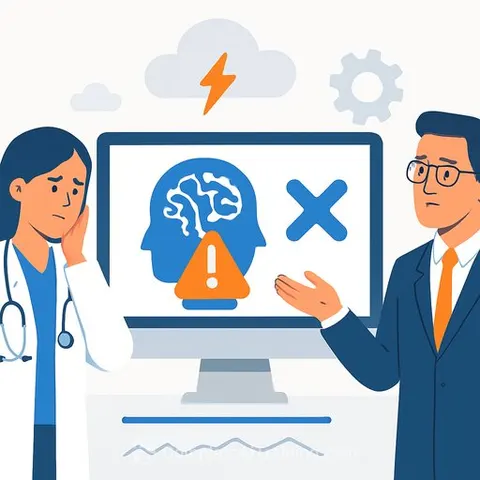
Healthcare AI Fails on Data, Not Models. Here's What's Actually Needed
The real bottleneck in healthcare AI has nothing to do with algorithm quality. It's infrastructure.
That's the core insight from Vitalis 2026, a Scandinavian healthcare forum where physicians, startup founders, and technical teams spent two days discussing how AI should actually work in hospitals and clinics. The consensus was clear: healthcare institutions are sitting on fragmented, inconsistent data they can't reliably use - and building AI systems on top of it anyway.
Medical Data Isn't Oil. It's Shale
One session framed the problem directly: medical data is not "the new oil," as the saying goes. It's shale - everywhere, but fragmented, inconsistent in quality, and expensive to refine into anything useful.
That's only the surface problem. Several organizations across different sectors are already mandating that all code be written by AI by the end of 2026. Within months, no one will be able to read the pipelines holding entire systems together.
The standard chain of "explanation → understanding → trust" is closing off for an entire class of systems. In medicine, where errors cost health or lives, this is not theoretical. The answer isn't to stop AI development. It's to build systems where outcomes can be verified and where data provenance can be clearly traced at every step.
Move the Algorithm to the Data, Not the Reverse
A parallel principle emerged across multiple conference sessions: most healthcare institutions still move data to where it needs to be analyzed. They shouldn't.
The working model is different. A hospital or clinic runs analysis locally. Only verified, aggregated results leave the building. Zero-trust becomes an architectural property, not just a security policy.
This matters for compliance. GDPR, NIS2, the EU AI Act, and EHDS are converging on the same requirement: data stays put, computation moves. Organizations that build this way don't just become compliant faster. They move faster overall, because they remove the legal bottleneck that slows research and model testing.
What Worked and What Didn't
Hallway conversations revealed what's actually happening in healthcare:
- Data abundance and trust are inversely related. Multiple founders said they have more data than ever - and less confidence in it than ever.
- Replacing an electronic medical record system is now a strategic decision about decoupling data from any single vendor, not just a vendor selection.
- Compliance fails when it's bolted on afterward. It works when built into architecture from the start.
- AI projects fail because of poor data quality, labeling errors, or systems built without understanding how they function inside actual hospitals - not because of the models themselves.
Real examples are no longer theoretical. Epic's sepsis prediction model and documented algorithmic bias in healthcare systems forced the industry to rethink how it approaches medical AI.
What This Means for Your Organization
If your healthcare system wants to scale AI without sacrificing compliance, the work is primarily infrastructure, not research. When a hospital needs to run AI on sensitive data without exporting raw records, that's a platform engineering challenge. When every data step needs to be stable, transparent, and auditable, that's an SRE and architecture question.
The competitive advantage goes to organizations that build this foundation first. Compliance, scalability, transparency, and data sovereignty aren't constraints when they're designed in. They're advantages.
For teams in healthcare or medtech working on AI for Healthcare or the infrastructure supporting it, the pattern is consistent: the foundation determines what's possible. Get it right from the start.