Psychological Safety: The Missing System HR Needs for Enterprise AI
Sponsored * In partnership with Infosys
Rolling out AI at scale is a two-front effort: getting the tech right and building a culture where people feel safe to use it, question it, and improve it. The second front determines whether pilots stall or projects stick.
As one executive put it, "Psychological safety is mandatory in this new era of AI. The tech is moving fast-companies have to experiment, and some things will fail. There needs to be a safety net." That safety net is precisely where HR can lead.
What the data says
MIT Technology Review Insights surveyed 500 business leaders to understand how psychological safety influences AI success. The results point to a clear pattern-and a gap HR can close.
- 83% say a culture that prioritizes psychological safety measurably improves AI outcomes.
- Four in five leaders agree organizations with higher psychological safety are more successful at adopting AI.
- 73% feel safe giving honest feedback at work, yet 22% have hesitated to lead an AI project for fear of blame if it fails.
- Only 39% rate their organization's psychological safety as "very high." Another 48% say it's "moderate."
Translation: the message "it's safe to experiment" is common, but many employees still don't trust that promise. HR can turn that message into operating reality. Pairing survey insights with practical training can help-see AI Research Courses for programs that build research literacy and data-driven decision skills.
Why HR is pivotal (and why HR alone can't carry it)
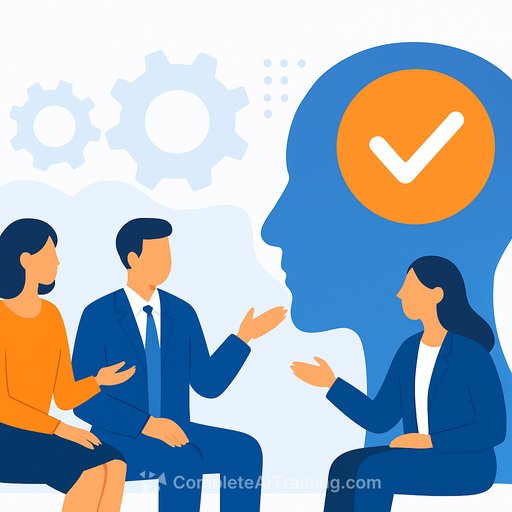
AI adoption touches job design, incentives, skills, and decision rights-HR's wheelhouse. But psychological safety isn't a policy; it's a system that must be embedded into how cross-functional teams plan, build, test, and learn.
That means HR partners with product, data, legal, security, and IT to hardwire norms, rituals, and protections into daily work. Not a campaign-an operating model. For practical training on designing operating models, governance, and rituals, consider AI Design Courses.
A practical playbook HR can deploy now
Use these moves to turn "safe to experiment" into something people can feel and trust.
- Set decision rights and risk appetite: Define what teams can try without approvals, what needs review, and what's off-limits. Publish it. Keep it simple.
- Create a blame-free runway: Add blameless postmortems for AI pilots. Focus on the system, not the individual. Share learning openly.
- Rewrite incentives: In performance reviews, reward learning velocity, risk management, peer coaching, and responsible use-not just outputs.
- Stand up "safety by design" rituals: Pre-mortems for every pilot, red-team reviews for sensitive use cases, and an escalation path with executive cover.
- Make constant feedback easy: Add a two-minute pulse after each sprint: "Did you feel safe to speak up? Were concerns acted on?" Track trendlines.
- Train managers for psychological safety: Teach how to invite dissent, respond without defensiveness, and separate accountability from blame.
- Clarify data and compliance rules: Provide one-page guardrails for privacy, IP, bias, and model use. Reduce ambiguity, reduce fear.
- Name a sponsor shield: For each AI pilot, assign an exec sponsor who publicly protects learning-based failures that follow the rules.
Simple scripts managers can use
- Pilot kickoff: "We expect unknowns. Follow the guardrails. If something goes sideways, I own it. Our goal is learning."
- Weekly check-in: "What's risky or unclear? What did you disagree with this week and why? What do we stop, start, or adjust?"
- Postmortem: "What did the system make easy or hard? What signals did we miss? What will we change next time?"
Metrics that matter
- Safety pulse: Monthly team score on "I can question AI decisions," "I can share bad news early," "My manager backs learning-based failures."
- Learning velocity: Time from idea to pilot, and pilot to decision. Shorter cycles signal higher safety and clarity.
- Issue surfacing rate: Number of flagged risks per sprint. If it drops to zero, people may be holding back.
- Outcome ties: Link psychological safety trends to AI adoption, quality, and risk incidents to prove business value.
Address the fear behind the 22%
People hesitate to lead AI work if failure could bruise their career. Counter that with explicit sponsor protection, clear "safe-to-try" zones, and recognition for thoughtful risk-taking. Make the escalation path visible and fast.
Avoid these common traps
- Safety theater: Posters and town halls without changes to incentives, reviews, or governance.
- Vague guardrails: If rules are fuzzy, people default to caution and progress slows.
- HR-only ownership: This must be co-owned by product, data, legal, and security-or it won't stick.
- Punitive postmortems: One blame-heavy review can erase months of trust.
30-day quick wins
- Publish a one-page AI pilot policy: decision rights, risk tiers, and escalation path.
- Launch blameless postmortems for all pilots and share findings across teams.
- Add a 3-question psychological safety pulse to sprint rituals and track trendlines.
- Train managers in two behaviors: ask for dissent; reward early risk flags.
Download the report for the full survey insights and case examples.
Want to build AI skills alongside cultural change? Explore curated training by role here: AI courses by job.
For a foundational overview of psychological safety, this primer is helpful: What Is Psychological Safety?
About this content
This article is based on research produced by Insights, the custom content arm of MIT Technology Review, in partnership with Infosys. It was researched, designed, and written by human teams, including survey creation and data collection. AI tools, if used, supported secondary production steps under human review.
Your membership also unlocks: