
AI news ·
Warehouse drones cut emissions by nearly 50% through improved inventory accuracy, study finds
Warehouse drones cut greenhouse gas emissions by nearly 50%, according to research at a U.S. fulfillment center. The biggest gains came from fewer inventory write-offs, not energy savings.
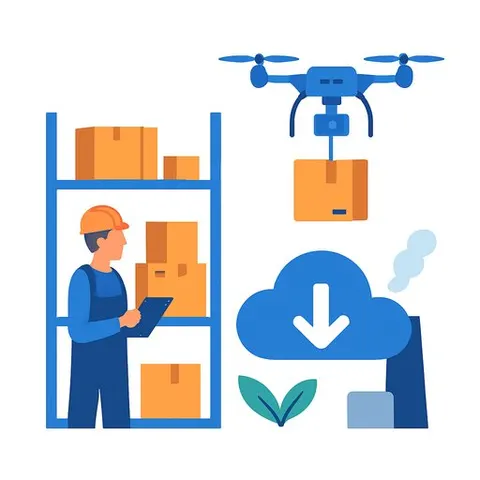
Warehouse drones cut emissions nearly 50% through better inventory tracking
Autonomous indoor drones paired with AI-driven inventory systems can reduce warehouse greenhouse gas emissions by nearly 50%, according to research conducted with a global logistics provider. The gains come not from energy savings alone, but from fewer inventory write-offs, reduced forklift usage, and lower labor commuting requirements.
The study measured emissions across all three scopes: direct emissions from warehouse operations, indirect emissions from energy use, and emissions throughout the supply chain. Researchers collected operational data before and after deploying drone-based inventory automation at a U.S. fulfillment warehouse, then modeled the environmental impact using real activity data.
Where emissions actually drop
Inventory accuracy emerged as the largest driver of emissions reduction. More frequent and precise drone-based cycle counts cut inventory write-offs-products that sit too long and must be discarded. That single improvement accounted for significant emissions savings across the supply chain.
Equipment changes delivered the second major reduction. Warehouses needed fewer forklifts and ran them less often, cutting both energy consumption and the lifecycle emissions from manufacturing and transporting the equipment.
Labor changes contributed a smaller but measurable portion. Staff required for manual inventory tasks decreased, reducing employee commuting emissions.
Full automation isn't necessary
Researchers tested three coverage scenarios: 64% drone coverage (current deployment), 90% coverage (target), and 100% coverage across all scannable locations. At 64% coverage, emissions fell 49.5% compared to manual baseline operations.
Expanding to 90% coverage delivered an additional 33% reduction relative to the 64% baseline. Beyond 90%, emissions reductions flattened. This suggests companies can capture most sustainability benefits before reaching complete automation.
The finding matters for operations managers weighing investment decisions. Substantial emissions cuts don't require the cost and complexity of full warehouse automation.
What this means for supply chain strategy
Warehouse automation traditionally justified itself through labor efficiency and productivity gains. This research adds a third business case: corporate decarbonization.
For managers responsible for sustainability targets, warehouse inventory systems now qualify as a strategic tool. The emissions reductions are measurable and material-not marginal cost reductions hiding in spreadsheets.
If your organization tracks Scope 3 emissions (which most do for supply chain accountability), inventory accuracy directly affects those numbers. Write-offs and excess inventory create emissions that extend far beyond the warehouse.
Learn more about AI for Operations or explore the AI Learning Path for Supply Chain Managers to understand how automation fits into broader supply chain strategy.