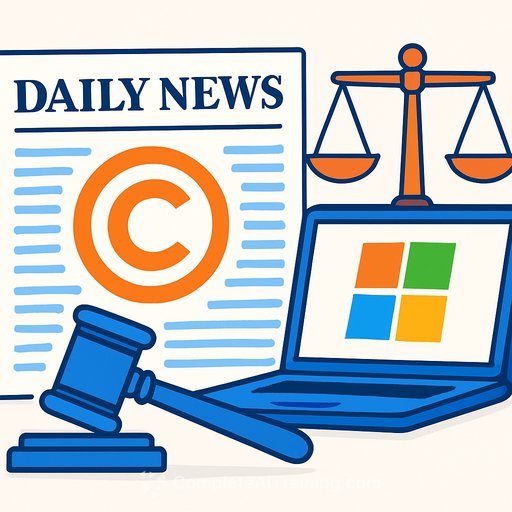
The Arkansas Democrat-Gazette and its parent company, WEHCO Newspapers Inc., have joined a federal lawsuit accusing OpenAI and Microsoft of stealing copyrighted news articles to train commercial AI systems. The suit, filed last week in the Southern District of New York, now represents nearly 400 newspapers - the largest collective action by local and regional publishers to challenge AI companies over unauthorized use of reporting.
The scope of the lawsuit
The case argues that OpenAI and Microsoft "systematically and willfully stole copyrighted news articles" and used them to build products like ChatGPT and Microsoft Copilot. According to the filing, OpenAI extracted more than 138,000 pieces of text from the Democrat-Gazette alone, and over 1 million from AIM Media outlets in Indiana and Texas. The suit claims this copying occurred without permission or payment, violating the Copyright Act and the Digital Millennium Copyright Act by stripping out bylines, copyright notices, and terms of use information.
The legal action follows similar complaints from The New York Times, the New York Daily News, and The Center for Investigative Reporting. Authors including John Grisham and Sarah Silverman have also sued, saying their books were used without compensation.
Copyright and compensation claims
Matt Platkin, a former New Jersey Attorney General representing the media outlets, said the technology harms local news by reducing subscription revenue, licensing fees, and the ability to hire journalists. "AI systems do not critically evaluate city council and community meetings. They don't investigate local crimes and corruption, publish obituaries, or cover the new restaurant opening downtown," Platkin said in a statement. "Local reporters do. This lawsuit is not about stopping AI innovation, but ensuring that innovation happens fairly and within the bounds of the law."
The publishers are seeking a permanent injunction to stop further copyright infringement, along with unspecified damages, restitution, and disgorgement of profits the companies earned from the reported violations.
What technology companies say
Messages left for Microsoft and OpenAI representatives were not returned. The suit, however, cites testimony OpenAI founder Sam Altman gave to the British House of Lords, where he said it would be "impossible to train today's leading AI models without using copyrighted materials."
Platkin added that newspapers operate on tight budgets and "employ dedicated reporters" who keep communities informed, while OpenAI is "generating enormous profits using content they did not create."
Why this matters for writers
When newsrooms lose exclusive control over the copy their staffs produce, the economic foundation of writing as a profession weakens. Every byline, investigation, and obituary represents hours of skilled labor - work that AI models treat as free raw material. For writers outside of journalism, the case sets a precedent: if a court finds that training on copyrighted content without a license is not fair use, it could reshape how companies building large language models source their data and compensate creators. The outcome may determine whether writers across industries get paid when their work fuels commercial AI products.
Your membership also unlocks: