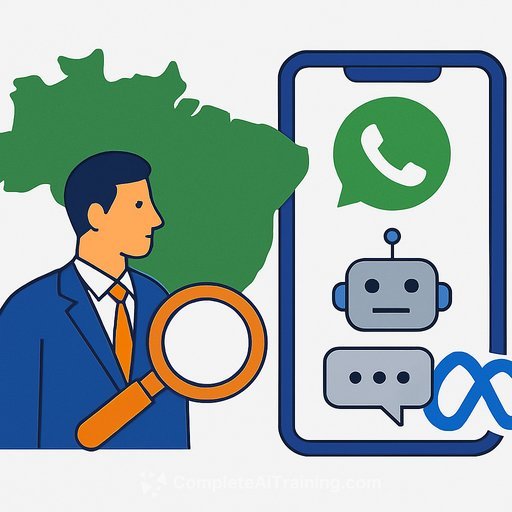
WhatsApp Exempts Brazil From Rival Chatbot Ban: What Customer Support Teams Need To Do Next
WhatsApp is pausing its crackdown on third-party, general-purpose chatbots in Brazil. Users with +55 numbers are exempt while the country's competition authority reviews the policy. Italy previously received a similar carve-out, and EU officials are probing whether Meta is favoring its own assistant on the platform.
If your support org runs automation on WhatsApp, this is a practical fork in the road. Brazil can keep operating as usual for now. Most other regions must prepare for a 90-day wind-down for general-purpose bots and shift to approved auto-replies.
What's Actually Banned (and What's Still Allowed)
WhatsApp's updated terms target general-purpose AI assistants on the Business API - bots that handle open-ended questions like a ChatGPT-style agent. Service bots for support, commerce, and notifications remain allowed. Think ticket lookup, order status, refunds, and proactive alerts-all good.
Outside exempt markets, developers get 90 days to stop responding to prompts and enable standardized auto-replies that redirect users to other channels. WhatsApp's position: the Business API is built for transactional service traffic, not sustained, free-form conversations at scale.
Why Brazil (and Italy) Matter For Support
Brazil is a WhatsApp-first market. The app reaches the vast majority of internet users, so any policy shift touches customer service, local startups, and AI vendors tied to WhatsApp workflows. The exemption keeps your automation running for +55 users.
Italy set the pattern: when a competition regulator intervenes, enforcement pauses or adapts. The European Commission is also reviewing the policy through a self-preferencing lens, which could shape future rules platform-wide.
Action Plan For CX and Support Leaders
- Segment by phone number: Route +55 users through current chatbot flows. For all other country codes, prepare wind-down plans for general-purpose bots.
- Split use cases: Separate general Q&A from service workflows (ticketing, orders, refunds). Keep service bots running. Sunset or relocate general-purpose assistants.
- Stand up compliant auto-replies: Build standardized responses that redirect users to web, app, or SMS. Include clear next steps and expected response times.
- Prepare load balancing: Expect higher agent volume in non-exempt regions. Add triage rules, queue priorities, and after-hours coverage.
- Coordinate with vendors: Confirm timelines, failover paths, SLAs, and analytics for migration. Ask for feature flags to turn experiences on/off by region.
- Data and consent: Review privacy, opt-ins, and storage as you move traffic off WhatsApp. Keep audit trails of policy compliance.
- Owner and cadence: Assign a policy lead. Track regulator updates weekly and adjust rollout plans quickly.
Messaging Templates You Can Use
- Non-exempt regions (wind-down): "Thanks for reaching us on WhatsApp. Our AI assistant is no longer active here. For quick help: visit [URL], use our app, or reply 'AGENT' to chat with a human. We're online Mon-Fri 9-6."
- Brazil (+55): "Our assistant is available on WhatsApp in Brazil. For order status, refunds, and account help, just ask. For complex questions, tap here to continue on the web: [URL]."
Tech Checklist For WhatsApp Business API
- Enable auto-replies and shut off general-purpose responses in non-exempt markets before the 90-day deadline.
- Use template messages to redirect users and confirm opt-ins where needed.
- Add region-aware routing based on MSISDN country code (+55 vs. others).
- Instrument KPIs by market (containment, CSAT, FRT, AHT, deflection rate).
- Implement rate limits and fallbacks for traffic spikes to live chat.
- Keep a feature flag for rapid reactivation if more regulators pause enforcement.
KPIs To Watch
- Containment rate (service flows vs. handoff to human)
- First response time and average handle time
- CSAT by channel and region
- Channel migration rate (WhatsApp to web/app/SMS)
- Cost per resolution and agent occupancy
- Opt-out and complaint rates after policy changes
Risks And How To Reduce Them
- Policy enforcement risk: Document changes and keep logs. Limit general-purpose behavior outside exempt markets.
- Customer confusion: Use clear auto-replies with two-click paths to help. Avoid dead ends.
- Vendor lock-in: Keep parallel channels (web widget, in-app chat, SMS) ready with shared context.
- Agent overload: Expand deflection to FAQs, order trackers, and callback options.
- Quality ratings: Monitor WhatsApp number quality; avoid spammy templates and over-messaging.
What To Watch Next
- More regulators seeking suspensions similar to Brazil and Italy
- Whether WhatsApp offers differentiated access for general-purpose AIs (tiers, quotas, or rate limits)
- How quickly Meta's own assistant expands across languages and features inside WhatsApp
Helpful References
Upskill Your Team For AI-Driven Support
If you're reworking your automation stack, a quick refresh on AI workflows for support can save time and rework. Start with practical training focused on customer service roles.
Bottom line: Keep general-purpose chatbots live in Brazil, prepare wind-downs elsewhere, and double down on service workflows that stay compliant. Build clear redirects, watch your KPIs, and stay ready to pivot as regulators and WhatsApp update the rules.
Your membership also unlocks: