Are employees introducing risk by emotionally leaning on AI?
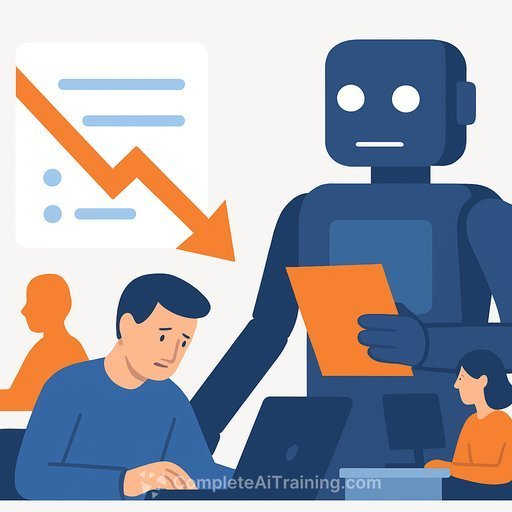
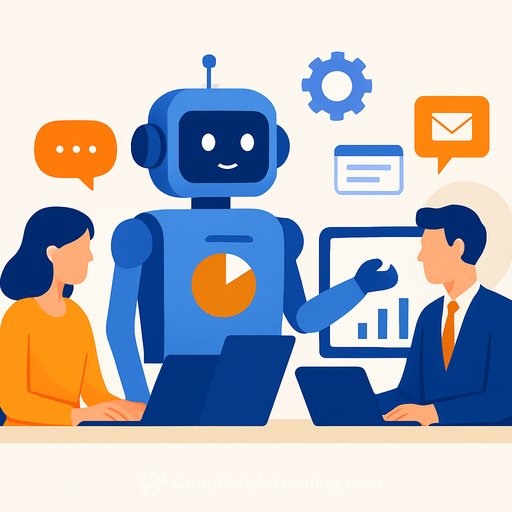
AI chatbots are creeping into HR's most sensitive territory: employee emotions. What started as wellness apps is now enterprise software that listens, scores, and flags "risk" across email, chat, and video calls. For HR, this is support and surveillance wrapped in the same interface.
The upside is obvious: 24/7 availability, zero judgment, and consistent responses. The downside is harder to see at first glance: data trails, bias, and decisions made from feelings turned into scores. Your job is to extract the value without breaking trust.
Why workplace use is different from consumer therapy apps
Employees talk more freely to AI because it doesn't interrupt, doesn't get impatient, and mirrors empathy on cue. Some studies even show AI responses can feel "more empathic" than human ones in short exchanges.
But at work, empathy isn't the only variable. The same system that "listens" can create a profile of stress patterns, burnout risk, and morale by team. That's management intelligence, and it changes how people behave the moment they know it exists.
Support vs. surveillance: the thin line
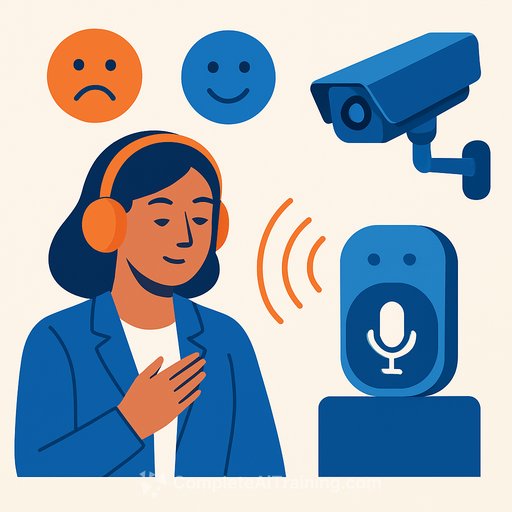
Tools that parse Slack, email, and Zoom to map emotions can help spot real distress. They can also push people to self-censor and avoid seeking help. Employees worry about consequences if they're tagged as stressed, burned out, or "at risk."
Even with anonymization, trust erodes if the boundary between care and control isn't explicit. The result: more stress, less disclosure, and a quieter signal for the people who need help most.
When artificial empathy meets real consequences
AI can validate feelings while missing context, harmful dynamics, or ethical breaches. It can also misread tone and facial cues, especially across cultures and identities. Employees of color, trans and non-binary staff, and people living with mental illness often carry more risk of being misclassified.
There's an authenticity problem too. People rate identical empathetic messages as less genuine when they know an AI wrote them. Yet some employees prefer AI because it feels "safer." Both can be true-and that tension is yours to manage.
The HR playbook: make AI care without creeping people out
- Start with opt-in, not opt-out. Voluntary use, with plain-language consent. No hidden toggles, no implied pressure.
- Separate care from performance. Hard wall between wellbeing data and anything tied to evaluation, compensation, or promotion.
- Collect less, keep less. No continuous recording by default. Turn off audio/video emotion tracking unless clinically justified. Short retention windows.
- Aggregate first, individual last. Managers see trends, not people. Individual data visible only to accredited care providers or with explicit employee consent.
- Publish the rulebook. Make a 1-page "What's collected, why, who can see it, how long we keep it" available to everyone.
- Bias and accuracy audits. Test with diverse employee panels. Validate false positive/negative rates across demographics. Document fixes.
- Incident and escalation plan. Define when AI flags trigger human outreach, and who reaches out. Document duty of care, emergencies, and after-hours rules.
- Manager enablement. Use AI to surface themes; train managers to have the hard conversations. AI supports-the human does the caring.
- Offer a human path-always. Employees should reach a human counselor without touching AI if they prefer.
- Governance with teeth. Cross-functional committee (HR, Legal, Security, DEI, EAP). Quarterly reviews, kill-switch authority, and published decisions.
Policy checklist you can ship this quarter
- Acceptable use: Where AI is allowed, where it isn't (grievances, medical disclosures, investigations).
- Access controls: Role-based access. No manager access to individual emotional data.
- Data handling: Encryption, retention limits, deletion on request where legally possible.
- Transparency: Labels on AI interactions, alerts when monitoring is active, and an audit log employees can request.
- Vendor commitments: No secondary use, no model training on your data, SOC 2/ISO 27001, subprocessor list, breach SLAs.
- Fairness controls: Regular third-party bias testing; publish summaries to employees.
Procurement questions for emotion-aware tools
- What signals do you capture (text, voice, video, biometrics)? Can we disable each one?
- How do you measure accuracy and bias across demographics? Share your latest results.
- Can we keep all raw data in our tenant, or is anything stored with you?
- Is data used to train your models? If not, is that clause in the contract?
- What's your false-alarm rate, and how should we calibrate thresholds to reduce harm?
- Do you provide a kill switch and full export/delete capabilities within 30 days?
Where AI helps-and where it doesn't
- Good uses: After-hours check-ins, pre-meeting stress regulation, structured journaling, triage to human support, anonymized trend reporting.
- Bad uses: Performance scoring, disciplinary decisions, covert monitoring, facial analytics without explicit opt-in and clear benefit.
Measure trust, not just usage
- Trust & safety pulse: Quarterly survey items on psychological safety and privacy confidence.
- Help-seeking behavior: Human counselor utilization, time-to-support after a flag, completion of referrals.
- Harm indicators: Complaints, opt-out rates by team, bias audit deltas, false-positive follow-ups.
- Manager capability: Feedback quality scores after difficult conversations and retention in high-stress teams.
Compliance anchors to ground your program
Use established frameworks to formalize risk controls and reviews. The NIST AI Risk Management Framework offers a practical structure for mapping, measuring, and governing model risk. If you operate in jurisdictions with strict monitoring rules, the UK ICO guidance on monitoring at work is a clear reference point.
Final take
AI can lighten emotional load, but it can also chill speech and widen inequities if left on autopilot. Treat it like any sensitive benefit: consent-based, data-light, human-led.
If your program makes it easier for people to ask for help-and safer to be honest-you're doing it right.
Want to upskill your HR team on AI governance and tooling?
Explore curated learning paths by role at Complete AI Training to build practical fluency without the hype.
Your membership also unlocks: