Work, reworked: What it takes to win in the age of Agentic AI
Agentic AI changes how work gets done. These systems don't just assist; they act. They plan tasks, call tools, hand work back for judgment, and improve through feedback. For HR, this is the cue to redesign roles, teams, and governance so humans and AI agents can create outcomes no traditional org chart can match.
Key takeaways
- Agentic AI is more than automation. It's a new system of work where humans and AI agents co-own workflows, decisions, and outcomes.
- HR is the integrator. You define skills, decision rights, governance, and change plans so the Human-Agentic Workforce actually works.
- Five shifts matter most. Redesign jobs into workflows, move to capability-based staffing, set guardrails, shift from projects to products, and build federated enablement.
What is a Human-Agentic Workforce?
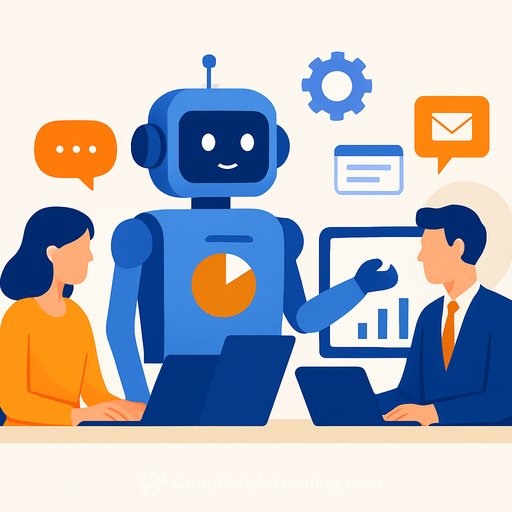
It's a model where people and AI agents operate as one team. Agents handle retrieval, drafting, analysis, testing, routing, and follow-ups. Humans set context, judge edge cases, resolve conflict, and make the calls that carry risk or ethics.
Think recruiting: agents source, score, schedule, and summarize; recruiters build relationships and close. Think L&D: agents create personalized paths; managers coach. Think HR operations: agents resolve routine tickets end-to-end; HR focuses on exceptions and experience.
The five shifts HR must lead
- 1) From jobs to workflows. Deconstruct roles into tasks. Assign each task to human, agent, or human-with-agent oversight. Make the flow visible, measurable, and improvable.
- 2) From headcount to capability inventory. Track skills, tools, data access, and agent abilities. Staff work based on capabilities available across humans and agents, not just titles.
- 3) From policies to guardrails. Codify what agents can do, when they must escalate, what data they can touch, and how outputs are verified. Guardrails beat blanket bans or blind trust.
- 4) From projects to products. Treat key workflows like products with owners, roadmaps, metrics, and release cycles. Agents and prompts are features you ship and improve.
- 5) From centralized COEs to federated enablement. Keep standards and platforms centralized, empower business teams to build locally with templates, patterns, and training.
Redesign work, roles, and decisions
Start with one critical workflow: recruiting, onboarding, payroll, case management, or learning. Map tasks, inputs, outputs, risks, and handoffs. Decide where agents act alone, where they co-pilot, and where humans stay fully in control.
- Task mapping: Break down the work and label decision risk for each step.
- Agent selection: Choose agents by function (research, routing, summarization, QA, orchestration) and wire them to tools and data they need.
- Control loops: Add checkpoints: confidence thresholds, sampling, dual-approval for sensitive actions, and mandatory human sign-off where required.
- Data fitness: Clean sources, permission data, and reduce duplication. Agents magnify data debt.
- Change plan: Update job profiles, KPIs, handbooks, and manager playbooks. Train for judgment, not keystrokes.
Trust, risk, and governance (without slowing the work)
Set clear rules for safety, transparency, and accountability. Use evaluation benchmarks, bias checks, audit logs, red-teaming, and incident response as standard muscle memory. The NIST AI Risk Management Framework is a practical reference for controls and assurance.
Define "who is on the hook" for each decision. Agents propose; humans decide on anything with legal, ethical, or brand impact. Keep a visible register of agent capabilities, versions, datasets, and owners.
Technology and operating model readiness
Stand up an agentic platform with orchestration, identity and access management, prompt and tool catalogs, data policies, and monitoring. Provide safe sandboxes for teams to build and test patterns before they hit production. Integrate with ticketing, HRIS, ATS, and knowledge systems so agents can actually do the work, not just write drafts.
Metrics that matter
- Cycle time: Time-to-fill, time-to-resolution, time-to-launch training.
- Throughput per FTE: Cases closed, reqs handled, learning assets shipped.
- Quality: Defect rates, rework, compliance hits, sentiment on outputs.
- Adoption: Active users, agent-involved steps per workflow, opt-outs.
- Risk: Incident rate, escalation volume, audit findings, data policy breaches.
- Cost-to-serve: Unit cost per request or hire.
- EX impact: CSAT for employees and candidates, manager effort reduced.
- Skills uplift: Share of workforce certified on agent skills and oversight.
Your 90-day HR playbook
- Days 1-30: Pick two priority workflows. Map tasks and risks. Define guardrails, data sources, and decision rights. Select 3-5 agent patterns to test (e.g., sourcing, case routing, knowledge search, QA).
- Days 31-60: Build a pilot with human-in-the-loop. Set metrics, sampling, and escalation rules. Train managers and frontline staff on new handoffs and quality bars.
- Days 61-90: Expand to more tasks in the same workflow. Launch dashboards. Update job profiles and incentives. Document a reusable playbook for the next workflow.
Common pitfalls to avoid
- Buying tools without redesigning the work.
- Skipping data governance, then blaming the tech.
- Unclear accountability for agent-made decisions.
- Training once and calling it done.
- Central teams blocking progress instead of enabling it.
Skill up your workforce
Give HR and people leaders hands-on practice with agent workflows, oversight, and evaluation. Build capability in prompt design, workflow orchestration, and risk controls-not just tool usage.
- AI courses by job function for HR, recruiting, L&D, and operations teams.
- Latest AI courses to keep your playbooks current.
Bottom line
Agentic AI rewards teams that redesign work with intent. Start small, measure hard, and scale what proves value. HR is uniquely positioned to make this shift real-by aligning skills, guardrails, and incentives with a new system of work.
Your membership also unlocks: