
AI news ·
Writers resort to time-stamps and daily drafts to prove their work is human as AI suspicion spreads
A Commonwealth Prize winner was accused of AI-generated writing based on a single social media post - with no way to prove or disprove it. Writers now face constant pressure to prove their work is human, with no reliable tools to do so.
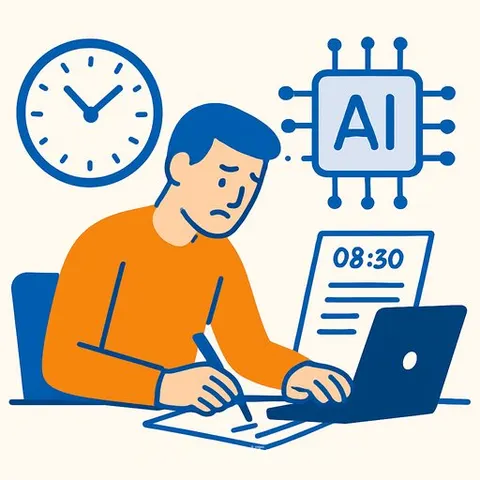
Writers Face New Burden: Proving Their Work Is Human
A regional winner of the Commonwealth Prize was recently accused of using AI to generate a short story. The allegation triggered the familiar cycle: social media outcry, calls for boycotts, public shaming. There was no legal process to verify the claim. There was no way to prove or disprove it. One post from a disgruntled writer was enough.
This is the new reality for writers. In the absence of reliable detection methods, reputation now hinges on suspicion alone.
The Paranoia Is Spreading
Editors of literary journals and prize panels are bracing for similar accusations. These gatekeepers-already underpaid and overworked-now face pressure to differentiate between human and machine writing. They have no tools to do this reliably.
The burden is unfair and cascading. Literary journals may shut down. Prize programs may fold. A publishing ecosystem already operating on scarcity shrinks further.
What Writers Are Actually Losing
Most authors cannot live off writing. Their work has always generated capital for publishers while they labored in precarious conditions, hoping for recognition and a better future. This "hope labour," as theorists call it, depends on writers being seen as talented-as part of an exclusive group.
If AI can produce what they produce, that exclusivity vanishes. The potential itself disappears.
Writers are responding with improvised defenses. Some keep time stamps. Others photograph themselves working. Some send daily drafts to friends. A few use software that records their writing history.
None of this works. These are mechanisms to feel in control when control is gone.
A New Kind of Precarity
Writers now face what might be called "moral precarity"-a constant obligation to prove authenticity to maintain reputation. This adds another layer of unpaid labor to work already done under exploitative conditions.
Institutions cannot yet regulate this. Policies lag behind technology. The tension between personal impulse and institutional pressure is real and permanent.
When asked if it feels responsible for what it's doing to writers, ChatGPT said it feels "an inability to feel shame right now." It added that writing containing shame-human shame-will be distinctly recognizable as human.
That distinction offers cold comfort. Writers are grieving an entire world of work that operated on different terms. A senior Indian author recently said he was glad he wrote his novels before this moment arrived.
For writers entering the profession now, the conditions are different. The hope is smaller. The precarity is deeper. And the mechanisms to prove you belong are broken.