
AI news ·
Zimbabwe's arts council backs AI regulation over bans as creative industry debates technology's role
The Academy of Motion Picture Arts and Sciences will bar fully AI-generated works from major competition categories next year. Zimbabwe's arts council says banning the technology is imprudent-but regulation is coming.
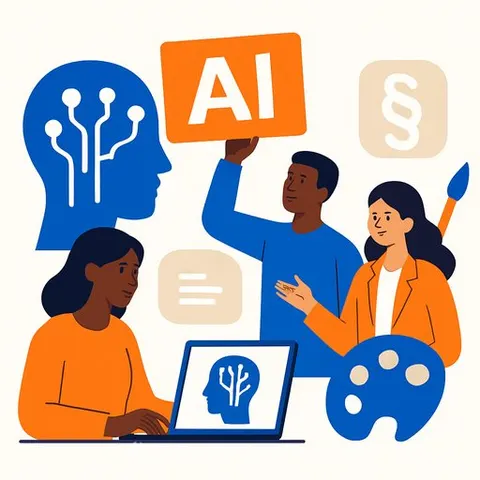
Zimbabwe's Creative Industry Faces AI Reckoning as Academy Tightens Rules
The Academy of Motion Picture Arts and Sciences recently restricted fully AI-generated creative works from major competition categories beginning next year, particularly in music and visual production. The decision has ignited debate globally about whether to protect human creativity or embrace technological change.
Zimbabwe's arts sector is watching closely. The National Arts Council of Zimbabwe chief executive Napoleon Nyanhi said the country should accept AI rather than fight it.
"There is no justification for fighting technology," Nyanhi said. "AI is just another part of the progression of technology in this world."
AI is Already Here
Across Zimbabwe, AI-generated graphics, music promotion and visual storytelling now dominate social media. Young musicians use AI tools to edit videos, generate cover art and master sound. Designers compete against free applications that produce posters and logos in seconds.
Nigerian creatives have embraced AI-generated visuals to amplify Afrobeats. In the US, producers and musicians use AI-assisted mastering and songwriting support. The technology is no longer theoretical.
The anxiety among young creatives is real. A designer who once spent days on artwork now competes against instant AI generation. Music producers watch software compose melodies and mimic instruments in minutes.
History Suggests Industries Adapt, Not Disappear
When digital cameras arrived, photographers did not vanish. When streaming platforms emerged, radio and cinema survived. Industries evolved instead.
Even Hollywood remains divided. Actors' and writers' unions struck in 2023 partly over fears studios could replace creative labour with machines. Actor and producer Tyler Perry paused an $800 million studio expansion after witnessing AI video generation capabilities.
Yet tech innovators argue AI should function as a creative assistant, not a replacement for human imagination.
Regulation Without Suffocation
Nyanhi's position differs from outright bans. He believes regulation and adaptation are smarter approaches.
"Yes, it needs to be regulated. Yes, there is need for control measures and ways of ensuring that AI is not abused, but to ban it seems imprudent in my view," he said.
The National Arts Council already discusses AI during National Arts Merit Awards adjudication. Terms of reference given to judges are reviewed annually and strengthened.
Next year's NAMA Awards could introduce AI disclosure rules for submitted works. Zimbabwe could follow Hollywood's cautious approach or chart its own path.
What Gets Lost, What Gets Found
Completely resisting AI may prove impossible. The technology moves faster than legislation and institutions can adapt.
AI is democratising creativity. Ordinary people now access tools once reserved for major studios and wealthy production houses. That does not make human creativity irrelevant. If anything, AI may increase the value of originality, emotion and authentic storytelling - the very things machines still struggle to replicate genuinely.
For creatives looking to understand how these tools fit into their work, resources like AI for Creatives and AI Design Courses offer practical guidance on adapting to this shift.
Whether the creative world accepts it or not, the AI era is here. The question now is how Zimbabwe regulates it without stifling the innovation that could reshape music, film, design, literature and advertising within the next few years.