AI agent for devops engineers
Cloud Cost Regression Investigation Agent
Every cost spike explained, with the right owner and a safe fix proposal.
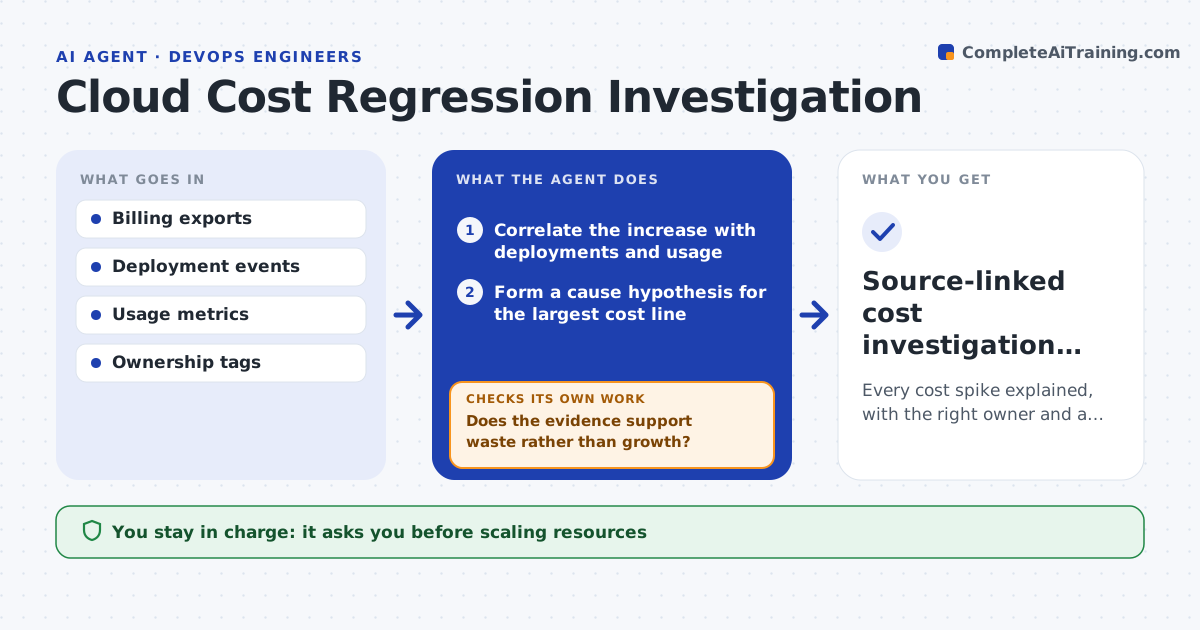
What it does
When the cloud bill spikes, engineers dig through deployments and usage reports by hand. When daily cost crosses the anomaly threshold, this agent correlates the increase with dated workload changes, such as deployments, traffic shifts and new resources. It forms a hypothesis for the largest cost line and runs read-only queries to separate growth from waste. If cost per request stays stable, the increase is growth, and it revises its view or moves to the next resource. When waste is confirmed, it creates an investigation task for the resource owner with a reversible fix proposal. Infrastructure leads approve changes. Edge case: storage cost doubles, but it tracks a new data retention policy, so it is recorded as expected.
How it works
Follow the arrows from top to bottom. The orange dashed arrow is the loop: when a check fails, the agent goes back and tries again.
Read the steps as a list
- Cost anomaly detected
- Correlate the increase with deployments and usage
- Form a cause hypothesis for the largest cost line
- Run read-only resource and unit-cost queries
- Does the evidence support waste rather than growth?If not: investigate the next resource or conclude growth. Back to step 3.
- Create an owner task with a reversible proposal
- Infrastructure lead approves changesThe agent waits here for your OK.
- Source-linked cost investigation case
How it decides
It tests explanations in order of size and checks unit cost to tell growth from waste.
- Stable unit cost means growth, not waste.
- Owners come from resource tags.
- Only reversible changes are proposed.
Make it yours
Every agent is a starting point. You choose these settings for your own situation.
- Anomaly threshold (default 20% above the 14-day average)
- Cost sources and tag that identifies owners
- Unit cost metric per service (default cost per request)
- Who approves changes
What keeps you in control
It always asks you first
- Scaling resources
- Deleting data
- Configuration changes
Hard limits
- Read-only queries.
It stops when
- Done: cause found or growth confirmed.
Set it up
We guide you through the set-up, step by step
Members get the full set-up guide for this agent. No technical skills needed: you copy, paste and upload.
- One set of instructions to paste into your AI, with the clicks for ChatGPT, Claude, Microsoft 365 Copilot, Gemini and Grok
- The agent then walks you through connecting your own data, one source at a time
- A downloadable copy with the flow chart, the rules and the full guide