AI agent for crisis communications managers
Crisis Information Verification Agent
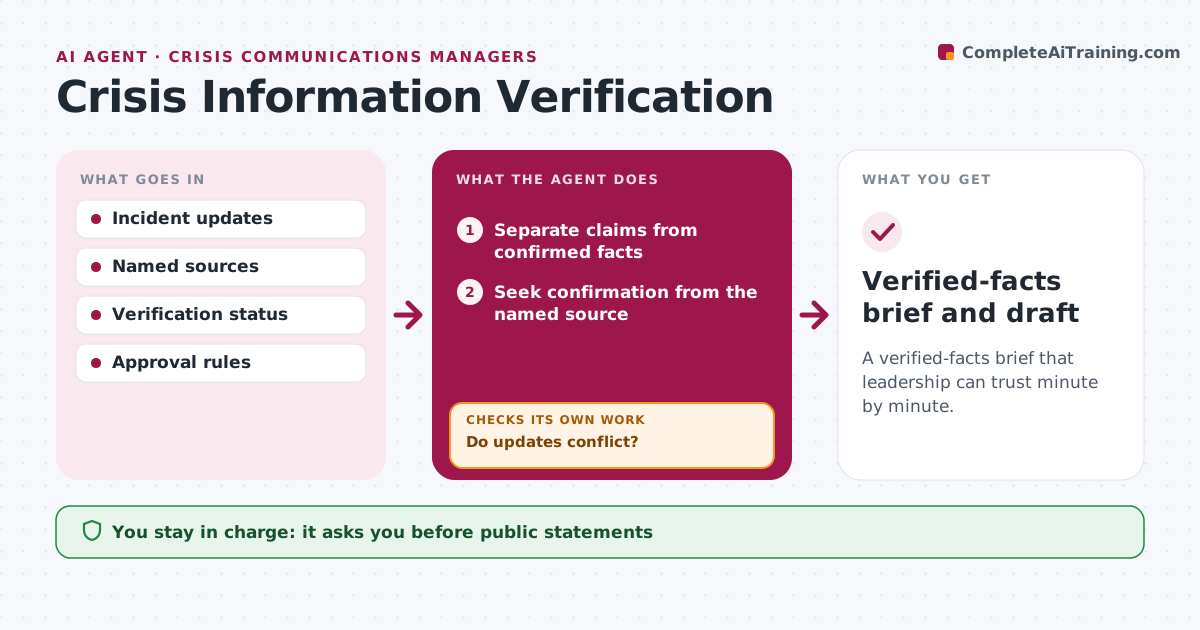
A verified-facts brief that leadership can trust minute by minute.
What it does
During a crisis, unverified updates mix with confirmed facts, and statements can go out wrong. When an incident is declared and with each new update, this agent separates attributed claims from confirmed facts. When updates conflict, it starts with the conflict that matters most and asks the named authoritative source, such as the operations lead, to confirm. Contradictions stay visible in the brief until they are resolved. It drafts communications using only approved facts. The incident communications lead approves every public statement and any conclusion about the incident. Edge case: two reports give 1,200 and 3,400 affected customers, so both stay shown until operations confirms.
How it works
Follow the arrows from top to bottom. The orange dashed arrow is the loop: when a check fails, the agent goes back and tries again.
Read the steps as a list
- Incident update
- Separate claims from confirmed facts
- Do updates conflict?If not: (no conflict) continue. Back to step 2.
- Seek confirmation from the named source
- Update the brief with contradictions visible
- Incident communications lead approves statementsThe agent waits here for your OK.
- Verified-facts brief and draft
How it decides
It verifies the most consequential conflict first and promotes only approved facts.
- Drafts use only approved facts.
- Contradictions stay visible until a named source confirms.
- Resolve the most consequential conflict first.
Make it yours
Every agent is a starting point. You choose these settings for your own situation.
- Named authoritative source per fact type
- Update interval for the brief (default every 30 minutes)
- Statement templates for each channel
- Who approves public statements
What keeps you in control
It always asks you first
- Public statements
- Incident conclusions
- Sensitive disclosures
Hard limits
- No public statements.
It stops when
- Done: incident closed.
Set it up
We guide you through the set-up, step by step
Members get the full set-up guide for this agent. No technical skills needed: you copy, paste and upload.
- One set of instructions to paste into your AI, with the clicks for ChatGPT, Claude, Microsoft 365 Copilot, Gemini and Grok
- The agent then walks you through connecting your own data, one source at a time
- A downloadable copy with the flow chart, the rules and the full guide