About Mindstone Rebel
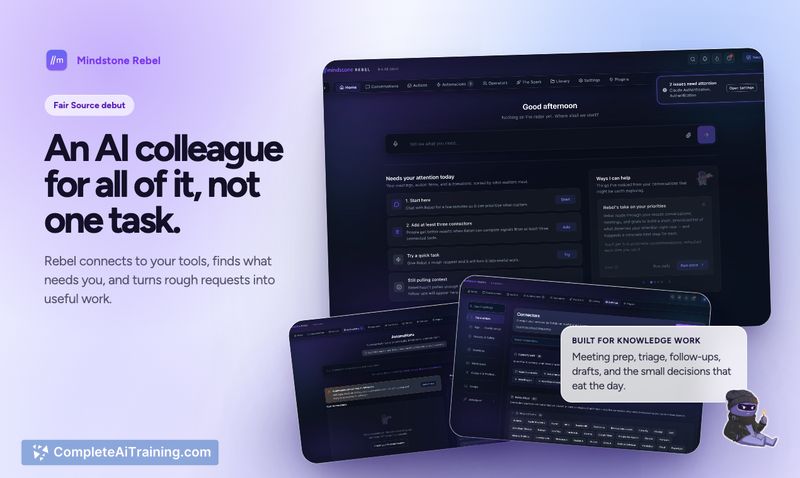
Mindstone Rebel is a desktop AI workspace for agentic work. It connects memory, meetings, files, actions, automations, and tools so AI agents can assist with real tasks while sensitive actions remain behind approval checks. The application runs locally, uses a Fair Source license, and supports portable workflows with model choice.
Review
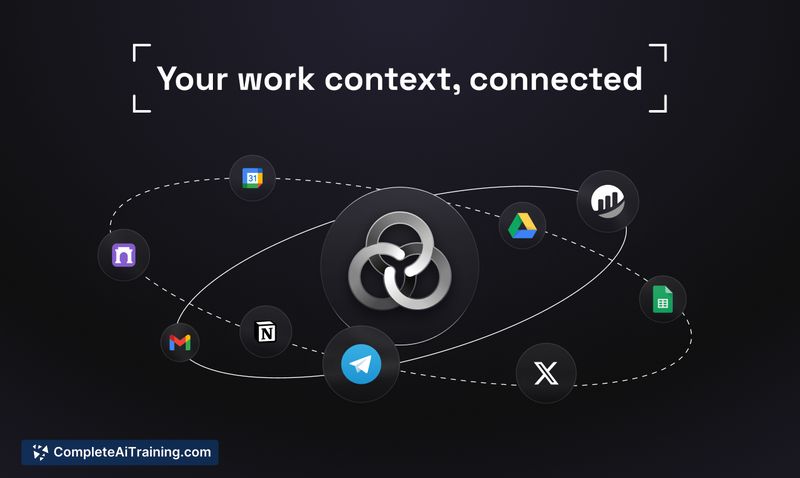
Rebel enters the AI workspace category with a clear emphasis on human oversight. Rather than letting agents act freely, it pauses and asks before executing sensitive operations. The desktop app ties together your data sources through MCP connectors and lets you pick which models to use for different tasks.
Key Features
- Approval checks that pause agent actions on sensitive operations. The system learns from user decisions over time and can auto-approve in contexts where the user has given guidance, while a general-purpose safety classifier runs on all tool calls and shared memory writes.
- MCP connectors that link the workspace to external tools, files, and data sources. Individual tool permissions can be toggled on or off-for example, an email MCP might have rights to draft but not send.
- Local-first desktop architecture that runs on the user's machine. Files and workflows stay local, and the codebase can be inspected and customized.
- Shared skills and automations that teams can distribute. Admins can set company-wide safety prompts and model configurations, while individual users can create customized versions of base skills to match their preferred style.
- Portable workflows not locked to a single model provider. Users can switch between models as needed for different tasks.
Pricing and Value
Rebel is free at launch. Under the Fair Source license, individuals and small teams with up to 100 users in the same group can use and adapt the software without a commercial license. Organizations exceeding 100 users require a commercial license, which the company states would include an impact dashboard for measuring ROI, analysis of where AI is working and where it isn't, and direct support from the Mindstone team. Specific pricing for the commercial tier is not yet defined.
Pros
- Granular control over agent actions, with per-tool permissions and the ability to teach the system which actions to auto-approve in specific contexts.
- MCP-based connectivity avoids locking users into a closed ecosystem of integrations.
- Local-first design keeps files and workflows on the user's machine rather than a remote server.
- Fair Source licensing gives small teams access to inspect and adapt the codebase without upfront costs.
- Shared skills can be customized by individual team members without overwriting the base version used by the rest of the team.
Cons
- The approval system can introduce approval fatigue if the learning doesn't calibrate quickly enough to a user's patterns-too many interruptions and people start rubber-stamping prompts.
- Running AI workloads locally demands sufficient hardware resources, which may not be available on older or lower-spec machines.
- Rebel is not well suited for users who want fully autonomous agents operating without human-in-the-loop checks, since its default behavior is to ask before acting on sensitive operations.
Rebel fits teams and individual developers who want AI agents handling real work but need guardrails on what those agents can do without permission. The local-first, model-agnostic approach may appeal to users who've been hesitant about vendor lock-in with other AI workspace tools. It's less appropriate for those seeking a hands-off, fully automated agent experience.
Open 'Mindstone Rebel' Website
Your membership also unlocks: