AI tool
Murmell
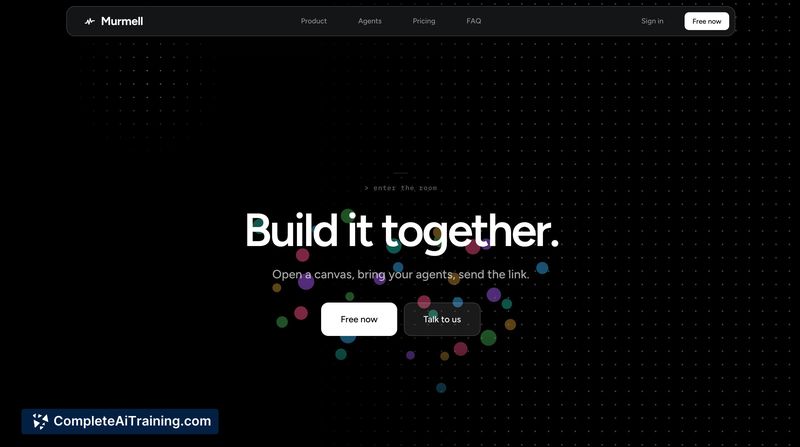
Murmell is a browser-based cloud canvas where AI coding agents and your team work on a single repository in a shared cloud environment. It is designed for development teams who want to avoid coordination issues and keep agents running even when la...
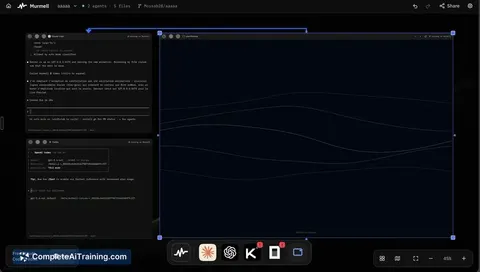
About Murmell
Murmell is a shared cloud canvas that runs in the browser. A team and multiple AI coding agents work on the same repository, on a cloud machine. When you close your laptop, the agents keep going and the work eventually lands back in git.
Review
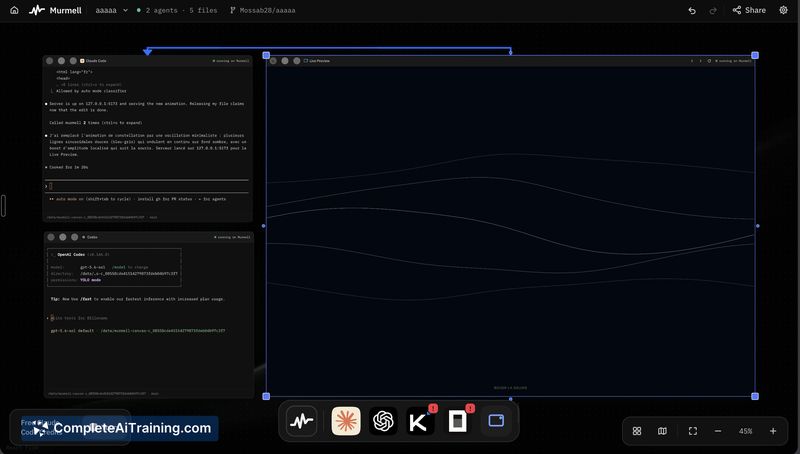
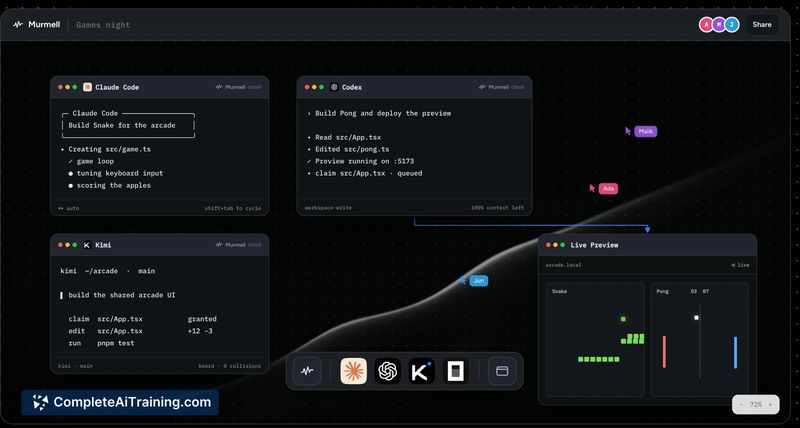
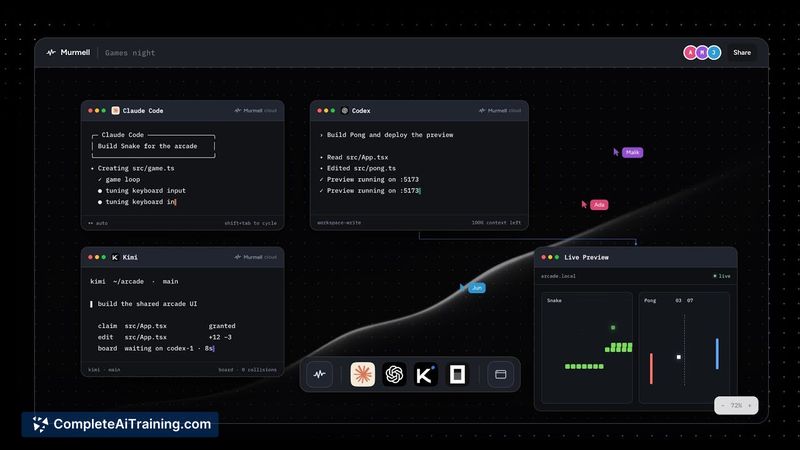
Murmell addresses a specific friction point: coordinating people and AI agents on a single codebase without overwriting each other's work. The tool combines a persistent cloud environment with file-level claims so multiple actors can edit concurrently. It supports a handful of agents today, with more planned.
Key Features
- Shared cloud canvas - A browser-based workspace where the team and agents operate on one repo, with a live preview.
- File-level claims - An agent claims a file before writing, preventing collisions when people and other agents are editing simultaneously.
- Multi-agent support - Run Claude Code, Codex, Kimi, and OpenCode together in the same room. Hermes and OpenClaw are on the roadmap.
- Persistent cloud machine - Work continues after you close the laptop. The environment stays alive, and agents don't depend on a local session.
- Git integration - All changes land back in git, so the project remains accessible through standard version control.
Pricing and Value
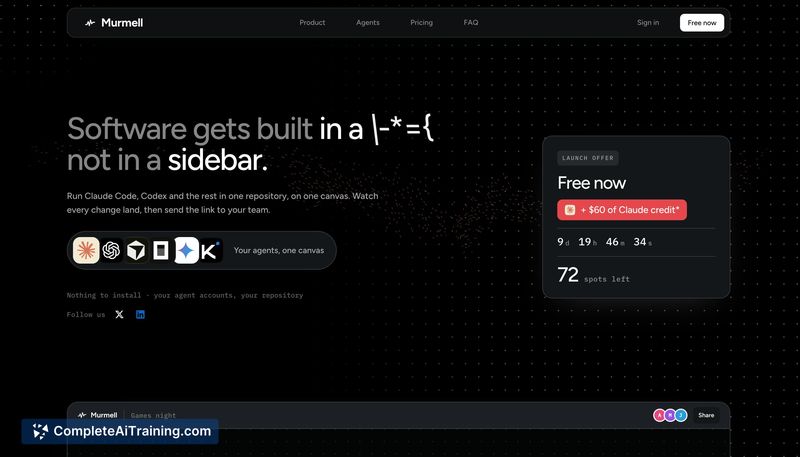
At launch, Murmell is free for the first week and includes $60 of Claude Code credits. Longer-term pricing is not yet defined. The current offer gives a short trial window, but teams evaluating it for ongoing use will need to wait for the pricing model to be announced.
Pros
- Agents keep working when no one is at the keyboard, so progress isn't tied to a developer's laptop uptime.
- File-level claims reduce the coordination overhead of deciding who edits what.
- Multiple agent types can run side by side, which lets a team compare outputs from different models in one session.
- The canvas includes a preview, making it possible to see front-end changes without leaving the tool.
- Git-native output means the work doesn't get siloed in a proprietary format.
Cons
- The agent roster is limited to four options today; teams that rely on other coding agents will have to wait for future additions.
- Mobile simulators (iOS, Android) are planned but not yet available, so mobile development previews still require external tools.
- Murmell is not well suited for teams that need agents to run inside a client's own environment or on-premise infrastructure-the current design is a cloud canvas, not a self-hosted or client-controlled machine.
Murmell fits teams that already use multiple AI coding agents and want a shared, persistent workspace where agents and people can commit to the same repo without manual file locking. It's less relevant for solo developers or teams that work exclusively within a single IDE and don't need an always-on cloud machine. The tool's usefulness will grow as the agent list expands and the mobile simulators ship.
Jobs Murmell suits
We checked Murmell against 500+ jobs; these get the most out of it.
Alternatives to Murmell
Other tools that do the same main job. Our AI compared Murmell with similar tools and kept the ones you could use instead.