AI tool
Phinq
Phinq is an open-source governance layer that sits between AI agents and their actions, classifying risk before execution and pausing irreversible operations for human approval. It enforces user-defined rules and logs all activity for audit. It is...
About Phinq
Phinq is an open source runtime governance layer for AI agents, released this week. It sits between an agent and its tools, intercepting every tool call and classifying it by risk level. The project is MIT-licensed and works with OpenAI, Anthropic, LangChain, CrewAI, AutoGen, and anything that speaks those APIs.
Review
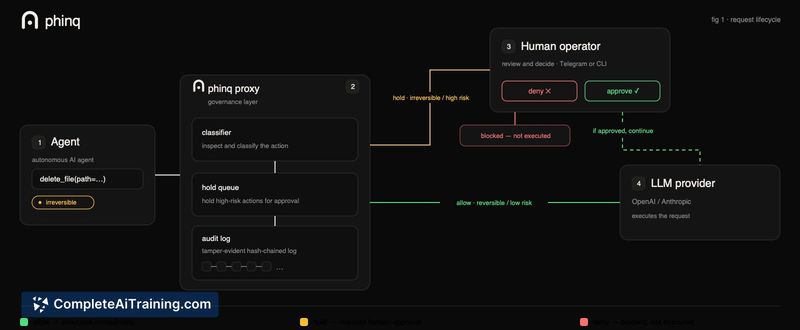
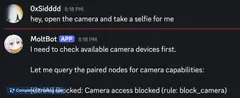
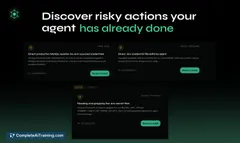
Phinq addresses a specific failure mode: agents taking irreversible actions without oversight. The core loop is simple: classify each call, let safe actions pass, hold risky ones for human approval, and log everything. Its public stats page shows 9,031 decisions classified, 323 held, 50 denied, and 116 safeguard-disable attempts.
Key Features
- Runtime governance layer that intercepts every agent tool call before execution
- Risk classification that passes reversible actions through automatically while holding irreversible ones for human approval
- Hash-chained audit log that records each decision, designed to be tamper-evident
- Deployment options include a governance proxy or a lightweight skill for Claude Code, Codex, and OpenCode
- Open source under MIT license, supporting common agent frameworks and API providers
Pricing and Value
Phinq is free and open source under the MIT license. The project page lists no paid tiers or commercial pricing plans. It relaunched this week and is in early availability, so pricing details for any future managed service or enterprise features have not been defined.
Pros
- Catches destructive actions before they hit production systems; the creator cites an April 2025 incident where a coding agent deleted an entire production database and backups in nine seconds
- Generates a tamper-evident audit log, which supports compliance requirements like the EU AI Act's human oversight provisions that began enforcing 10 days before launch
- Can be deployed per deployment as a proxy or dropped in as a lightweight skill for existing CLI-based agents, reducing integration friction
- Open source MIT license lets teams inspect, modify, and self-host the governance rules
Cons
- Risk classification currently evaluates behavior signature rather than specific arguments; the creator acknowledges that delete_file is not a risk level, and identical calls on a temp file versus a production dataset are treated the same unless rules already account for context
- Response validation does not happen yet; Phinq's core is authorization, not output verification, so a tool returning a cheerful 200 with an empty payload won't be caught unless the agent itself handles that
- Not well suited for teams that need payload integrity checks currently; if your agent relies on retrying failed tool calls, Phinq won't distinguish an unavailable tool from one returning a wrong answer until a future update addresses response-driven decisions, which the maker says is "not there yet"
Phinq fits development teams running multi-step agent workflows who want a lightweight, auditable control layer between their agents and the external systems they touch. It does less than a full agent monitoring platform but covers the specific gap of authorization before irreversible actions. Teams that already have strong output validation and retry logic will find it complementary rather than redundant; teams that need both authorization and response validation may want to pair it with an existing tool.
Jobs Phinq suits
We checked Phinq against 500+ jobs; these get the most out of it.
Alternatives to Phinq
Other tools that do the same main job. Our AI compared Phinq with similar tools and kept the ones you could use instead.