AI tool
Predibase Reinforcement Fine-Tuning
Predibase Reinforcement Fine-Tuning enables customizing open-source LLMs using reinforcement learning, improving performance beyond GPT-4 even with limited labeled data. Optimize language models efficiently for advanced, data-scarce applications.
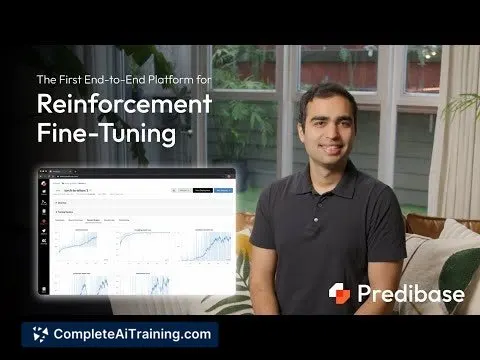
About Predibase Reinforcement Fine-Tuning
Predibase Reinforcement Fine-Tuning is a platform that enables users to improve large language models (LLMs) using reinforcement learning techniques. It allows fine-tuning of open-source LLMs with minimal labeled data, aiming to enhance model output quality efficiently and effectively.
Review
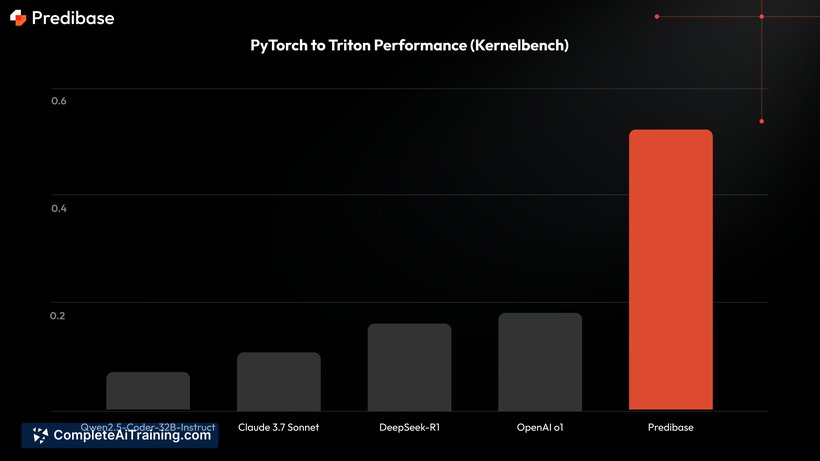
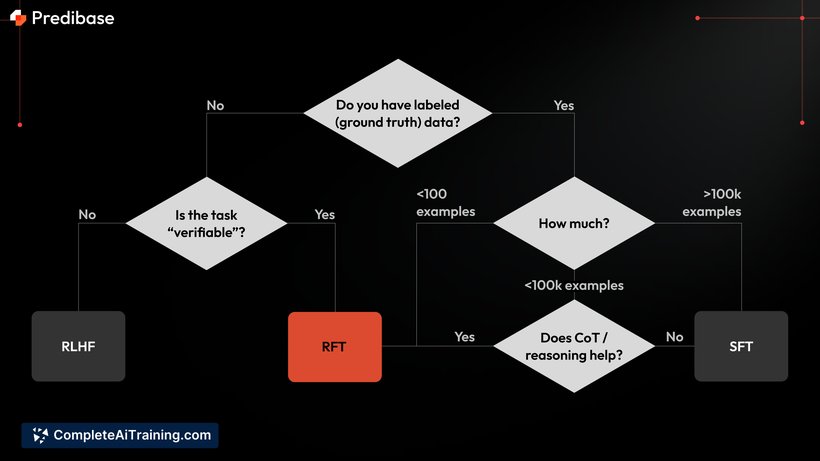
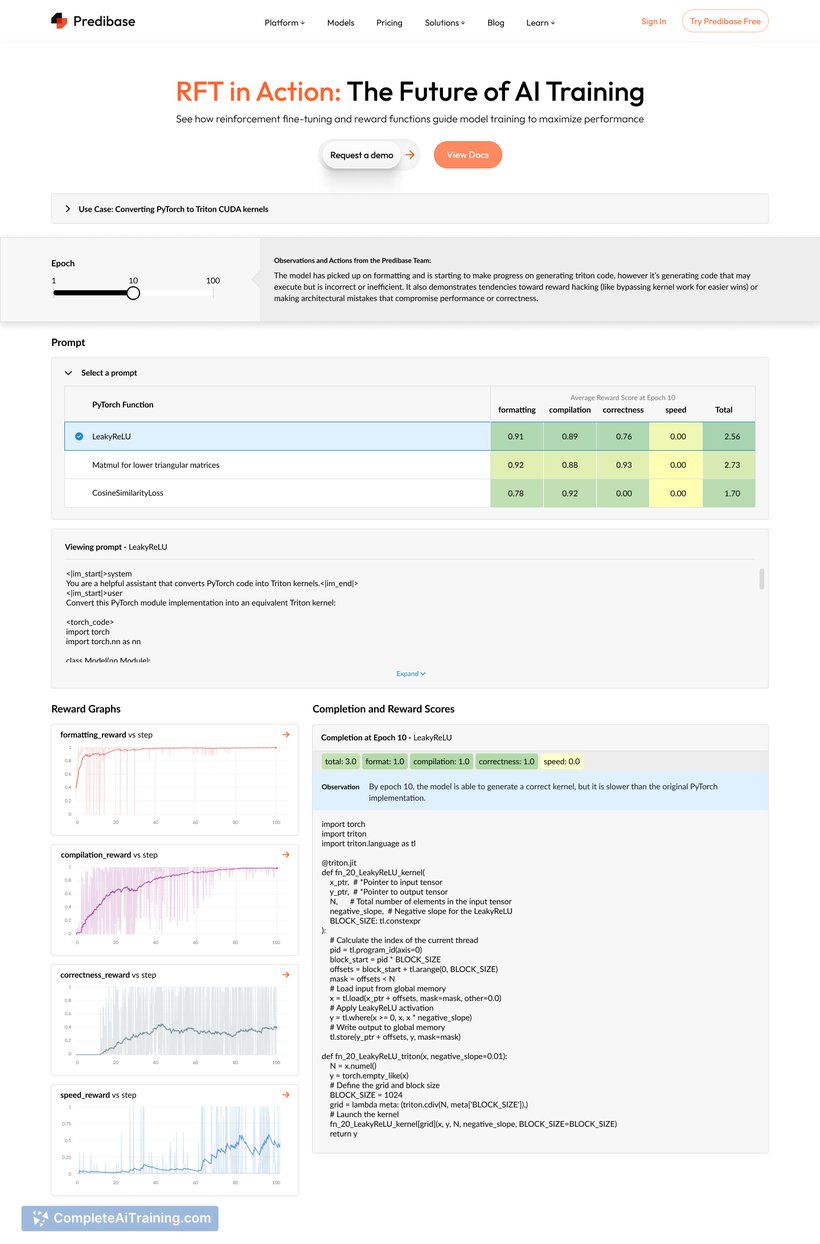
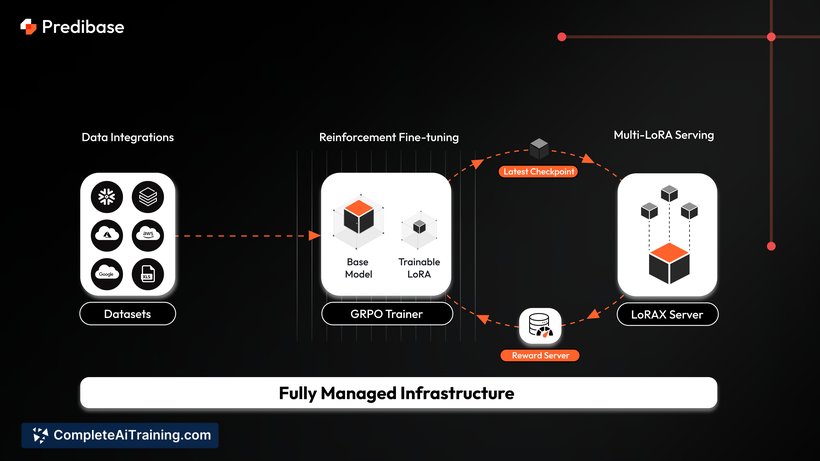
This tool offers a streamlined approach to customizing LLMs without the need for extensive datasets or complicated prompt engineering. By leveraging reinforcement fine-tuning, it promises to deliver performance improvements that can surpass even advanced commercial models in specialized tasks. Its user-friendly platform is suitable for AI teams looking to quickly iterate and deploy fine-tuned models.
Key Features
- Fine-tuning with very limited labeled data, reducing dependence on large datasets.
- Turbo LoRA speculative decoding for up to 3-4x faster inference speeds.
- Ability to define custom reward functions to guide model behavior during training.
- Enterprise-ready deployment options, including cloud and virtual private cloud (VPC) environments with full security.
- Integration of supervised fine-tuning (SFT) warmups to handle highly specialized tasks effectively.
Pricing and Value
Predibase Reinforcement Fine-Tuning offers free usage options, making it accessible for developers and teams exploring fine-tuning capabilities. The platform’s value lies in its ability to reduce the need for massive labeled datasets, which can significantly lower costs and resource requirements. Its rapid iteration cycle and deployment flexibility provide additional value for enterprises seeking secure and scalable AI model customization.
Pros
- Requires only a small number of labeled examples to achieve competitive or superior performance.
- Improves inference speed substantially through Turbo LoRA technology.
- Supports secure deployment options suitable for enterprise environments.
- Custom reward functions offer precise control over model training objectives.
- Facilitates faster development cycles from idea to deployment.
Cons
- May require some familiarity with reinforcement learning concepts to fully utilize reward function customization.
- Advanced features like Turbo LoRA might have a learning curve for new users.
- Currently focused on open-source LLMs, potentially limiting integration with proprietary models.
Overall, this platform is well suited for AI developers and organizations aiming to fine-tune language models efficiently without extensive labeled data. It is particularly beneficial for projects that demand specialized model behavior or faster inference performance, making it a strong choice for teams focused on practical and scalable LLM customization.
Jobs Predibase Reinforcement Fine-Tuning suits
We checked Predibase Reinforcement Fine-Tuning against 500+ jobs; these get the most out of it.