
Learning path
Learning AI as a Machine Learning Engineer
Machine learning engineers build models that reach production. This path shows you how to use AI assistants for data prep, training, evaluation, deployment, and career growth.

Your path
Everything in the Machine Learning Engineer AI kit, in the order that makes sense. Members tick off each step and see their progress.
Set up your AI
We guide you through each click.
Let skills do your everyday tasks
Connect your apps and pick your AI apps
Hand whole tasks to AI agents
Build your own tools
Keep growing
Everything for machine learning engineers
All the courses, certifications, AI tools, MCP servers and apps for machine learning engineers, most relevant first. Open any list to see more.
Take the prompt courses
A short framework course to learn how to ask, then 8 lessons with ready-to-use prompts for machine learning engineers.
Start with this framework: how to talk to AI
Context engineering helps you turn messy ML debugging notes into structured prompts so an agent reproduces failing model training runs.
Then your prompt course for machine learning engineersWatch the video courses or add them to your Favorites for later
146 video courses our AI picked for machine learning engineers, most useful first. Save the ones you want to watch later with the heart.
Favorites are saved to your account: sign in or get your AI kit first.
Show all 146 video courses
Get certified, or add certifications to your Favorites
Every course ends in an exam and a certificate you can add to LinkedIn. Save the certifications you are aiming for with the heart.
Favorites are saved to your account: sign in or get your AI kit first.
More certifications for machine learning engineersShow all 24 certifications
Try the AI tools for machine learning engineers
24 AI tools our AI matched to the work of machine learning engineers, best fit first. Each review shows what it does, its alternatives and the jobs it suits.
Favorites are saved to your account: sign in or get your AI kit first.
Show all 24 AI tools
Connect your AI to the apps machine learning engineers use
MCP servers let ChatGPT, Claude or Copilot look things up and get work done in other apps, like your email, calendar or bookkeeping software. These 12 fit the work of machine learning engineers best, well-known apps first.
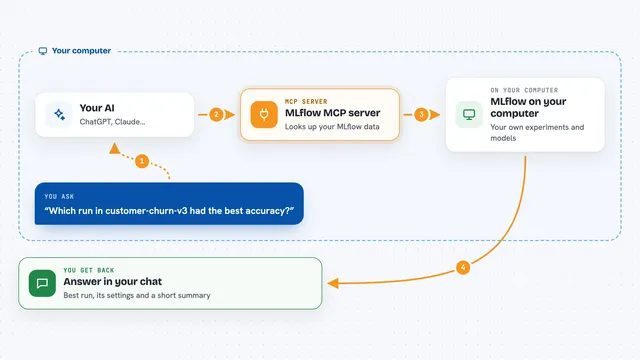
MLflow MCP server
by us-allLets your AI look up MLflow experiments, runs, models, and traces and summarize them for you.

Jungle Grid MCP server
by Jungle-GridLets your AI estimate, run and check GPU jobs on Jungle Grid, then fetch the results.
Developer tools Official
Tech Trend MCP server
by salwksYour AI can gather fresh research papers, trending code, and FDA device news, then write you a short newspaper-style briefing.

Jupyter MCP server
by datalayerLet your AI open, edit and run Jupyter notebooks for you while you watch.
CodingNo install
Jupyter Notebook MCP server
by jjsantos01Let your AI write and run code inside your Jupyter Notebook, cell by cell, and read the results.
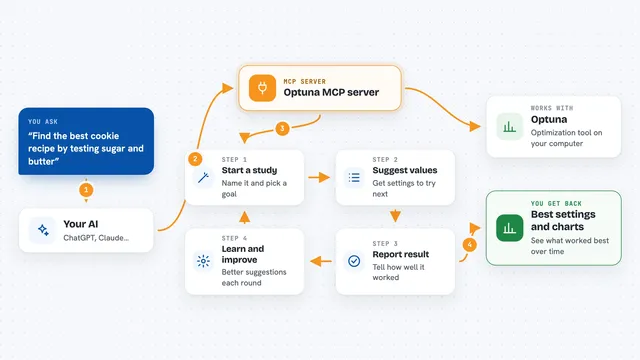
Optuna MCP server
by optunaLet your AI run optimization experiments and show you the results as charts.
Analytics OfficialShow all 12 MCP servers

pcq MCP server
by playidea-labLets your AI run, check and compare machine learning experiments in your project and report back what happened.

Google Colab MCP server
by SebastianGilPinzonLet your AI open a Google Colab notebook, add and run code cells, and pick a GPU for you.

Google AI Search MCP server
by shariqriazzLets your AI search the web and pull answers from official docs using Google's AI models.

ZenML MCP server
by zenml-ioLets your AI look up ZenML pipelines, runs, models, and deployments, and start new pipeline runs for you.

Papers with Code MCP server
by hbgLets your AI search research papers and find the code, datasets, and results linked to them.

arXiv MCP server
by andybrandtLets your AI search arXiv for research papers and pull up their details and full text.
ResearchNo installBuild your own AI apps for machine learning engineers
Apps you build yourself with your own AI, no coding needed and no monthly fee. Our AI picked the 12 that fit the work of machine learning engineers.
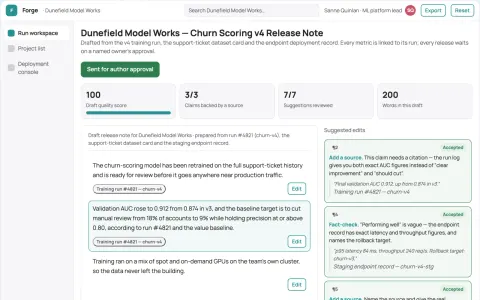
Managed model training and deployment workspace
Reduce tool switching and manual handoffs while keeping models and data under the team's control.
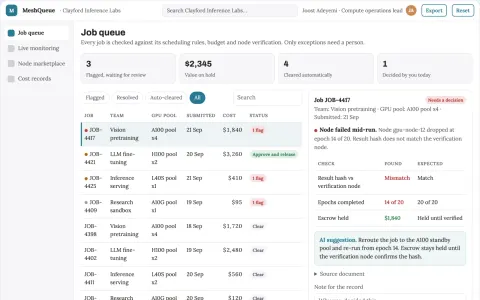
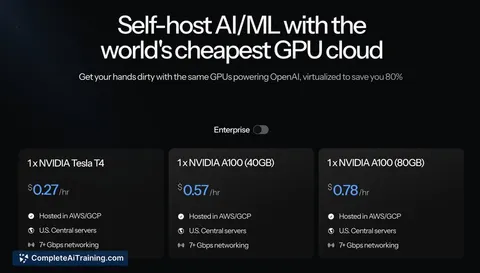
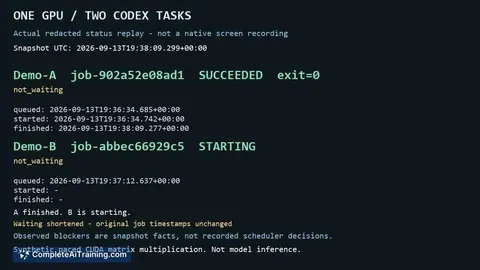
GPU compute job coordination portal
Run training and inference jobs on pooled GPU capacity through one owned portal.
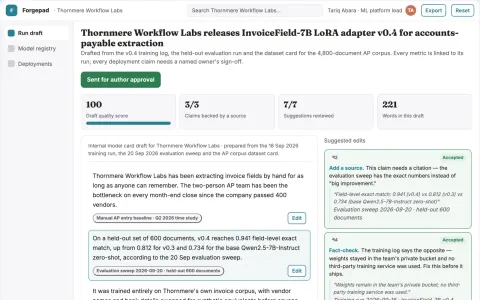
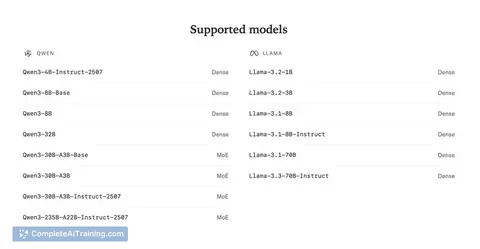
Private fine-tuning and workflow automation workspace
Reduce tool sprawl and manual training work while keeping data and model weights under the team's control.
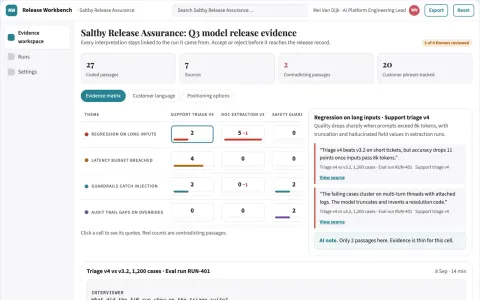
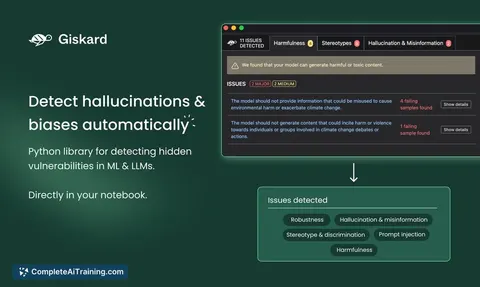
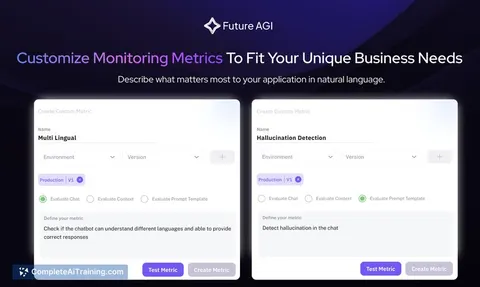
AI model test and monitoring workbench
Reduce release risk while keeping a defensible test record.
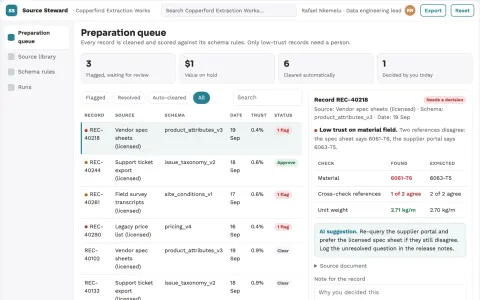
Raw-source data preparation and stewardship library
Reduce repeated data-preparation work while keeping source rights and review visible.
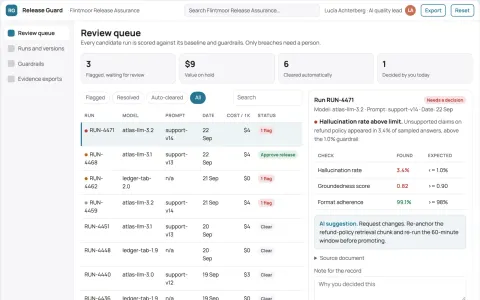
AI output evidence review and release workspace
Reduce unreviewed model releases while keeping a defensible record of what was checked.
Show all 12 apps
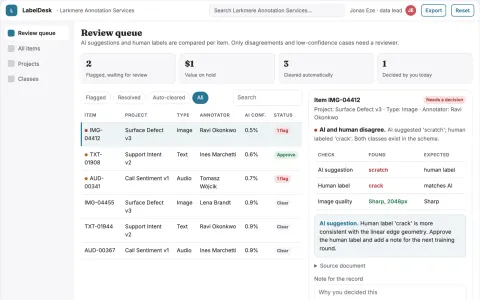
Human-reviewed training data labeling workspace
Reduce tool sprawl and rework while keeping one reviewable record of every label.
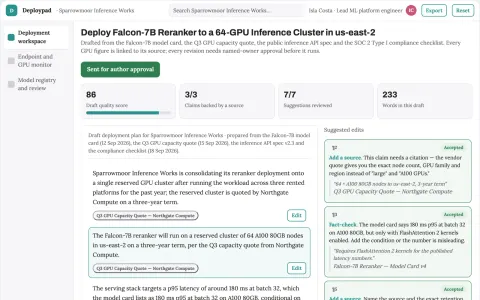
Managed GPU model deployment control plane
Reduce the number of rented platforms and manual handoffs needed to deploy and run AI models.
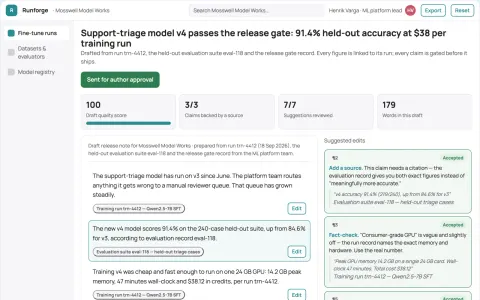
Managed custom model fine-tuning and deployment workspace
Reduce the engineering effort to reach a deployed, evaluated custom model.
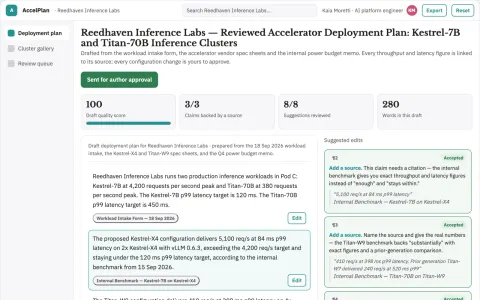
Managed AI accelerator deployment workspace
Reduce the time and coordination needed to run training and inference on specialized accelerators.
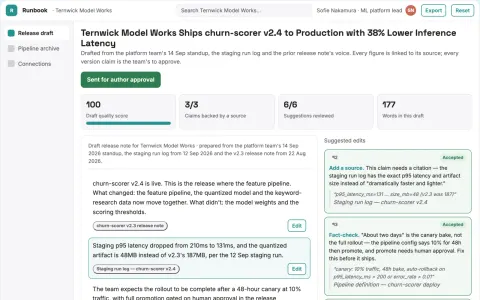
AI delivery workspace with managed implementation
Reduce tool sprawl and handoff effort while keeping project data and workflow under the team's control.
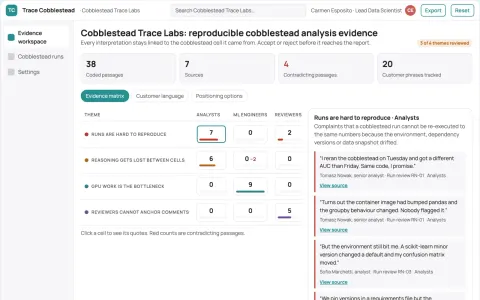
Evidence-backed notebook analysis and reporting workspace
Reduce notebook rework while preserving the analyst's reasoning.









































About this learning path
6 topicsAI skills for machine learning engineers
Your day is part engineering, part science. You clean data, choose models, read loss curves, ship APIs, and explain why a model behaves the way it does.
This path helps you use AI tools as a practical teammate. You keep the judgment and the responsibility. The assistant handles drafts, code skeletons, and first passes so you can focus on decisions that need a human.
Why AI matters for this job
Machine learning work is moving faster. Teams expect models to be trained, tested, and served with less waiting. AI assistants can help you move through routine steps while you stay responsible for design and results.
The engineers who use these tools well spend more time on hard problems: data quality, failure analysis, and clear communication.
What the path includes
You start with setup questions and connecting your AI assistant to your notes, code, and documentation. Then you practice job skills inside your AI, such as asking for a clean training script or a serving plan.
The path includes this prompt course, video courses chosen for machine learning engineers, and the certifications that come with those courses. You can move at your own pace and return to any lesson when a real task appears.
How it saves you time
The prompts help with the slow parts: writing boilerplate, checking assumptions, drafting evaluation code, and turning research notes into runnable steps. You still review every line and every result.
Saved time goes back into thinking about model behavior, data leaks, edge cases, and the needs of the people who use your system.
How it protects your career
AI tools do not replace engineers who understand the whole pipeline. They make those engineers faster and more valuable. You learn to use AI in a way that keeps your skills sharp instead of hiding them.
You also practice safe habits: protecting private data, checking outputs, and documenting your decisions so your work can be trusted.
How to start
Begin with the setup questions and connect your AI assistant. Then take the prompt course in order. Each lesson gives you a prompt you can adapt to your current project.
After that, choose a video course that matches your next goal, whether that is deployment, monitoring, or research reading. Use the certification as a checkpoint, not the finish line.
Frequently asked questions
Do I need to be an expert in AI tools?
No. The path starts with setup and basic habits. If you can write code and explain your work, you can follow the lessons and adapt them to your stack.Will this replace my machine learning knowledge?
No. The prompts support your knowledge. You still choose models, judge data quality, and decide what ships.How much time should I plan?
Short sessions work well. Many learners do one lesson, try it on a real task, then return the next day. You can move faster or slower depending on your project.Are the certifications useful?
They give you a clear marker of practice completed. The real value is the work you can show: cleaner pipelines, better evaluations, and models that serve reliably.