AI tool
Reviu
Reviu is a review workspace for coding agents. Developers run Claude Code, Codex, Gemini, and other ACP agents in durable sessions, inspect diffs, and send inline comments. It finishes branches with real Git and supports GitHub pull request review...
About Reviu
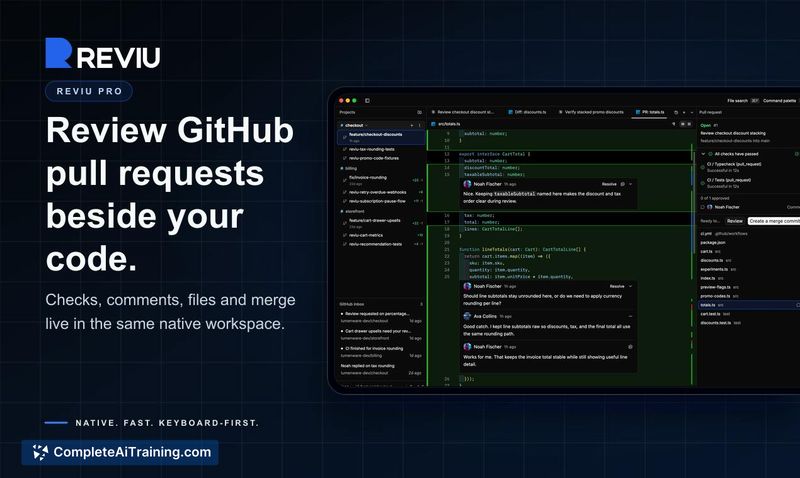
Reviu is a native desktop app built for reviewing code written by coding agents before it gets pushed. It runs agents like Claude Code, Codex, and Gemini in durable sessions, letting you inspect every diff, send inline comments back to the agent, and handle Git operations without switching tools. The app was rebuilt from an earlier Git client into a review workspace centered on the agent review loop.
Review
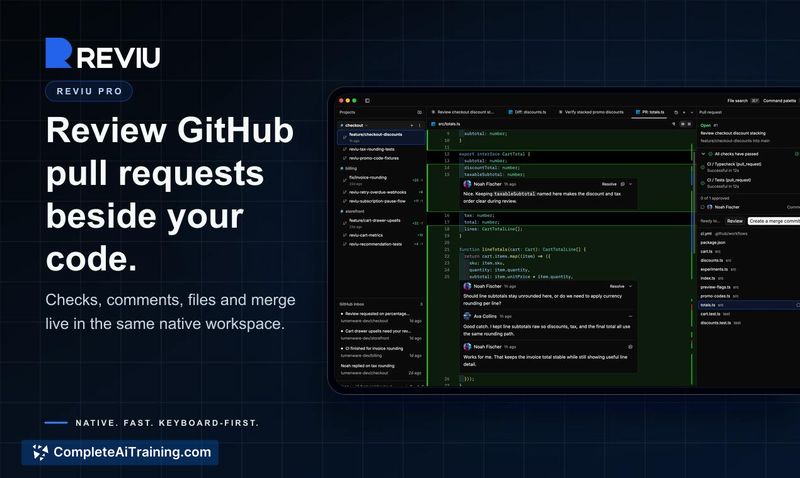
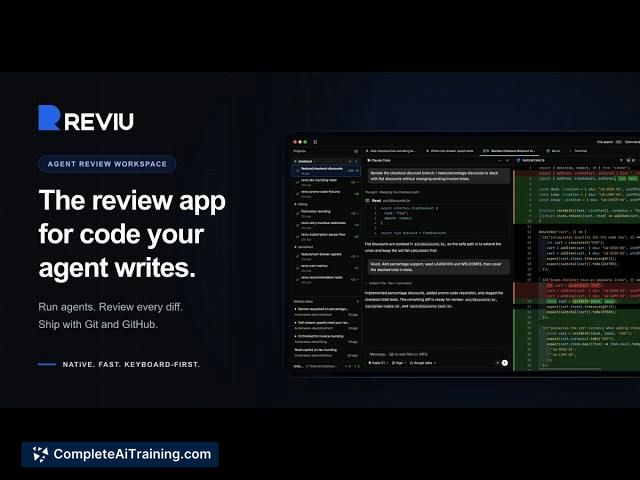
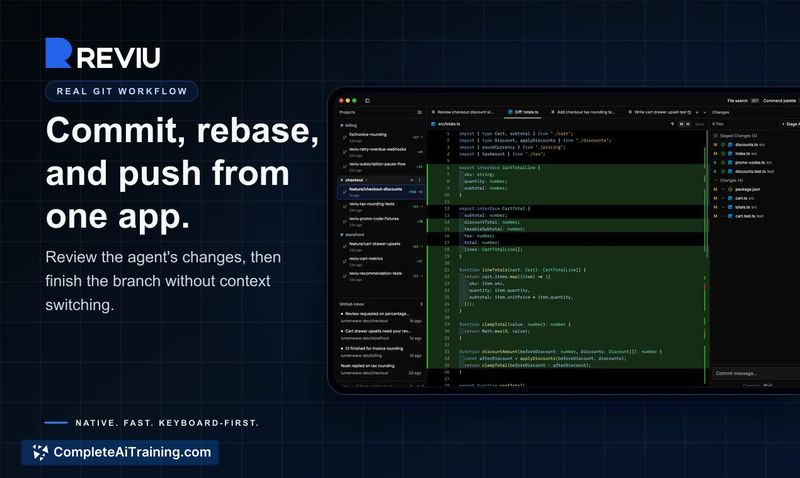
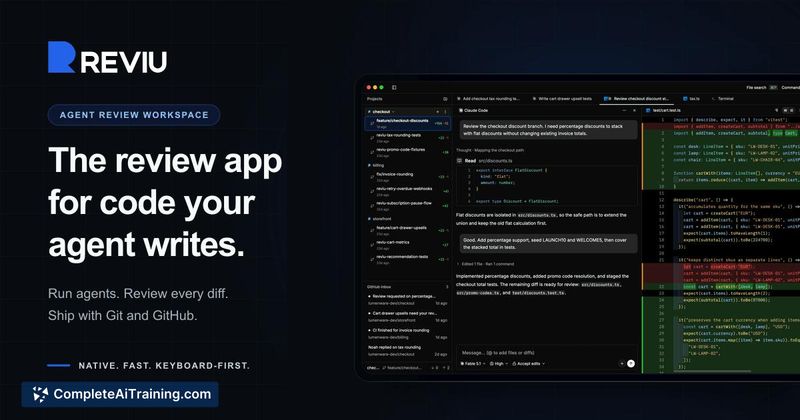
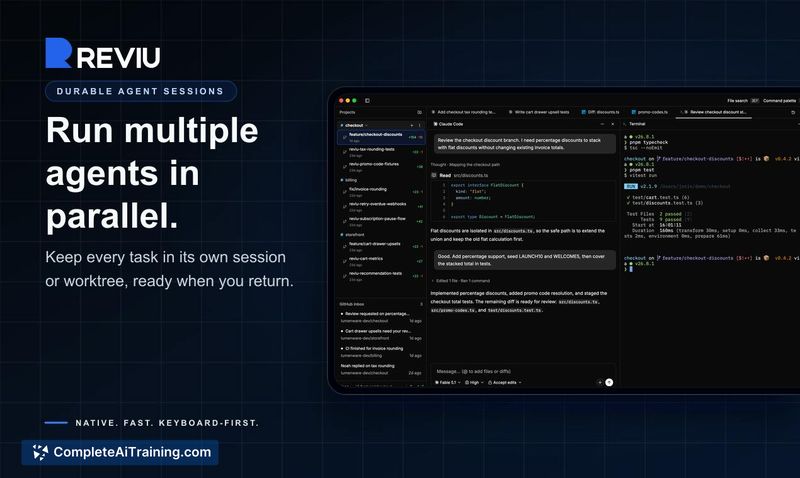
Reviu approaches agent-written code from a specific angle: the review boundary. Instead of treating agent interaction as a chat with a diff viewer attached, the app structures work around sessions and turns. Each turn produces a diff receipt, and the reviewer can comment on exact lines to send feedback back to the agent with file and line context.
Key Features
- Per-turn diff receipts. After each agent turn, Reviu shows exactly what files changed. This lets reviewers inspect changes incrementally rather than squashing the entire branch at once.
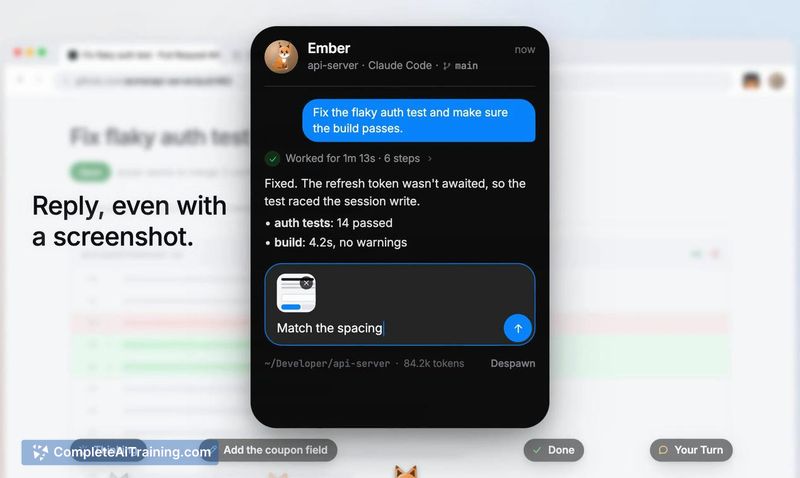
- Inline comments with line-level context. You can comment on a specific line in the diff and send that comment back to the agent. The agent receives the file path and line number, which replaces vague instructions like "fix that function."
- Checkpoints and undo. Reviu snapshots the working tree before each turn. You can undo a turn to restore files to their previous state. The undo is repo-state only-it does not reverse side effects like API calls or database writes that happened during the turn.
- Durable agent sessions with worktrees. Agents run in isolated worktrees tied to a project and checkout. Tool calls and file changes stay visible within the session, and the boundary between agent-written code and reviewed code remains explicit.
- Git and GitHub workflows. The free tier includes local Git operations (stage, rebase, commit). The Pro tier adds GitHub PR review, checks, merge, notifications, and browser handoff.
Pricing and Value
Reviu uses a free tier with paid Pro features. The free app covers agent sessions, local diff review, worktrees, checkpoints, an editor/terminal, and local Git workflows. Pro adds the GitHub integration layer: PR review, checks, merge, notifications, and browser handoff. The maker has stated that GitHub features are not included in the free tier due to API, authentication, and maintenance costs. Exact Pro pricing is not yet defined in the available information.
Pros
- Review granularity matches agent turns rather than whole branches, so changes are inspected in the same units the agent produced them.
- Inline comments carry file and line context back to the agent, which reduces ambiguity in feedback.
- Checkpoints let you walk back a turn without manually untangling which files changed when.
- The app separates agent-written code from reviewed code as a deliberate design boundary, not an afterthought.
- Runs multiple ACP agents (Claude Code, Codex, Gemini) within the same review workspace.
Cons
- The undo feature only reverts file changes. Side effects from shell commands-API calls, database writes, pushes-persist after an undo, and the app does not currently surface a warning about them.
- When a later turn edits a file already marked as reviewed, it's unclear whether the review status updates to reflect the new changes or stays silently green.
- Reviu is not well suited for developers who prefer reviewing agent output as a single squashed diff or who work primarily outside of Git-based workflows.
Reviu fits teams and solo developers who already use coding agents and want a structured review loop between agent output and human approval. The turn-by-turn diff model works best when you need to catch issues that disappear in a full branch diff, though reviewers should be aware that repo-state checkpoints don't cover external side effects. If your workflow centers on squashed reviews or you rarely inspect incremental agent changes, the session-and-turn structure may add steps you don't need.
Jobs Reviu suits
We checked Reviu against 500+ jobs; these get the most out of it.