AI tool
Snitch
Snitch is a Slack AI agent that creates, updates, and answers questions about a company's org chart. It is built for employees and HR teams in large organizations who need quick access to reporting structures and personnel details.
About Snitch
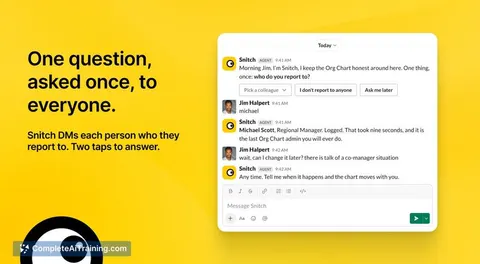
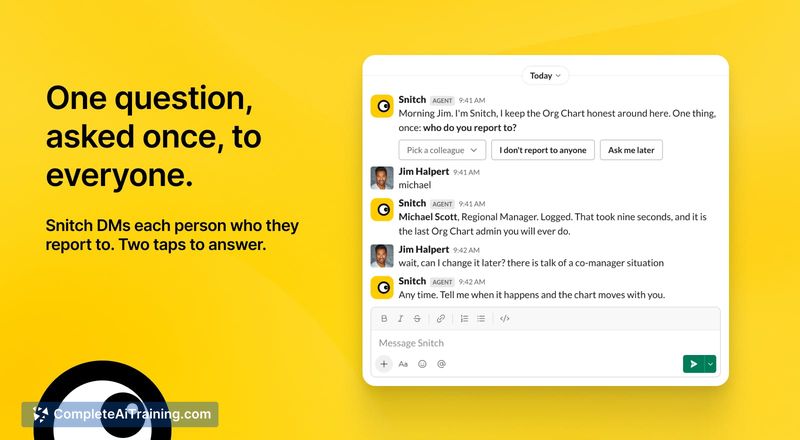
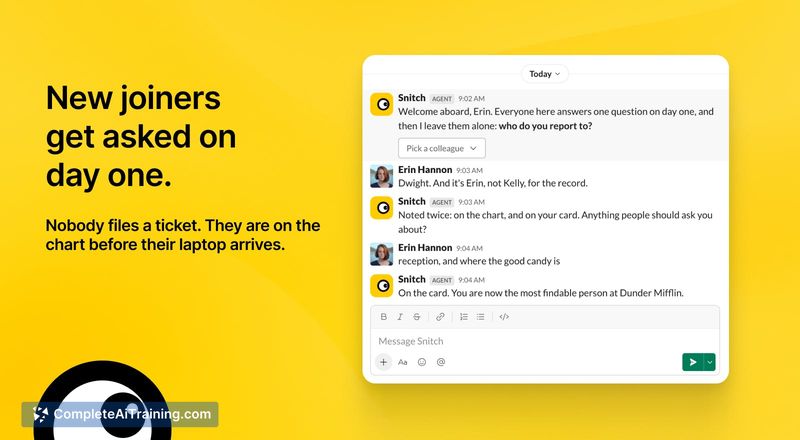
Snitch is a Slack AI agent that builds and maintains an organization chart by asking each team member a single question: who they report to. It uses the responses to construct reporting chains, then answers questions about team structures, reporting lines, and ownership directly within Slack. No HR system integration or manual data entry by administrators is required.
Review
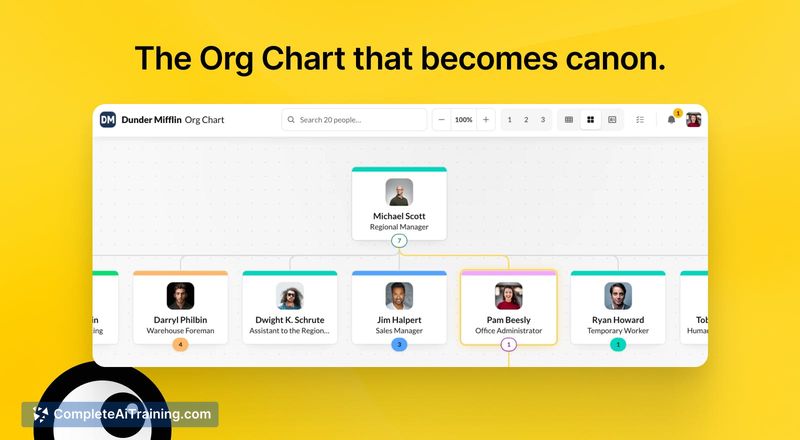
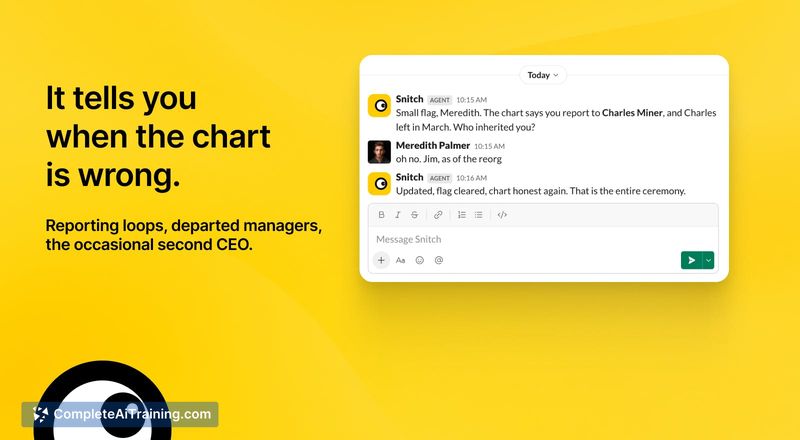
Snitch tackles a specific friction point in medium and large companies: the org chart is often out of date, buried in an HR tool nobody checks, or simply doesn't exist in an accessible form. The tool distributes the data collection work to everyone in the Slack workspace instead of centralizing it with one person. It's a straightforward premise with a narrow scope, which shapes both its strengths and its limitations.
Key Features
- Collects reporting relationships by sending a single Slack question to each user: "who do you report to."
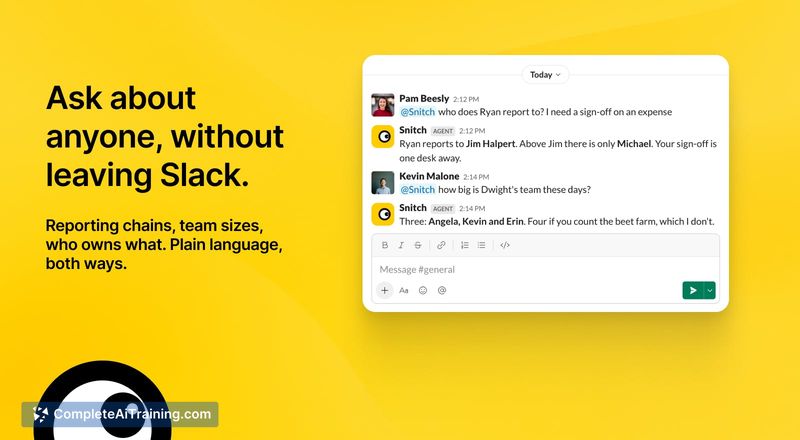
- Answers natural-language questions about the org chart, including reporting chains, team sizes, and ownership of specific areas.
- Runs nightly verification checks that detect changes in user details and flags potential drifts in the chart.
- Requires zero HR system integration and no manual org chart population by administrators.
Pricing and Value
Pricing details are not yet defined. The tool launched with free options, but the maker has not published a formal pricing model or indicated what future paid tiers might include. Teams evaluating Snitch should confirm current and upcoming costs directly before rolling it out widely.
Pros
- Setup is lightweight. An admin invites the bot to Slack, and data collection begins as soon as people respond to the question.
- Reduces repetitive HR inquiries by letting employees ask Snitch directly about reporting structures.
- The approach keeps the org chart current without requiring a dedicated administrator to update it manually.
- Works entirely inside Slack, so users don't need to log into a separate system to find reporting information.
- Maker has indicated regular check-in functionality is on the backlog based on user feedback about long-term accuracy.
Cons
- Snitch does not currently re-ask all users periodically. Over months, the chart can drift if people change roles without triggering the nightly verification.
- Accuracy depends entirely on user participation. If a portion of the team ignores the initial question, the org chart will have gaps.
- The tool is not a fit for organizations that don't use Slack as their primary communication platform, since it has no standalone interface or integrations with other chat tools.
Snitch makes sense for Slack-centric companies that need a low-effort way to surface reporting structures without touching their HR system. Teams with high turnover or frequent reorgs will want to track whether the promised regular check-in feature ships, since the current drift detection catches some changes but won't proactively refresh the full dataset. Small teams where everyone already knows the reporting lines won't see much benefit, but mid-size companies where "who owns this" questions pile up in HR's DMs will likely find it cuts down on repetitive messages.
Jobs Snitch suits
We checked Snitch against 500+ jobs; these get the most out of it.