MCP server · Developer tools
Kindly Debugger (KDB) MCP server
Lets your AI attach to a running program, step backward and forward through what it did, and find the bug.

KDB is a debugging helper that your AI can use to look inside a running program. You tell your AI that something crashed, and it can pause the program, look at what was happening, and even rewind to see what went wrong earlier. It is handy for developers who can describe a problem but would rather not dig through debugger screens themselves.
What is an MCP server? The 30-second version
On its own, your AI can only chat. An MCP server is a small helper program that gives your AI a new skill or a connection to another service. This one connects your AI to the Kindly Debugger service, which runs on Kindly's own machines. Once it is connected, your AI can attach to a program, set breakpoints, and step through execution for you when you ask.
What this MCP server does
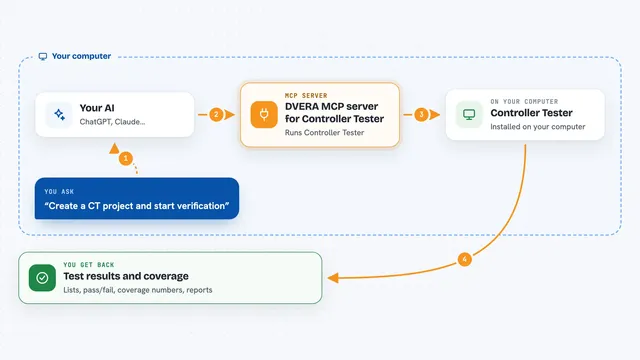
You describe the problem, for example that a program is crashing and you know its process ID. Your AI uses this helper to connect to that running program on the Kindly server. The helper pauses the program, takes a snapshot, and lets the AI look at the stack trace and the values in memory. The AI can step forward or backward through execution to find the moment things went wrong. Then it explains the cause and often suggests a fix right in the chat.
 Click to zoom
What you can do with it
- Attach your AI to a running program by its process ID
- Set breakpoints so execution pauses at a chosen spot
- Step backward in time to see what happened before the crash
- Step forward again from any checkpoint
- Read the stack trace to see the chain of calls that led to the problem
- Inspect variables and memory values at the moment of the crash
- Export the execution trace so you can keep or share it
Try asking your AI
- “My Rust program crashes at runtime, the process ID is 12345, can you find out why?”
- “Attach to my running Python service and set a breakpoint where the error is thrown.”
- “Step backward from the crash and tell me which value was wrong.”
- “Show me the stack trace and the variables at the moment it failed.”
What it gives back to you
You get answers in the chat: a stack trace, the values of variables, and a plain explanation of what went wrong. Your AI can also show you the exact line of code involved and suggest a fix. If you ask, it can export the full execution trace as a file you can keep or share with a colleague.
Before you start
What you need
- The Claude desktop app, Claude Code, Cursor, or another tool that supports MCP
- Node.js installed on your computer (the setup command uses npx)
- A Kindly account, which you can create for free when you run the setup command
Good to know
This connects to a running program and can pause or change its execution, so use it on code you are allowed to debug, and be aware that the free plan only includes a few sessions per month.
Install it with your AI
Add Kindly Debugger (KDB) MCP server to your AI, no technical skills needed
You don't install anything by hand. You copy one prompt, paste it into an AI that can work on your computer, and it checks, installs and connects the server for you, asking you when it needs something.
Sign in to get the install prompt
Members get a ready-made prompt that lets the Claude desktop app check Kindly Debugger (KDB) MCP server, install it and connect it for them, step by step. You don't need any technical skills: you copy, paste and answer a few questions. Your connected AI can also find and install any of the 4,361 MCP servers here for you.
Who it's for
Developers and engineers who debug crashing or misbehaving programs and want their AI to do the digging.