MCP server · Developer tools
MCP Broker
by NavinAgrawal
Let your AI reach many MCP tools through one small, tidy connection instead of a huge list.

MCP Broker is a small helper program that sits between your AI app and all the other MCP tool servers you use. Instead of loading every tool into every chat, your AI talks to the broker, and the broker fetches the right tool only when a task needs it. It is handy for developers who run Codex, Claude Code, or similar tools and feel their setup has grown too big.
What is an MCP server? The 30-second version
On its own, your AI can only chat with you. An MCP server is a small helper program that gives your AI a new skill or a connection to another app. This one is a broker: a middleman that connects your AI to many other MCP servers at once. You add just one entry to your AI app, and the broker quietly finds and calls the right upstream tool when you ask for something.
What this MCP server does
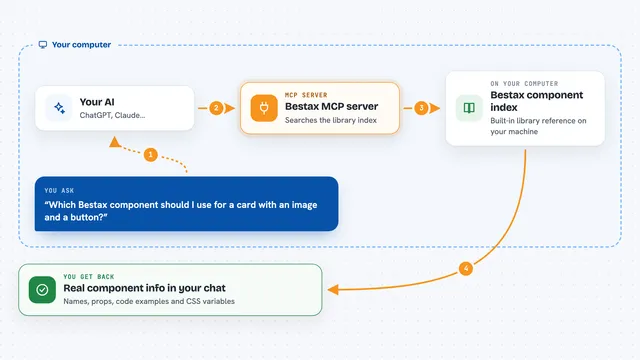
You add one broker entry to your AI app instead of a long list of servers. When you ask for something, your AI asks the broker to search for a matching tool. The broker looks across the upstream MCP servers you configured and finds the right one. It then calls that tool for you and hands the result back to your AI. Along the way it starts and stops those upstream servers, keeps their state in one place, and cleans up when sessions end.
 Click to zoom
What you can do with it
- Search across all your configured MCP tools with one query
- Describe a single tool so your AI knows how to use it
- Call an upstream tool through the broker without adding it to your client
- Check which upstreams are visible and their last errors
- Close a session and release its upstream processes
- Keep mutating tools hidden until a profile allows them
- Render and back up MCP client configs before applying changes
Try asking your AI
- “Search my MCP tools for anything that can read a GitHub issue”
- “Describe the tool called create_pull_request so I can see what it needs”
- “Call the weather tool for Berlin and show me the result”
- “Show broker status and tell me which upstreams are active”
What it gives back to you
You get short answers in the chat: a list of matching tools with names and descriptions, the details of one tool, or the result of a tool call. Status requests return a summary of visible upstreams, their state, and any recent errors. The broker keeps the heavy tool details out of the way until you actually need them.
Before you start
What you need
- A computer running macOS, Linux, or Windows
- Python 3.10 or newer
- make and a clone of the mcp-broker repo
- Node.js and npx if you use npm-based upstream MCP servers
Good to know
The broker can start, stop, and route tools that change or delete things in other apps, so only allow mutating tools in a profile when you are sure you want them.
Install it with your AI
Add MCP Broker to your AI, no technical skills needed
You don't install anything by hand. You copy one prompt, paste it into an AI that can work on your computer, and it checks, installs and connects the server for you, asking you when it needs something.
Sign in to get the install prompt
Members get a ready-made prompt that lets the Claude desktop app check MCP Broker, install it and connect it for them, step by step. You don't need any technical skills: you copy, paste and answer a few questions. Your connected AI can also find and install any of the 4,609 MCP servers here for you.
Who it's for
Developers and technical teams who use several MCP clients and want one tidy place to manage all their MCP tools.